
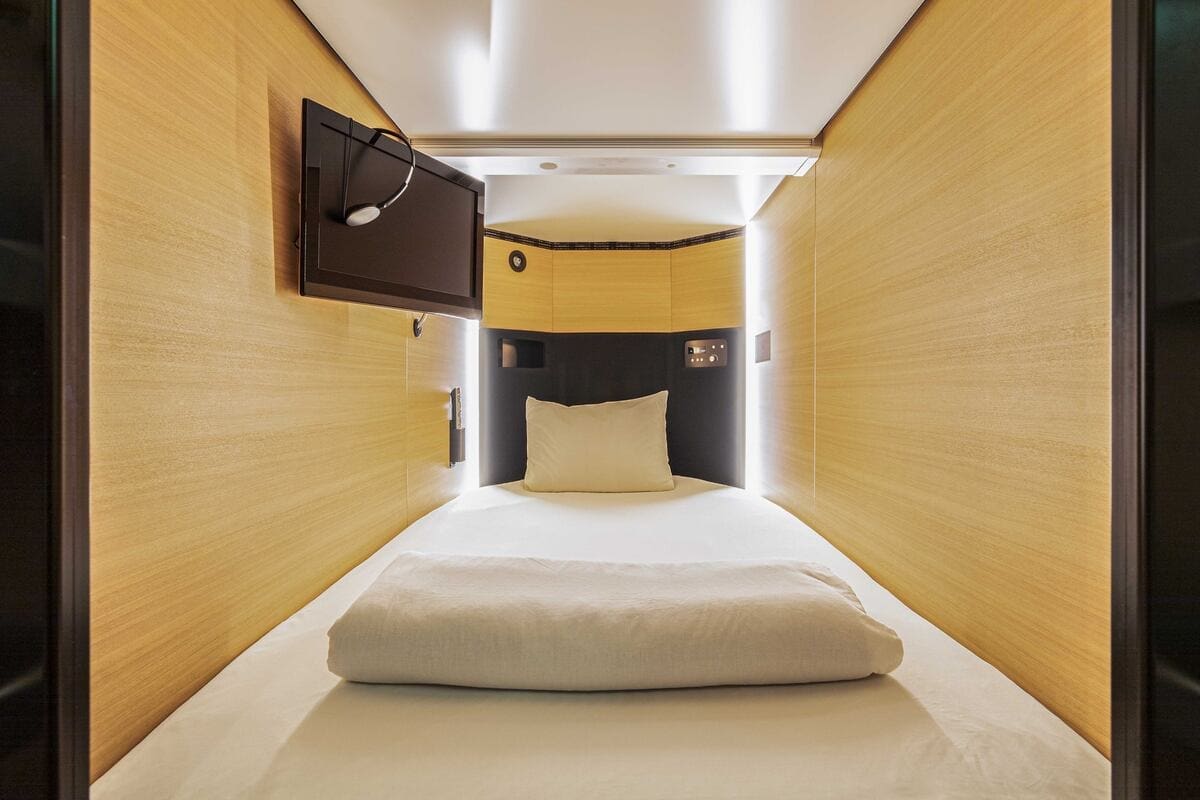
Though Canada is nearly 10 million square kilometres in size, only 18,000 of those square kilometres are actually lived on. The country’s population continues to grow and is becoming increasingly urban, so there’s a shift towards living in smaller and smaller homes.
Capsule homes are a natural result of the progression towards smaller or tiny homes. They originated in the 1960s in Japan, a country that knows a lot about living in small spaces, and they’ve been gaining popularity around the world, riding the wave of popularity that has come with tiny homes and the micro-living movement.
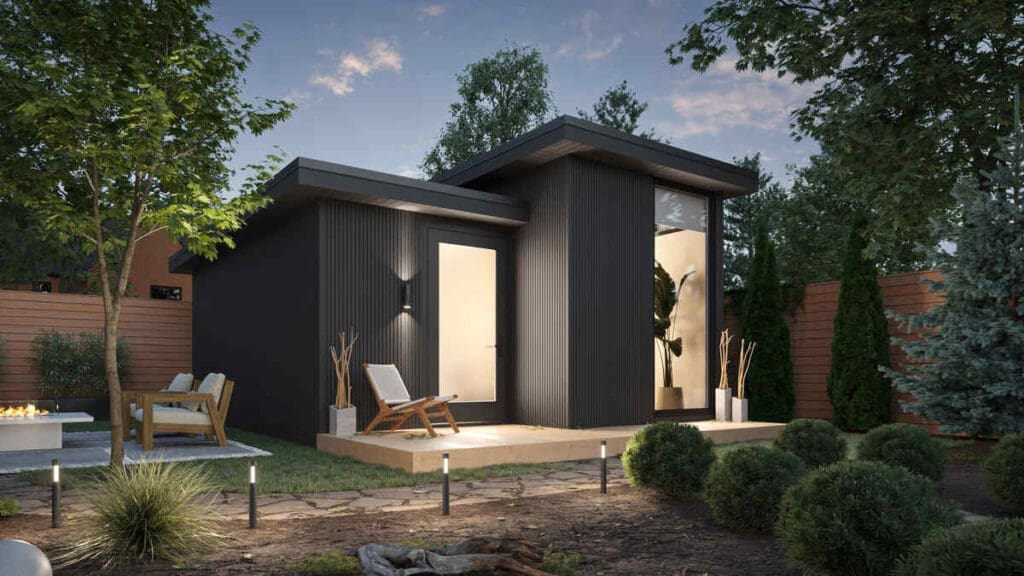
One of the distinguishing characteristics of capsule homes is their futuristic look, which also serves to differentiate them from other tiny homes. With capsule homes you get a utilitarian approach to living. It’s really about the basics: a bed, a bathroom, a kitchenette.
Although customization is limited, they do provide several attractive features that make them exceptionally versatile and efficient. They are uniquely adapted to the urban environment given their compact size, ranging from about 100 to 300 square feet. That small size also means they’re energy-efficient, portable and quick to assemble (they’re generally prefabricated).
Capsule homes also happen to cost a lot less than other homes. Granted, you’re not getting much space, so it’s not that they’re exactly cheap on a square footage basis, but to be able to get a standalone home for $50,000 is a lot less than you’d be spending for a conventional house or condo.
For those looking for opportunities to generate rental income or holiday accommodation, capsule homes are a safe bet. You get an attractive discount relative to conventional housing, they can be moved to different locations so you can rent apartment space out wherever there’s a demand for it and since they’re small you can easily set them up on a property as an accessory dwelling unit.
Before You Buy
Get the Green Building Project Checklist
Use this handy checklist on your next project to keep track of all the ways you can make your home more energy-efficient and sustainable.
As an alternative to high housing prices, capsule homes offer some attractive options. However, you must ensure that the capsule home of your dreams will comply with local regulations. Provinces like Ontario permit capsule homes but add some conditions, such as the minimum size being 188 square feet, and if there are two internal levels, they must be joined by a staircase and not a ladder.
Other conditions that local authorities may demand are safety regulations regarding door and window sizes, cooking and sleeping areas and a bathroom with running water. In some municipalities, a building permit may be required. Municipalities have different zoning laws. Some may allow tiny homes as a primary residence while others will see it only as a secondary residence. Some allow tiny homes on permanent foundations but not on wheels, while others will allow both. Before deciding on this type of home you first need find out whether your municipality will allow it.
Capsule Home Features
Because a capsule home has limited space they tend to adopt space-saving designs and multi-use furniture pieces. Fold-away beds and tables offer additional space when not in use. While the space is limited, it doesn’t mean the comfort level is reduced.
Capsule homes are excellent at combining comfort and space efficiency. In line with tiny homes, modern capsule homes offer eco-friendly finishes and ingenious designs to transform areas for multi-use.
Capsule homes are inherently sustainable thanks to their small stature. They consume less resources to build. Then at the end of their life, those minimal resources mean less stuff that needs to go to the dump. They also require less energy to operate. The addition of solar panels and smart home technology further reduces utility costs while minimizing environmental impact.
However, while many of the capsule home designs show large sections of glass, this may negatively affect the insulation qualities of the building and make them unsuitable for harsh winter conditions.
Speed is of the essence with capsule homes. They’re designed for quick assembly and include kitchenettes, bathrooms and sleeping areas. This makes them an ideal option in urban environments where space is severely limited.
How Much Does a Capsule Home Cost?
These homes generally start at around $30,000 for a basic module and can rise through $100,000 for more elaborate and upgraded finishes.
There are, however, ancillary costs that need to be considered before arriving at the final cost. First you need the land to site your home on. Once you have that, the cost of transport to your site and placement of the capsule home needs to be budgeted as this will frequently involve using a crane.
The connection to utilities also needs to be checked, and the site preparation must be added to the final purchase price.
Suppliers of Capsule Homes and Tiny Homes in Canada
Advertised as the “future of housing,” Capsule Living Homes produces three models that highlight the futuristic-looking design of capsule homes (see video below). The smallest unit is 130 square feet and is a one-bedroom, one-bathroom design that sells for $57,000, excluding taxes.
The midrange model is a little over 300 square feet and costs $74,500, while the largest unit is 410 square feet and costs just under $100,000.
As can be seen from the pricing, the cost per square foot drops considerably as the unit size increases. The smallest unit is priced at $438 per square foot, which drops to $ 248 for the mid-range unit and reduces further to $243 for the largest unit.
All the units come with a 30-year structural warranty and are customizable to some degree. They feature energy-efficient designs using eco-friendly construction materials; however, some features like solar panels and underfloor heating are not included in the price.
If the capsule home look isn’t for you, here are a few other tiny home options in the same size and price range.
T Pods is a Montreal-based design company that offers a range of tiny living spaces. Their products are manufactured in India, China and Canada and are available in flat-pack kits or fully assembled. They offer a range of pods from 100 to 400 square feet, built to withstand Canadian winter conditions with PU-insulated walls. They are portable and can be assembled within a couple of hours, and they can also be connected to create larger living spaces.
Acorn Tiny Homes is a Toronto-based tiny home business that offers three models. The smallest is the Sakura, at 225 square feet, while the two larger models are also available as tiny homes on wheels. The largest unit is a 546-square-foot home that sells for $258,000 for the wheeled version and $238,000 for the garden suite.
EkoBuilt specializes in building passive houses and has its manufacturing plant in Carp, Ontario. It provides kits that are shipped throughout Canada and customizes the insulation qualities of each unit to adapt to different regions and climatic conditions. The tiny house range has models from 400 to 1,000 square feet.
Are Capsule Homes Right for You?
Whether you’re considering downsizing and getting into a simpler lifestyle or you have the opportunity to add a rental unit to your property, module homes have a lot of advantages. They are super space- and energy-efficient, sustainable and the ability to relocate them makes them an attractive and financially lucrative choice.
If you’re set on buying a home, but when you’re looking through real estate listings you find there’s nothing even close to your price range, a capsule home could be right for you – as long as you’re fine with living in a small space. Alternatively, if you already own property and are looking for a convenient way to raise some rental income they can also be a good choice as an accessory dwelling unit (ADU).
Image from Depositphotos
Request a Quote for a Tiny Home
The following information helps us to find the best home builder to complete your project. Your information is safe with us – view our privacy policy.

We are in the market for a few small mobile homes for workers coming into our remote community and hopefully tourists later on
Sounds like a nice project! All the best with it