
Balancing Ergonomics, Productivity and Lifestyle in Canadian Workplaces

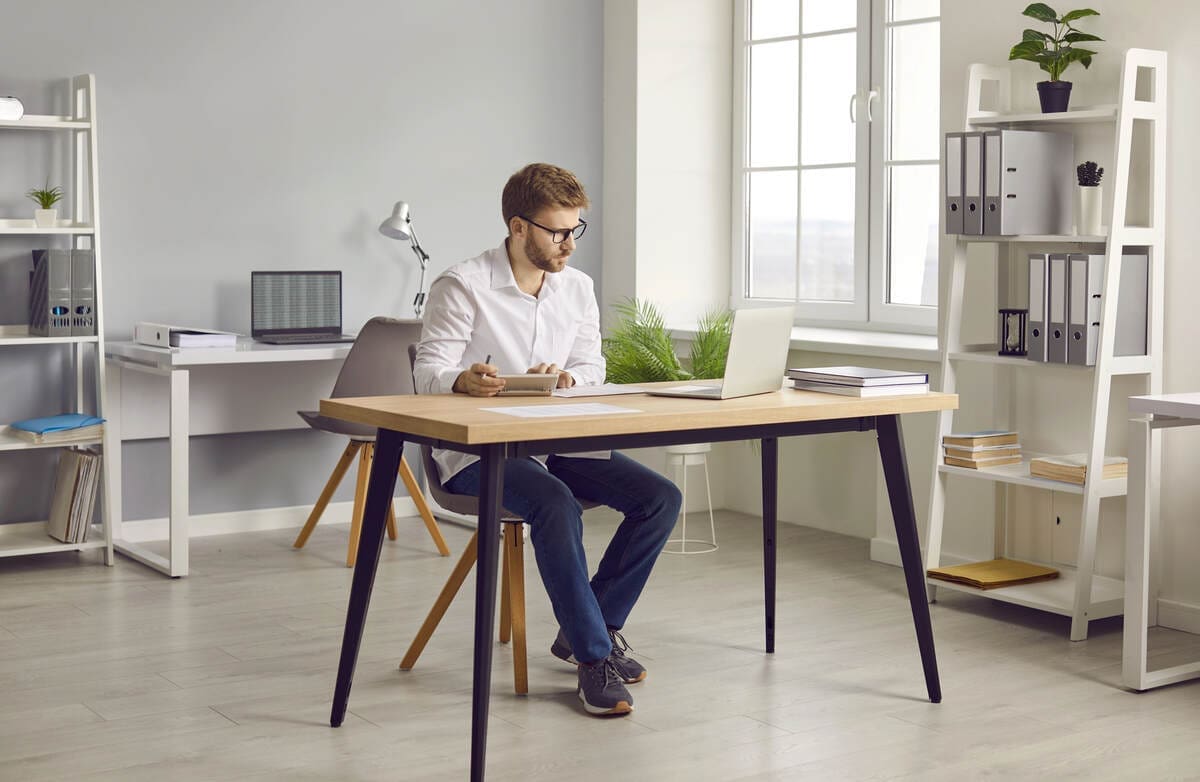
Canadian work culture is steadily shifting toward a calmer pace that still delivers strong results. The focus is not on working more hours. The focus is on structuring days so energy, attention and health hold steady from Monday to Friday. Employers and workers continue to refine routines that blend office, home and community life – with comfort, clarity and fairness at the centre.
This balance shows up in small choices. Better desk geometry reduces strain. Short walking breaks become normal. Meetings get shorter and written updates carry more of the load. The result is practical – less fatigue, fewer errors and room for real progress.
The Canadian Rhythm of Focus and Recovery
Many companies across Canada value reliable output over performative busyness. That means protecting deep work time and using quick touchpoints to align projects. Focus blocks run ninety to one hundred twenty minutes, followed by a short reset. These resets are not wasted minutes. They are the maintenance that keeps shoulders relaxed, eyes clear and thinking sharp.
Climate also shapes the day. Bright summer mornings invite earlier starts and a mid afternoon pause. Winter brings heavier layers and shorter daylight, so indoor light quality and consistent temperature matter more. Workflows adapt to seasons – not the other way around.
Everyday Ergonomics That Pay Off

Get the Green Building Project Checklist
Use this handy checklist on your next project to keep track of all the ways you can make your home more energy-efficient and sustainable.
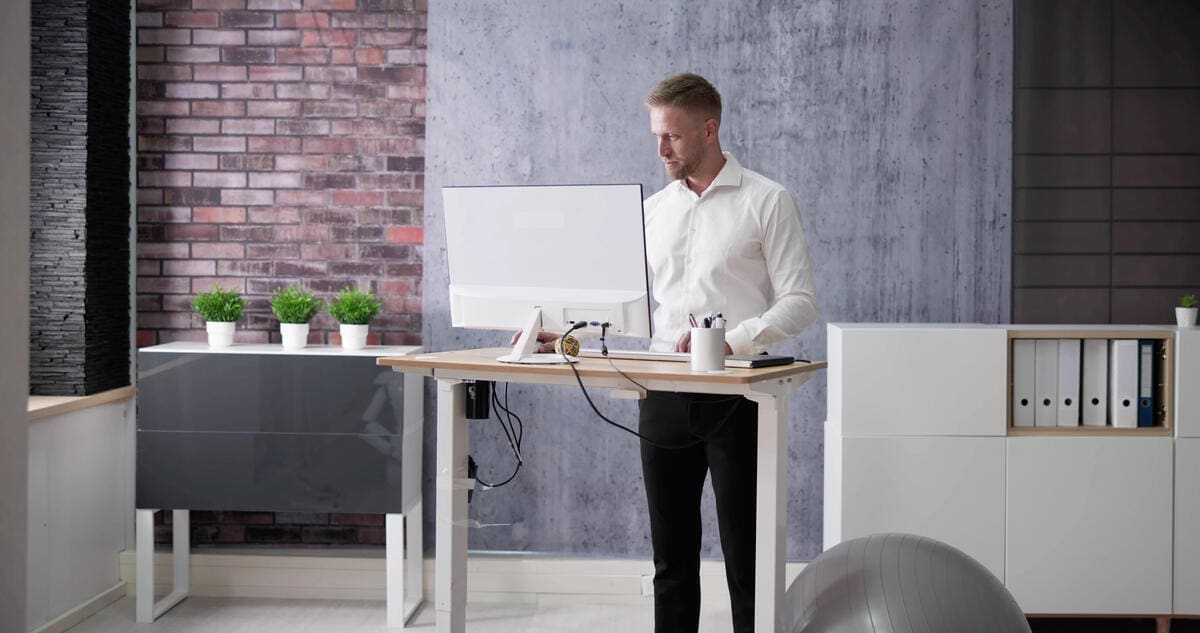
Healthy workstations are not a luxury. They are the foundation for steady output. Screen tops should meet eye level to reduce forward head posture. Elbows land near a right angle with wrists in a neutral line. Feet rest fully on the floor or a footrest to support the low back. Storage stays within easy reach, so shoulders do not hitch up during routine tasks.
Posture variety matters as much as posture quality. Sit for focused typing. Stand for email or review. Walk during low stakes calls. In many home or hybrid setups, a height flexible surface makes these changes fast. A compact standing desk can anchor this habit without dominating the room, allowing posture shifts in seconds. The goal is not to stand all day, but to rotate positions so no single tissue group carries the full burden.
Hybrid Norms That Make Work Feel Human
Hybrid work in Canada continues to mature. Clear team agreements reduce friction: which days call for in person collaboration, which tasks work best at home and which hours are protected for focus. When expectations are transparent, people plan around family needs, commutes and weather without guilt or guesswork.
Meetings get a slimmer profile. Short agendas, clear owners and defined outcomes keep sessions crisp. Asynchronous updates cover status, while live time is saved for decisions and creative problem-solving. Offices evolve to support this pattern. Fewer long corridors of desks, more small rooms for quick huddles and open areas with good light for informal alignment.
Food, Nature and the Midday Reset
Canada’s natural beauty and vibrant cities make it easier to step outside. Even five minutes of fresh air changes how a long afternoon feels. A quick loop around the block, a stretch on a balcony or a walk to a nearby cafe provides movement and a wider view. These small steps lower stress markers and reset attention, especially in the darker months.
Nutrition choices follow the same logic. Lighter midday meals prevent the post-lunch dip. Water bottles at the desk replace mindless snacking. Offices that place healthy options at eye level and keep microwaves, fridges and cutlery tidy see smoother afternoons. At home, a small prep zone with bowls, fruit and tea keeps resets simple and unhurried.
Simple Policies That Scale

Organizations of every size can back good habits with light structure that respects real life. A short list is enough to set tone without heavy rules.
- Protect two focus blocks per day on shared calendars. Colleagues avoid those windows unless the work is urgent and time sensitive.
- Default to written updates for routine status. Live meetings are for decisions or creative work.
- Encourage micro movement – two minutes of standing or walking every half hour.
- Provide basic ergonomic guidance for home and office – screen height, chair fit and cable management.
- Normalize short outdoor breaks when the weather allows. Fresh air is a performance tool, not a perk.
- Set quiet hours in collaboration apps to prevent late-night noise and weekend drift.
Small policies create shared habits. Shared habits become culture.
Where Balance Becomes a Competitive Edge
Some of the strongest Canadian companies treat health, productivity and lifestyle as parts of the same system. Attention lasts when bodies feel supported. Quality rises when meetings are lean and writing is clear. Retention improves when people can handle family logistics without stress. None of this is complicated. It is a series of practical choices that make work feel sustainable.
The point is not to promise perfect balance. The fact is to design days easier on the body, cleaner on the calendar and kinder to the mind. With steady ergonomics, predictable hybrid rhythms and five minute resets that anyone can keep, Canadian work culture can stay both healthy and effective – ready for the next project, the next season and the long arc of a career.
Images from Depositphotos
