

The recently released RBC Climate Action Institute 2024 Report has brought Canada’s building and construction industry into sharp focus, highlighting its critical role in achieving national decarbonization goals.
Buildings currently account for 13 percent of Canada’s total emissions (when including electricity usage within buildings that number is 18 percent), a figure projected to rise with the nation’s booming population and the corresponding surge in housing demand.
The report outlines significant challenges and opportunities for builders, policymakers and homeowners in decarbonizing this key sector.
Decarbonization in Building
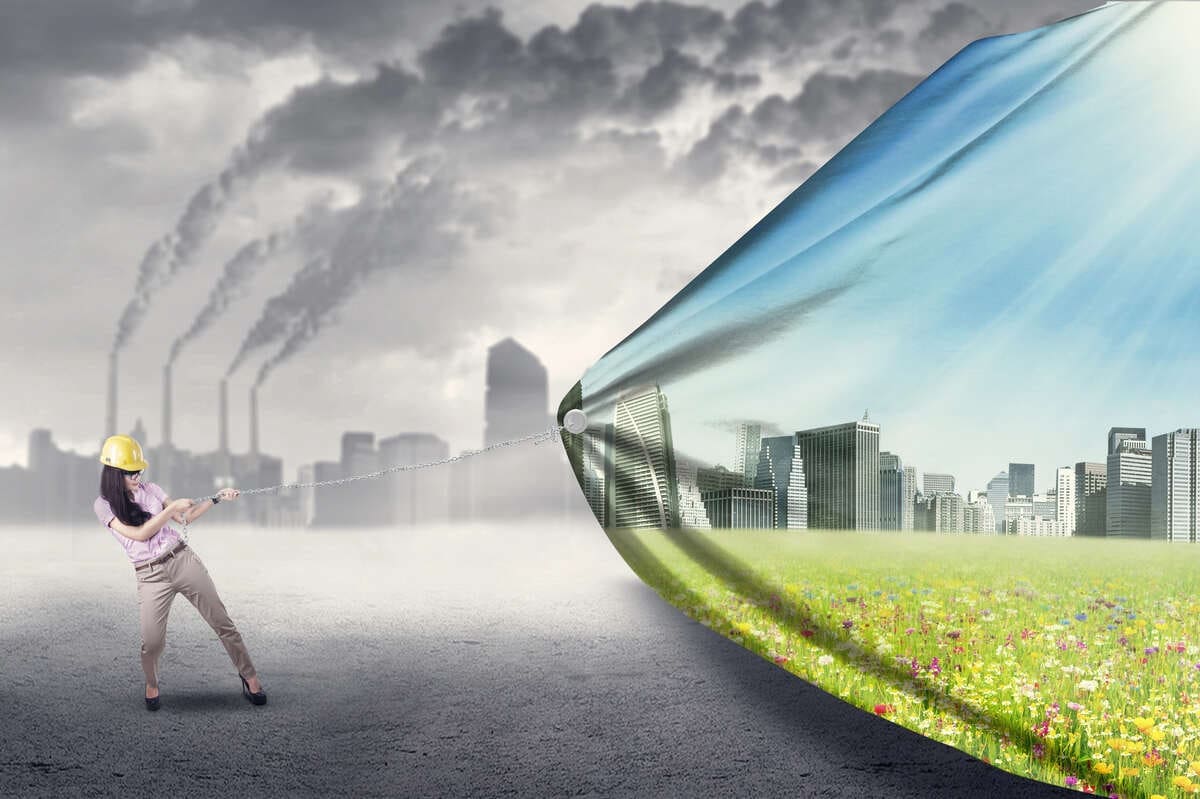
Canada’s population growth, spurred on by an ambitious immigration plan, requires the construction of 260,000 homes annually.
However, the reliance on traditional construction methods and fossil-fuel-dependent heating systems has left the sector lagging in emissions reductions.
Since 2005, emissions from buildings have risen by 9 percent, despite a modest 1 percent decline from their 2019 peak. This underlines the pressing need for sustainable construction practices and retrofits.

Get the Green Building Project Checklist
Use this handy checklist on your next project to keep track of all the ways you can make your home more energy-efficient and sustainable.
The report identifies retrofitting as a pivotal measure, citing the need to upgrade half of Canada’s existing 16.7 million homes. Retrofitting strategies, such as installing heat pumps and improving insulation, could cut residential emissions by 26 percent, equivalent to removing six million gas-powered vehicles from the roads annually.
Builders and Heat Pump Adoption
Heat pump adoption has become a standout solution in reducing emissions from home heating, which generates up to 85 percent of a building’s carbon footprint. In 2023, heat pump sales surpassed those of traditional furnaces, and adoption is projected to reach 10 percent of Canadian homes by 2030.
However, the report highlights significant barriers, including high upfront costs and supply chain challenges. Federal subsidies like the Canada Greener Homes Grant (which ran out of funds last year) have proven instrumental in offsetting these costs, but market forces must drive further adoption to achieve exponential growth.
The report also advocates for the implementation of community-based retrofitting programs modelled on the Dutch Energiesprong initiative, which aggregates demand and reduces costs through economies of scale. A pilot program launched in Canada last year aims to replicate this model, potentially accelerating the greening of Canada’s housing stock.
Implications for Builders and Homeowners
Canadian builders face mounting pressure to adopt sustainable practices in order to aid in decarbonization, particularly as provincial compliance with the 2020 National Model Codes for building energy efficiency began in March 2024.
This includes incorporating low-carbon materials, such as timber, mass timber and advanced concrete blends, which reduce the embodied carbon of new construction.
For homeowners, government subsidies and advancements in technology are making sustainable upgrades more accessible.
However, affordability remains a concern, as 50 percent of Canadians are reluctant to pay more for environmentally friendly housing options. Public-private partnerships and provincial investments could be key to bridging this gap.
The Path Ahead
The RBC Climate Action Institute 2024 Report underscores the urgency of rethinking how Canada builds and retrofits homes with decarbonization in mind.
With Canadian construction poised to escalate, the sector’s transformation into a low-carbon building machine is crucial to meeting national climate targets.
Builders, homeowners and policymakers must collaborate to accelerate the adoption of innovative technologies, sustainable materials and energy-efficient designs.
The choices made today will not only define the future of Canada’s housing market but also its role in the global fight against climate change.
Images from Depositphotos


It is ironic that RBC funded a report on conserving energy in the building sector, all the while investing in the fossil fuel industry more heavily than most other banks worldwide. I’d call it greenwashing, wouldn’t you?