
Building the Future
The Business Case for Construction that Supports Sustainability
Written by Antonio Manchisi, Vice-President of Construction, and Nick Haughton, ESG Director at Sapphire Balconies
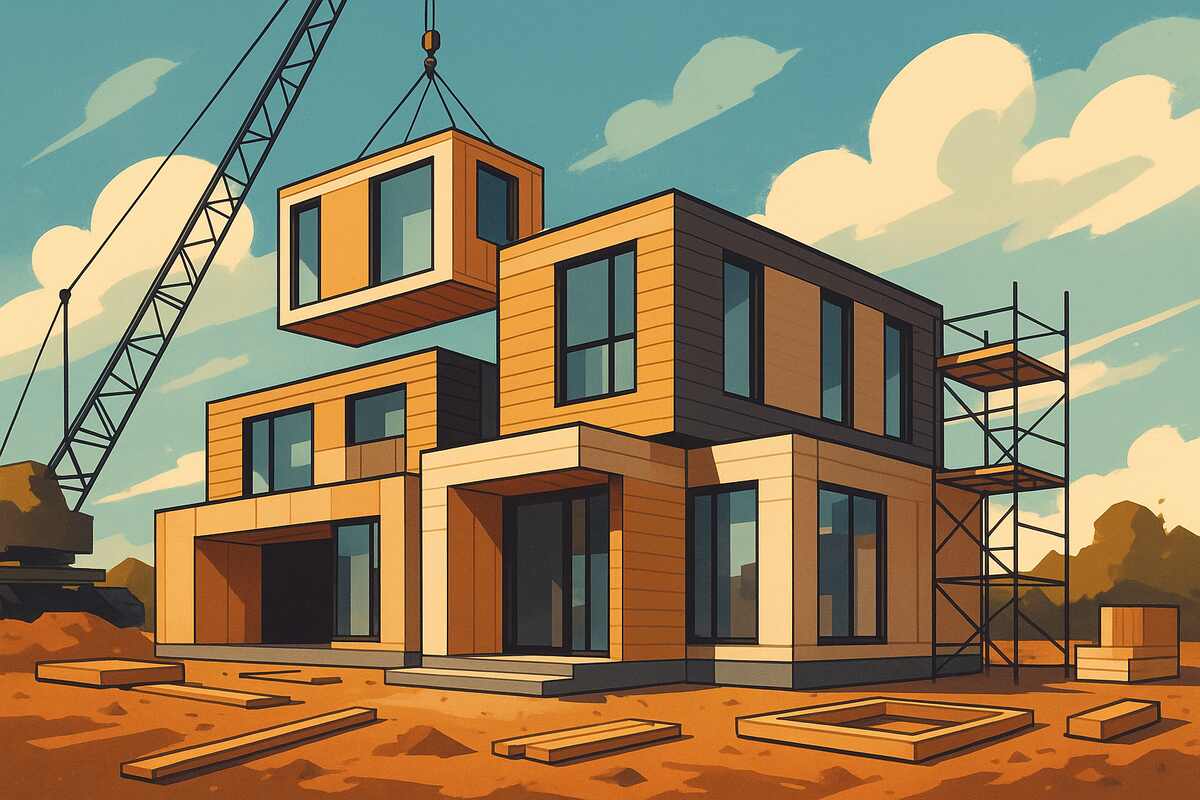
Canada faces a two-front challenge: an acute housing shortage and the accelerating demands of the climate crisis. New construction technologies and federal programs that explicitly support sustainable building create a rare alignment of social need and economic opportunity. The question now for industry leaders is simple – how do we harness these developments to grow supply, protect margins and strengthen the construction workforce?
Why Build Canada Homes Matters Now
The federal Build Canada Homes initiative – capitalized with an initial $13 billion – arrives at a crucial moment for our industry. Launched in September 2025, the program is designed to de-risk large projects, unlock public land for housing and accelerate affordable supply at scale. For specialty contractors and manufacturers, Build Canada Homes represents a channel to secure portfolio work and invest in the capabilities required for modern, sustainable delivery.
That need is more urgent because of trade and tariff pressures. Changes to U.S. trade policy in 2025, including higher tariffs on metals and downstream products, have already put upward pressure on material costs and disrupted cross-border supply chains. Industry analysis notes that, depending on a project’s sourcing profile and contract terms, certain material categories could see cost increases of 10–25 percent, and that ripple effects are delaying or pausing some projects. Those dynamics make federal programs that can lower financing and delivery risk particularly valuable.
Mass Timber, Prefabrication and the ESG Opportunity
Get the Green Building Project Checklist
Use this handy checklist on your next project to keep track of all the ways you can make your home more energy-efficient and sustainable.
From our vantage point, the strongest route to faster delivery and lower life cycle emissions is mass timber, prefabrication and high-performance building standards. These technologies reduce waste, shorten on-site schedules, and, when combined with careful design, can materially lower embodied carbon.
At the same time, ESG is no longer an optional label. Investors, owners and many municipal building policies are asking for demonstrable carbon and resilience outcomes. Organizations such as the Canada Green Building Council (CaGBC) have modelled scenarios where prioritizing green building can generate large employment and GDP benefits – on the order of 1.5 million direct green building jobs and roughly $150 billion in GDP by 2030, which underscores the substantial economic upside that exists alongside the environmental case.
Practical Reality: Why Balconies Still Belong in Sustainable Projects
Specialists in high-performance delivery often confront the same question: “If we’re optimizing for Passive House or mass timber, why keep features like balconies?” From our perspective, the right answer is that sustainability and liveability are not mutually exclusive.
We’ve taken this seriously – our team recently applied for Passive House certification, so we can continue to serve projects where ESG is core to the brief. That decision enables us to stay relevant in a growing cohort of buildings engineered for minimal operational energy use while remaining committed to resident amenities.
The 2025 Canadian Multi-Residential Satisfaction Study (CMRS) reinforces this point: balconies are an essential feature for a large majority of residents. More than 80 percent value private balconies over shared outdoor spaces, and most residents report they would not give up a private balcony even for lower rent and shared amenities. That resident demand is critical when designers and developers balance operational performance and market appeal.
How Industry, Government and Communities Should Work Together
To realize the twin goals of faster housing delivery and lower carbon, we need practical collaboration, including:
Targeted program outreach – Federal programs like Build Canada Homes should actively engage specialized contractors and mid-market manufacturers, so that those firms can compete for portfolio work.
Industry upskilling – Meeting net-zero and Passive House targets requires rapid skills development across design, trades and maintenance. The public and private sector should co-fund training and knowledge transfer.
Meaningful procurement signals – When procurement emphasizes life cycle outcomes and resilience, markets shift towards low-carbon materials and repeatable factory processes.
Roundtables and information sessions – Practical sessions that pair policy makers with contractors and SMEs reduce friction and accelerate implementation.
If we get this right, sustainable construction does more than cut emissions, it can accelerate housing supply; create stable, higher-quality jobs across the supply chain; and strengthen the businesses and margins of the contractors who deliver the work. Build Canada Homes and complementary ESG programs create a pathway to those outcomes – provided we align incentives, invest in skills and keep resident wellbeing, including amenities like private balconies, front and centre in design.
At Sapphire Balconies, we’re optimistic. This is an industry that has historically adapted through waves of change. With the right public policy and proactive industry collaboration, we can build housing that’s faster, greener and more liveable than the stock we replace.

Nick Haughton (ESG Director, Sapphire Balconies) heads up the Global thought leadership at Sapphire Balconies. Nick spearheads Sapphire’s ESG strategy and runs the ESG committee, driving sustainable-focused progress into Sapphire’s business activities and plans.

Antonio Manchisi (Vice President of Construction, Sapphire Balconies) is a mechanical engineer and seasoned leader in the construction industry, with a proven track record in delivering complex, high-value projects. Over the years, Antonio developed deep expertise in modular construction and became a recognized specialist in the field.
Images from Depositphotos

Great point about industry upskilling. Without rapid training and knowledge transfer, even the best policies won’t achieve net-zero targets. Collaboration between government and SMEs is key.
Interesting to see the CMRS study highlight resident demand for private balconies. It’s a reminder that sustainable construction must balance technical performance with human comfort.