
If you are planning on building your own home, one of the things you should consider are the environmental concerns, especially the emissions associated both with construction and operation.
As environmental concerns continue to grow, there is an increasing emphasis on reducing the carbon footprint of all phases of a home’s life cycle, from construction to demolition.
Here, we’re talking about the emissions associated with the different building methods that you may use to construct a house.
We’ll take a look at some of the most popular building methods available today and just how environmentally friendly they are in terms of overall emissions.
The Most Common Building Methods and Their Emissions
There are various methods and construction techniques for building homes, each with its own advantages, disadvantages, and considerations.
Some factors will increase or minimize emissions associated with the project regardless of the type of building you decide on. If your home can readily tap into existing infrastructure like sewers and water lines, for example, that will help minimize emissions associated with construction because your project will need fewer materials and fewer hours of machine operation to be completed.
And of course, homeowner decisions ranging from taking public transit or driving from home to work, driving vs shipping a car during your move to your new home and even whether you invest in an EV and an EV charging station, will impact the emissions associated with operating your home.
Get the Green Building Project Checklist
Use this handy checklist on your next project to keep track of all the ways you can make your home more energy-efficient and sustainable.
But before we get ahead of ourselves and think about emissions that arise during a home’s operation, here are some considerations around the carbon footprint associated with common home building methods.
Stick-Built (Traditional Framing)
This is the most common method of building in North America. It involves constructing a home on-site piece by piece using wood framing. It’s versatile and allows for customization. It’s also relatively cost-effective and can accommodate various architectural styles.
It’s worth noting that the emissions associated with stick-built homes can vary widely based on factors like the home’s size, location, design and construction practices.
Building codes, regulations and incentives related to energy efficiency and sustainability can influence the overall emissions associated with residential construction, while the choice of construction materials can affect the building’s embodied carbon. For example, using sustainably sourced wood and low-emission materials can reduce the carbon footprint of the building.
Stick-built homes that are well-designed and incorporate energy-efficient features tend to produce fewer emissions over their lifecycle. Features like high-quality insulation, efficient windows and modern HVAC systems can significantly reduce energy consumption and associated emissions.
Steel Frame Construction
Steel framing involves using steel columns, beams and studs instead of wood. Steel is durable, resistant to pests and can support larger open spaces. Steel-framed homes are typically more expensive upfront but can save on maintenance costs over time.
Steel production is energy-intensive and can result in significant embodied carbon emissions. The production of steel materials, including mining, refining and manufacturing, contributes to greenhouse gas emissions. However, the extent of these emissions can vary based on factors such as the type of steel used (recycled vs. new), production methods and transportation.
The construction process of steel frame homes involves assembling steel components. While this process is typically faster and requires fewer materials than traditional wood framing, it will still involve emissions from construction equipment, transportation and on-site activities.
Sustainable construction practices can mitigate emissions associated with steel frame homes. For example, using recycled steel, implementing waste reduction measures and adopting eco-friendly building techniques can help reduce the environmental impact.
Concrete Block Construction
Concrete blocks or masonry units are used to build exterior walls. Concrete is durable and provides good insulation and fire resistance. However, it may require additional insulation and finishing for energy efficiency and aesthetics.
The production of concrete blocks involves the manufacturing of cement, which is a carbon-intensive process. Cement production releases significant amounts of carbon dioxide (CO2) into the atmosphere, contributing to greenhouse gas emissions. Additionally, the transportation of concrete blocks to the construction site can further add to emissions.
The production of concrete blocks involves the manufacturing of cement, which is a carbon-intensive process. Cement production releases significant amounts of carbon dioxide (CO2) into the atmosphere, contributing to greenhouse gas emissions. Additionally, the transportation of concrete blocks to the construction site can further add to emissions.
It’s worth noting that advancements in concrete production and construction techniques, such as the use of supplementary cementitious materials and carbon capture technology, are being explored to reduce the carbon footprint of concrete construction.
Log Home Construction
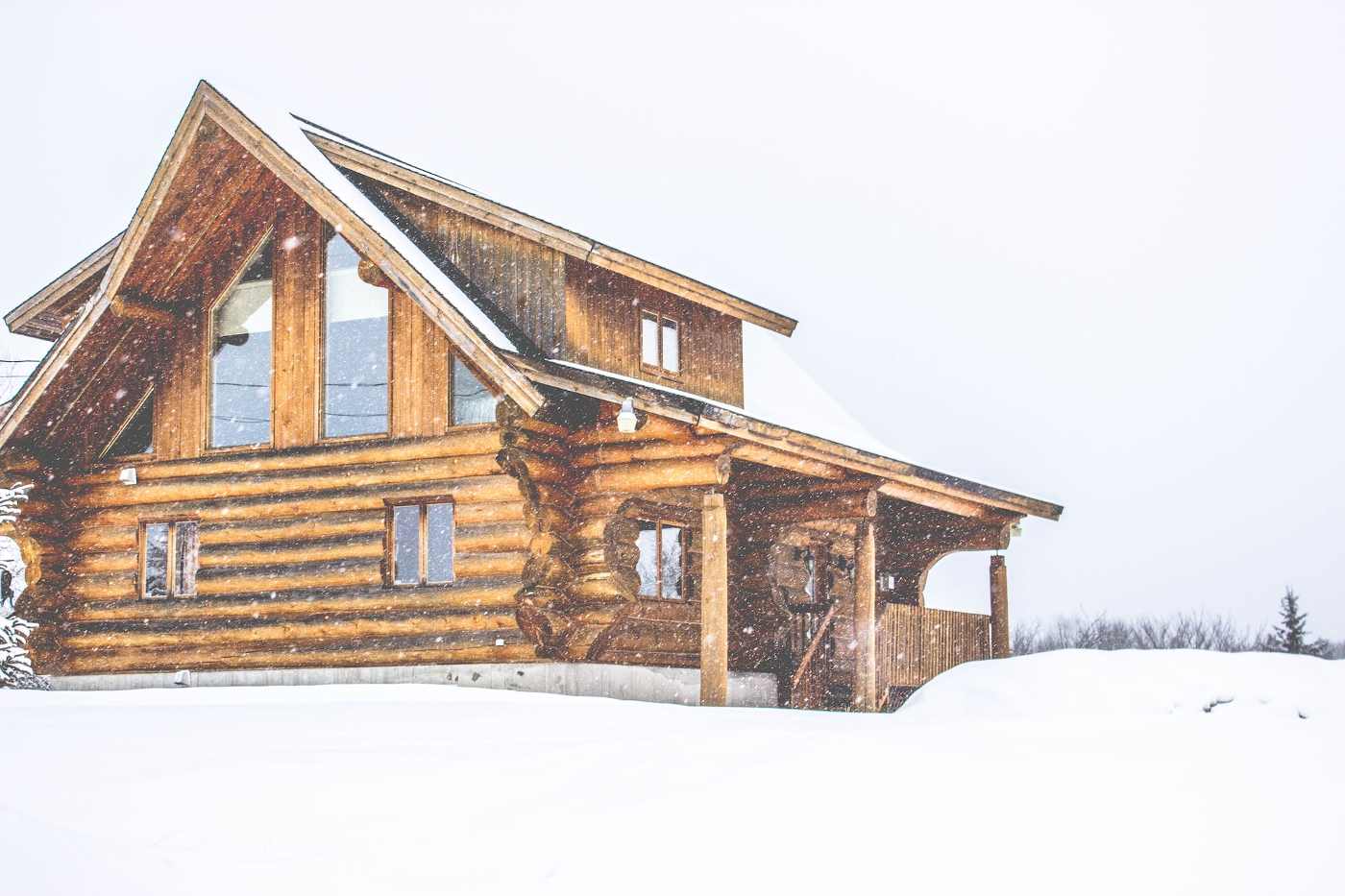
Log homes are built from stacked logs, either milled or handcrafted. They have a rustic and natural appearance and offer good insulation. However, they require regular maintenance and construction can be labour-intensive.
The primary raw material for log homes is timber, which comes from trees. Harvesting large trees for log construction can contribute to deforestation, which can lead to habitat loss, reduced biodiversity, and negative impacts on ecosystems.
As with the lumber for stick-built homes, the production and transportation of logs also results in carbon emissions, contributing to climate change. The energy-intensive processes involved in felling, transporting and milling logs can generate high emissions if the logs are transported long distances.
Log homes typically require more wood than conventional stick-built homes, which can put additional pressure on forest resources. Sustainable logging practices and responsible sourcing of timber are essential to mitigate this impact.
Log homes may require additional energy for heating and cooling compared to well-insulated, energy-efficient homes. Logs have a lower R-value (insulation value) compared to other building materials, which can result in increased energy consumption and emissions.
Modular and Prefabricated Homes
These homes are manufactured in a factory and then transported to the building site for assembly. They can be cost-effective, efficient and environmentally friendly. Modular homes consist of multiple sections, while prefabricated homes may come in panels or modules.
Modular and prefabricated homes are typically constructed with factory-manufactured components, which can be optimized for resource efficiency and waste reduction. However, the environmental impact depends on the choice of materials. Using sustainable, low-impact materials can minimize emissions and environmental harm.
Factory-controlled environments allow for precision in construction, leading to tighter, more energy-efficient homes. This can reduce operational energy consumption and associated emissions over the life of the home.
The controlled manufacturing process of modular and prefabricated homes can significantly reduce construction waste compared to traditional on-site construction, as well. Offcuts and unused materials are often minimized in factory settings.
One potential drawback of modular and prefabricated homes is the transportation of modules or components to the construction site. If modules are transported long distances, it can result in increased emissions due to transportation. However, if the factory is located near the building site, this impact can be reduced.
Some modular and prefabricated home manufacturers offer sustainability certifications or adhere to green building standards, which can provide assurance that the home meets certain environmental criteria.
Rammed Earth Construction
Rammed earth involves compressing layers of earth, often mixed with small amounts of cement, into solid walls. It’s durable and provides excellent thermal mass but can be time-consuming and may require specialized equipment.
Rammed earth construction is generally considered eco-friendly due to its use of natural and abundant materials. However, there can be embodied carbon emissions associated with the production and transportation of cement or stabilizers used in some rammed earth techniques.
Rammed earth walls have good thermal mass properties, which can contribute to energy efficiency by stabilizing indoor temperatures. This can lead to reduced heating and cooling energy consumption over the life of the building.
Rammed earth construction relies on locally sourced earth, which can reduce the need for long-distance transportation of materials. Using on-site or locally available soil minimizes the environmental impact associated with material extraction and transportation.
Rammed earth structures can be incredibly durable, with a long lifespan. This durability reduces the need for frequent maintenance, repairs and the associated resource consumption and waste generation.
Rammed earth construction typically involves minimal use of toxic or harmful chemicals, which can contribute to healthier indoor air quality and a reduced environmental impact.
Conclusion
As you can see, different types of home construction methods come with different levels of environmental impact and emissions. Therefore, this is something that you need to carefully consider before choosing any one building method for your next home.
Feature image: alluregraphicdesign; Image 1: Marc-Olivier Paquin