
Solar energy’s comforting power has been recognized since the days of the Neanderthals settling down in a sunny spot inside their cave and resting their backs against a rock that had been warmed by the sun.
In recent years, both environmental and financial factors have spurred the uptake of solar power as we search for technological advances to make buildings not only our shelter but also our power-generating plant. Solar panels do a great job of generating electricity, but they suffer from space limitations since, in most cases, they’re limited to buildings’ roofs. They are also not generally considered to be an attractive feature of a building.
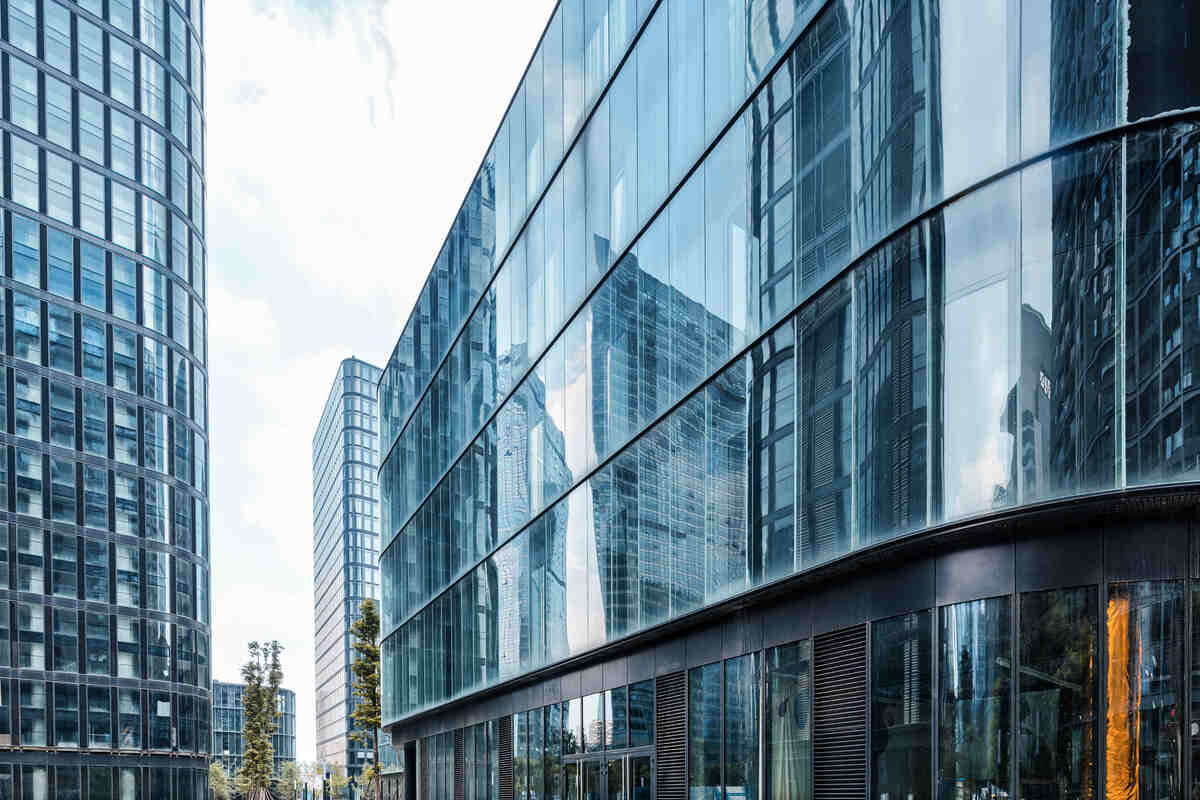
Enter BIPVs (Building-integrated Photovoltaics). These dual-purpose building materials (e.g. shingles, cladding, windows) seamlessly incorporate photovoltaics to realize a building’s maximum potential for generating electricity while concurrently being building materials that maintain (or improve) a building’s aesthetics rather than detract from it.
Michigan University developed the first transparent photovoltaic cells ten years ago, but its efficiency rate was below 5 percent and it only transmitted about 30 percent of light. Since then, advances in design and materials have improved both the efficiency and transparency of solar glass, which has significantly opened up their usefulness and increased the adoption of BIPV windows.
Building Integrated Photovoltaic Window Manufacturers
Stellaris Corporation
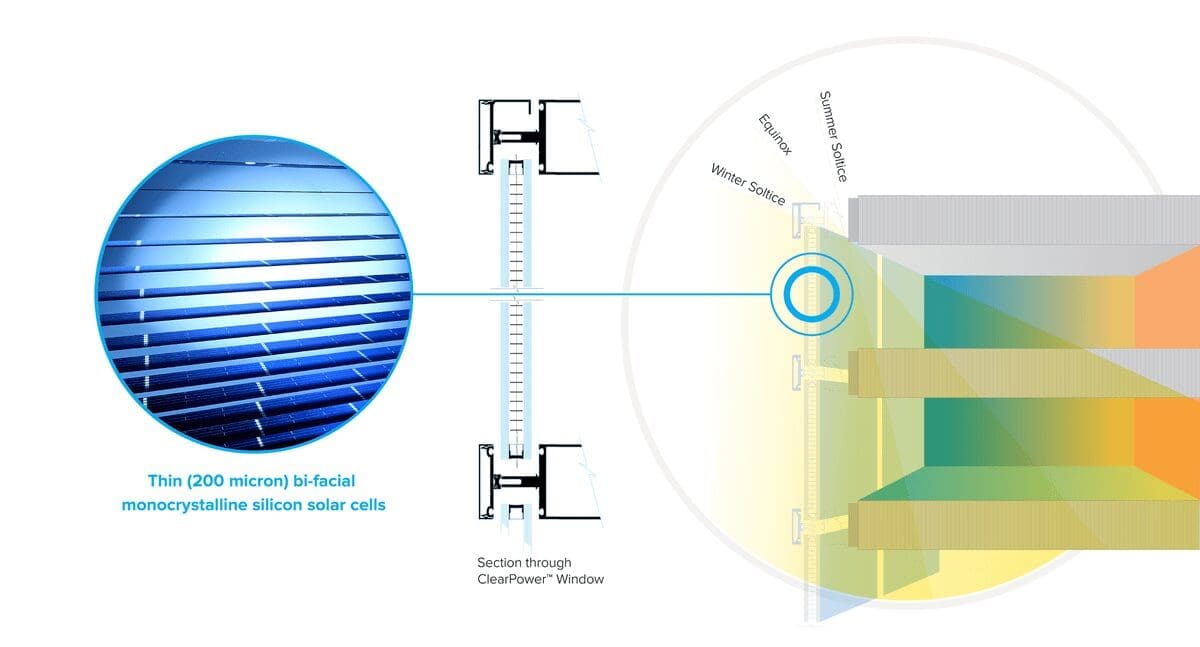
Stellaris Corporation has developed a clear window that uses the same cells as 90 percent of solar panels, which they state can generate almost as much annual power as a non-transparent high-efficiency solar panel. They claim that their windows can harvest five times more electricity than competing technologies. In addition, the design of the windows limits the amount of direct summer sunlight and lets the sun through in colder months to reduce your heating and cooling costs.
Get the Green Building Project Checklist
Use this handy checklist on your next project to keep track of all the ways you can make your home more energy-efficient and sustainable.
A crowdfunding program has been initiated to facilitate the product’s commercial launch. With one week to go, just under a quarter of a million dollars have been raised.
ClearVue PV
ClearVue PV produces solar glass with a VLT (visible light transmission) of up to 70 percent, which brings it to the standard of an average double-pane window that you’d see in a home. Their windows offer a peak production of 30 watts per m2. The company also produces a range of other BIPV products such as solar cladding, spandrel and skylights.
Onyx Solar
Onyx Solar has completed over 350 projects in sixty countries, integrating energy creating transparent glass panels into buildings for major companies like Samsung, Coca-Cola and Hewlett-Packard as well as the Tanjong Pagar, Singapore’s tallest structure.
Their PV glass produces clean electricity but also provides thermal and acoustic insulation. The glass panels are made of heat-treated safety glass and can be fitted similarly to conventional glass panes.
The company produces amorphous silicon glass and crystalline silicon panels. The latter can produce twice as much power from direct sunlight as the former. They are intended for buildings with good exposure to direct sunlight and where maximum power production is required. For hot climates with overcast skies, amorphous silicon glass performs better than crystalline silicon in producing electricity.
Polysolar
UK-based Polysolar started producing PV materials over fifteen years ago and offers a range of BIPV products such as transparent PV glass, solar carports, skylights and facades.
They also produce agrivoltaics, which they claim can have a marginal impact on yield in addition to a range of other benefits such as cutting out harmful UV light, maintaining more consistent temperatures and delivering a direct financial return.
Mitrex
Mitrex is a leading BIPV company based in Ontario, Canada. It offers single, double and triple glazing that integrates seamlessly into buildings and comes in a range of transparency. The panels are aimed primarily at the residential market, and the power output ranges between 310 W and 405W, with efficiency ratings between 15 and 21 percent.
The company has provided solar panels for the facades of many prestigious buildings, including the University of Toronto and the Alberta Hospital. Mitrex has successfully obtained ISO Certification, which indicates a solid commitment to providing high-quality materials and service to customers.
Brite
Brite is a specialist in agrivoltaics. The greenhouse glass it manufactures serves multiple purposes. It produces electricity, protects crops from adverse weather conditions and reduces the amount of water required for crop development. They produce glass both for greenhouses and open-field applications.
Long-Term Benefits of BIPVs

Buildings that incorporate BIPVs in their design and construction benefit from the long-term advantage of producing electricity that, over time, will handsomely reward the initial costs of the installations.
The introduction of BIPVs also results in reduced power consumption to control internal temperatures in the building, as transparent PV panels can manage the amount of sunlight permitted to enter the building. This results in cooler summer temperatures and warmer winter temperatures.
Government Incentives for BIPVs
The Government of Canada offers a 30 percent refundable investment tax credit called the Clean Technology Investment Tax Credit (CT ITC). The goal of the incentive is to spur the adoption of clean technology such as BIPVs and to help the country achieve its goal of becoming net zero by 2050.
To see a full range of incentives available to building owners in Canada read our Guide to Green Building Grants and Incentives in Canada.
BIPV Future Trends
While traditional PV panels have the advantage of producing more electricity at a lower cost, the future of BIPVs relates to their ability to blend into the building and, in many cases, enhance its aesthetics. Their scope of application extends far beyond rooftop positions and incorporates areas like panels, cladding and windows.
Buildings incorporating BIPVs in their structure have an increased commercial value, which will only grow as the emphasis on green energy and buildings grows. Buildings capable of producing all or part of their energy needs are a significant financial advantage for the owner.
In just over twenty-five years, the world will reach the milestone of 2050, and all the aspirations of a greener world will be measured. The role of BIPVs is critical for successfully realizing the aims incorporated in the internationally agreed terms of the Paris Agreement.