Notwithstanding the political environment, 2025 has been full of surprises. Fires raged in California while extreme cold and snow gripped the Southern U.S., and deep freezes set in across parts of Canada. Much like how we must adapt to current events, our built environment must constantly adjust to wild temperature swings and extreme weather.
Climate change – often misunderstood as steady warming – brings above-average temperatures to some areas while others experience record lows, as NASA’s Earth Observatory shows. Many homes built with conventional wall assemblies once felt comfortable in normal winters but now struggle during severe cold snaps and scorching heat, leading to subpar thermal performance and rising energy costs.
Alternative building methods offer a promising solution that prioritizes both thermal regulation and performance. This article compares the thermal properties of natural materials such as rammed earth, straw bale, hempcrete and light straw clay to conventional wall assemblies: wood frame, concrete and steel. This is the second article in our series exploring alternative wall assemblies. If you haven’t already, check out last week’s topic on Fire-Resistant Alternative Wall Assemblies.
Why Thermal Performance Matters
In our changing climate, thermal performance is paramount. It directly impacts energy efficiency, occupant comfort and structural durability. A well-performing building minimizes heat loss in winter and heat gain in summer by mitigating thermal bridging. It also reduces energy demands, utility bills and our reliance on fossil fuels while regulating moisture to prevent mould and structural damage.
Understanding the Status Quo of Conventional Wall Assemblies
Get the Green Building Project Checklist
Use this handy checklist on your next project to keep track of all the ways you can make your home more energy-efficient and sustainable.
Our modern built environment – dominated by wood frames, steel studs and concrete – often falls short on thermal performance. Building codes assign R-values based solely on material properties, ignoring the detrimental effects of thermal bridging, where heat bypasses insulation through studs and other elements. In stud walls, for example, this can cut the effective R-value by 14-18 percent, leaving much to be desired in overall thermal regulation.
Wood Frame
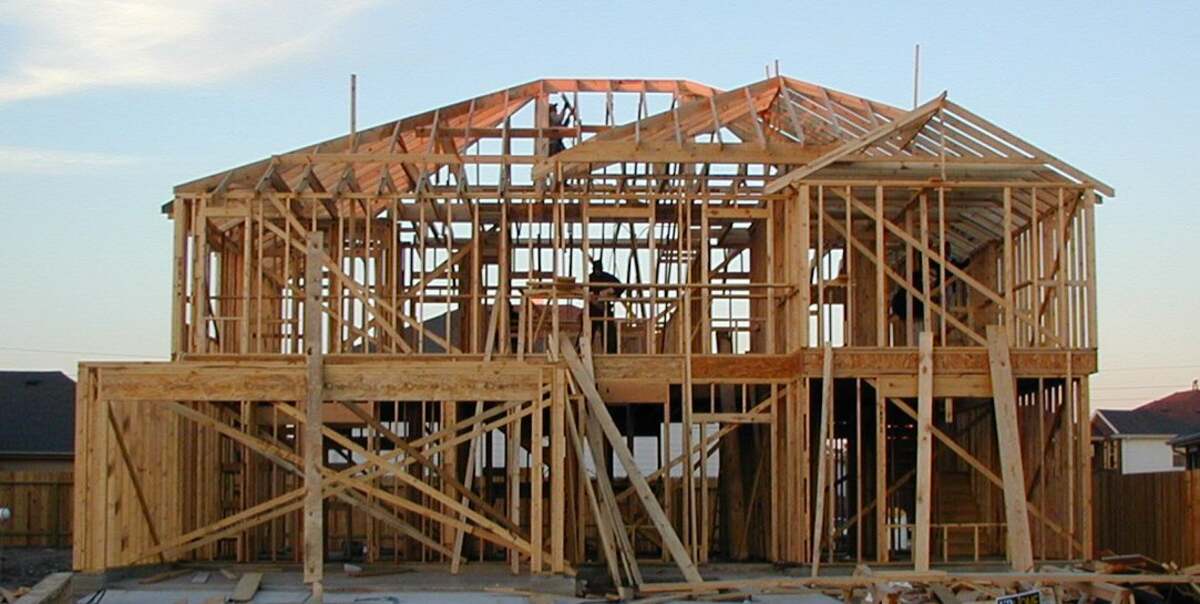
Wood is a natural insulator with a lower thermal conductivity than concrete or steel, which sounds ideal until you consider how wood frame wall assemblies encourage thermal bridging.
Ryan Shanahan, a Passive House rater and green-building consultant at Earth Advantage, succinctly states, “A wood frame assembly represents an 18 percent ‘framing factor’ (the percentage of a wall assembly that is comprised of framing members instead of insulation).” In Canada, where minimum standards call for an R-22 rating on exterior above-grade walls, the effective thermal resistance often falls to around R-18 once thermal bridging is taken into account.
Now, there are methods to reduce or eliminate thermal bridging in wood wall assemblies, such as adding a continuous layer of insulation to the exterior or constructing a double-stud wall that staggers the layout of studs and prevents direct thermal transfer. While effective, both solutions increase construction costs by adding labour and materials to the project scope.
Steel Stud
A steel stud wall assembly may have advantages over wood regarding dimensional stability and resistance to moisture, pests and fire, but it lags far behind when considering thermal performance. Whereas thermal bridging modestly reduced a wood wall’s overall R-value, research by the American Society of Heating, Refrigerating and Air-Conditioning Engineers (ASHRAE) demonstrated that “When used as infill in a 2×6 metal framed wall, the effectiveness of rated R-19 batt insulation may be reduced by a staggering 63 percent.” This means that the stated R-19 rating is cut to basically an R-7 and additional insulating factors are necessary to achieve code-required thermal performance.
Concrete
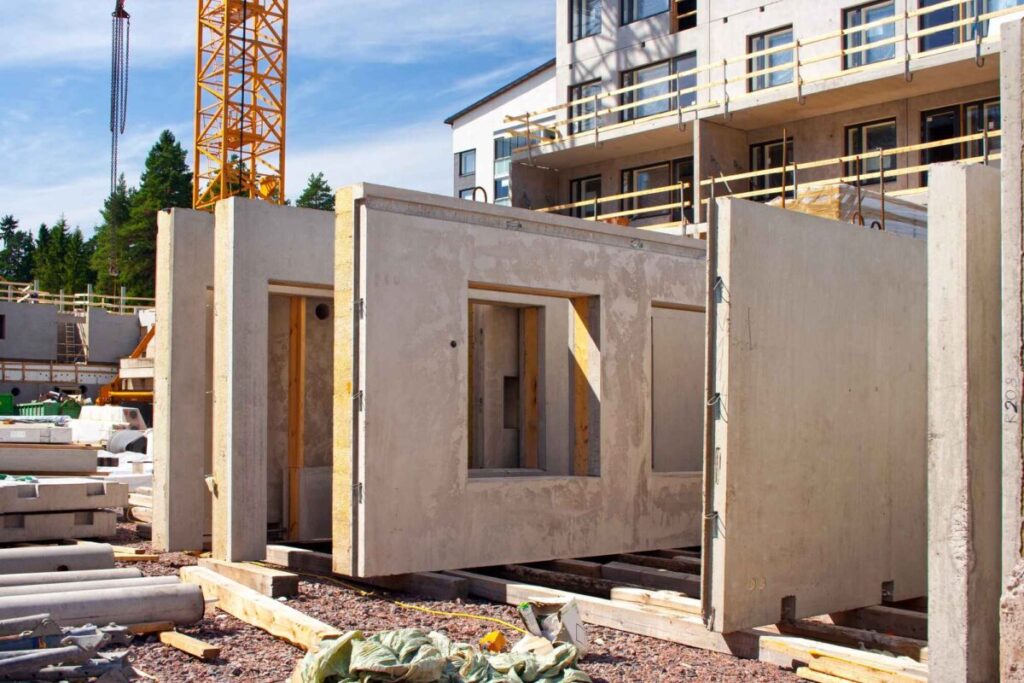
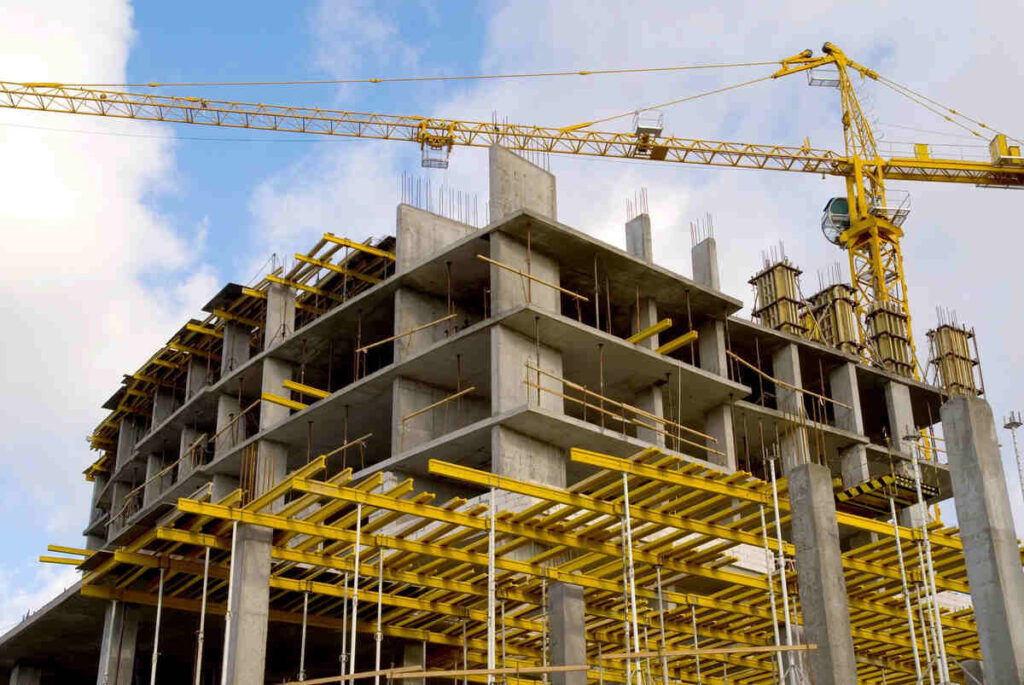
Concrete construction has become a fixture in our built environment for its durability and longevity. However, when it comes to thermal performance, concrete presents challenges. Due to its high thermal conductivity, a bare concrete wall facilitates significant thermal bridging, and a continuous layer of insulation on the exterior side is needed to achieve thermal performance standards.
Many in the building industry believe this wall assembly is superior to wood frame construction, but research by The Engineered Wood Association, a nonprofit trade association, proved otherwise. In a series of tests in climatic zones 3, 4 and 5 (U.S. climate zones), results showed that masonry walls with continuous insulation only modestly outperformed wood and steel framed walls in zones 3 and 4 and stated, “wood framed walls reduce annual energy consumption by 18 percent compared to steel framing and by 10 percent compared to CMU walls. The benefits of using wood-framed wall assemblies become more apparent in increasingly colder climates.”
How Do Alternative Wall Assemblies Stack Up in Thermal Performance?

Straw Bale
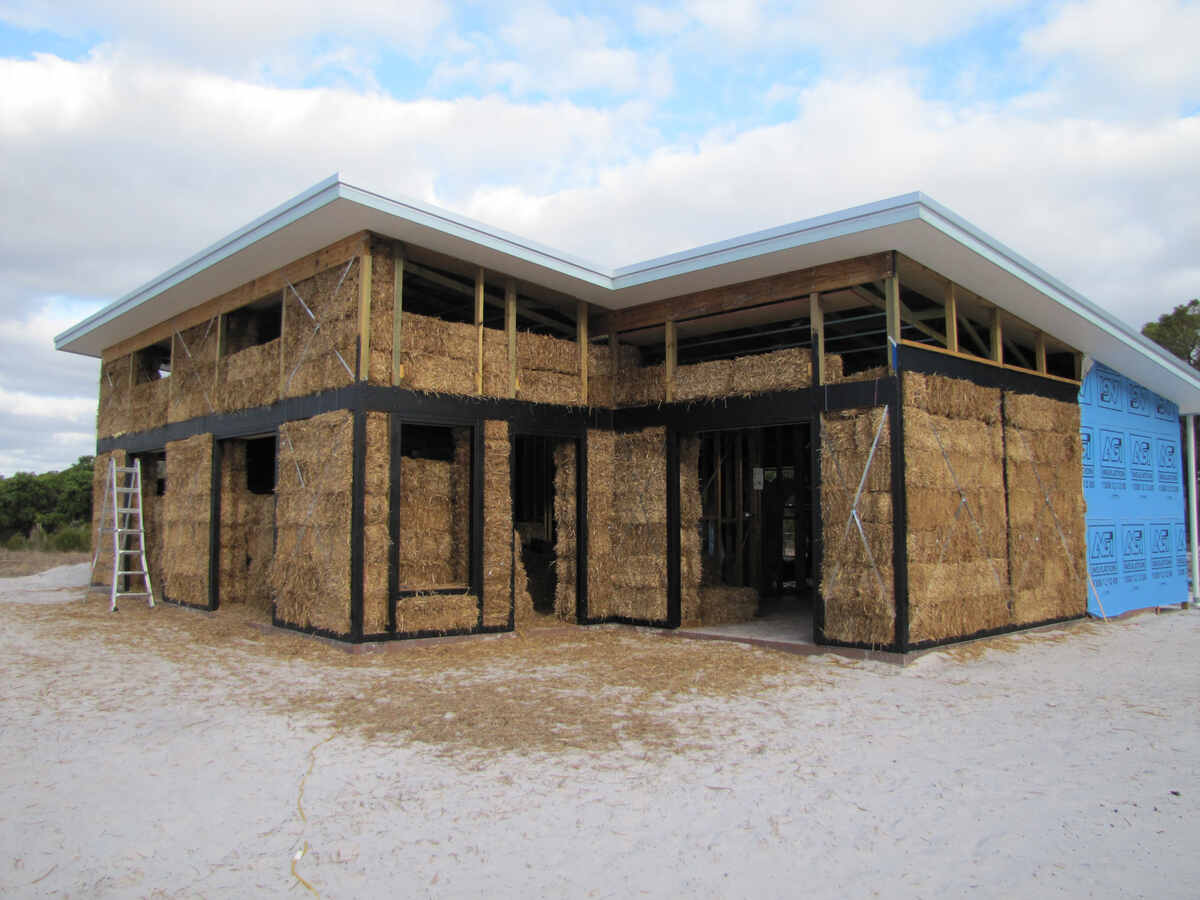
The epitome of thermal performance in an alternative wall assembly is straw bale construction, which achieves high thermal performance while providing structural integrity in one wall system (although most codes require wood frame structural members). According to research commissioned by the California Energy Commission in Sacramento, California, a straw bale wall assembly can reach R-55, depending on the size and density of the bales used. The report from 1998 presented findings that this building method “can decrease the heating and cooling energy usage of a typical house by up to a third over conventional practice.” Furthermore, the research revealed that R-45 was the generally accepted value for two-string, 18“ wide bales, and about R-55 for 23” wide three-string bales.
Further research by the International Passive House Association reveals that straw bale’s high thermal performance lies in its anisotropic thermal properties – the characteristic of a material whose ability to conduct heat varies depending on the direction. In other words, the thermal conductivity is not uniform in all directions, and as such, a straw bale wall works by trapping air in small chambers that effectively prevent convection loops.
Although architectural design constraints and the limited availability of skilled builders pose challenges, straw bale construction holds significant promise for its superior thermal performance.
Read more on this topic in 8 Great Benefits of Straw Bale Construction.
Rammed Earth
You may wonder why I’ve included rammed earth in an article about thermal performance. After all, earth is a poor insulator – it performs at about R-0.25 to R-0.75 per inch – and an excellent thermal conductor compared to other building materials, such as wood. Indeed, this characteristic requires insulation within a rammed earth wall in cold climates.
Still, I’ve included it here because of its thermal mass: the ability of a material to absorb, store and passively release heat. Materials with high thermal mass –such as rammed earth – will moderate temperature fluctuations by absorbing excess heat during warmer periods and releasing it when temperatures drop. This ability makes rammed earth excellent at stabilizing indoor environments, reducing the need for excessive heating or cooling, and improving overall energy efficiency. A properly sealed rammed earth home can achieve an average R-value between R22 and R30, meeting or exceeding code requirements while reducing climate control expenses and remaining unaffected by thermal bridging. While construction costs are typically 5-10 percent higher for rammed earth compared to conventional wood construction, this upfront expense is easily offset in the long term by realized energy savings afforded by the thermal mass.
Read more on this topic in Intro to Rammed Earth Construction.
Hempcrete
Hempcrete is another sustainable alternative, offering a blend of insulative qualities and thermal mass. The material achieves an R-value ranging from approximately R2.2 to R2.5 per inch – depending on its density – while providing effective thermal mass that helps moderate indoor temperatures. Hempcrete can be cast in place – using forms to create the necessary cavity – or installed as pre-cured blocks, much like masonry. As a result, hempcrete has earned its place in the modern builder’s toolkit, particularly for one-storey construction projects, as referenced in the ICC Appendix. As always, presenting detailed information to local code officials is essential to ensure acceptance of this innovative method.
Read more on this topic in 6 Advantages of Building With Hempcrete.
Light Straw Clay
Lastly, light straw clay (LSC) offers a fascinating blend of natural materials to create walls that serve as the structure’s envelope and insulation. LSC is composed of loose straw coated in a slurry of liquid clay – known as clay slip –which binds the straw together to form a monolithic, non-load-bearing wall, then covered in a breathable lime plaster. The resulting density and R-value of an LSC wall can vary significantly based on factors like the proportion of clay to straw and the density of the pack. However, according to Douglas Piltingsrud of the LSC organization Design Coalition, “a 12-inch wall could provide an insulation value of approximately R-20, and extending the wall to 15 inches could push that value to roughly R-25.4.” Experts point out that a 12-inch LSC wall offers thermal resistance comparable to a conventional wall with six inches of fiberglass insulation – but with the added benefit of significant thermal mass, high carbon sequestration and low embodied carbon.
Building the Case for Change
While physical and thermal mass are key factors in the alternative wall assemblies outlined above, the former is often considered a hindrance in the conventional building industry. Yet, in the face of environmental change and the increasing frequency of extreme weather events, the monolithic nature of these systems offers significant added benefits, including structural integrity and enhanced fire resistance. These walls seamlessly combine mass and insulation to drive high energy performance and provide a strong defense against the unpredictable challenges of our climate.
As we move forward, it becomes evident that our conventional building methods must evolve. Alternative assemblies like rammed earth, straw bale, hempcrete and light straw clay offer a promising path forward in thermal performance. While current green building rating systems may not yet fully capture or reward the benefits of mass wall construction, the real-world performance of these materials speaks for itself. In embracing these innovative methods, we set the stage for a built environment that is resilient, energy-efficient and better equipped to safeguard our communities against future climate extremes.
Feature image: Red moon sanctuary (CC BY-ND); Image 1: jaksmata (CC BY SA); Image 2: Kecko (CC BY ND)