
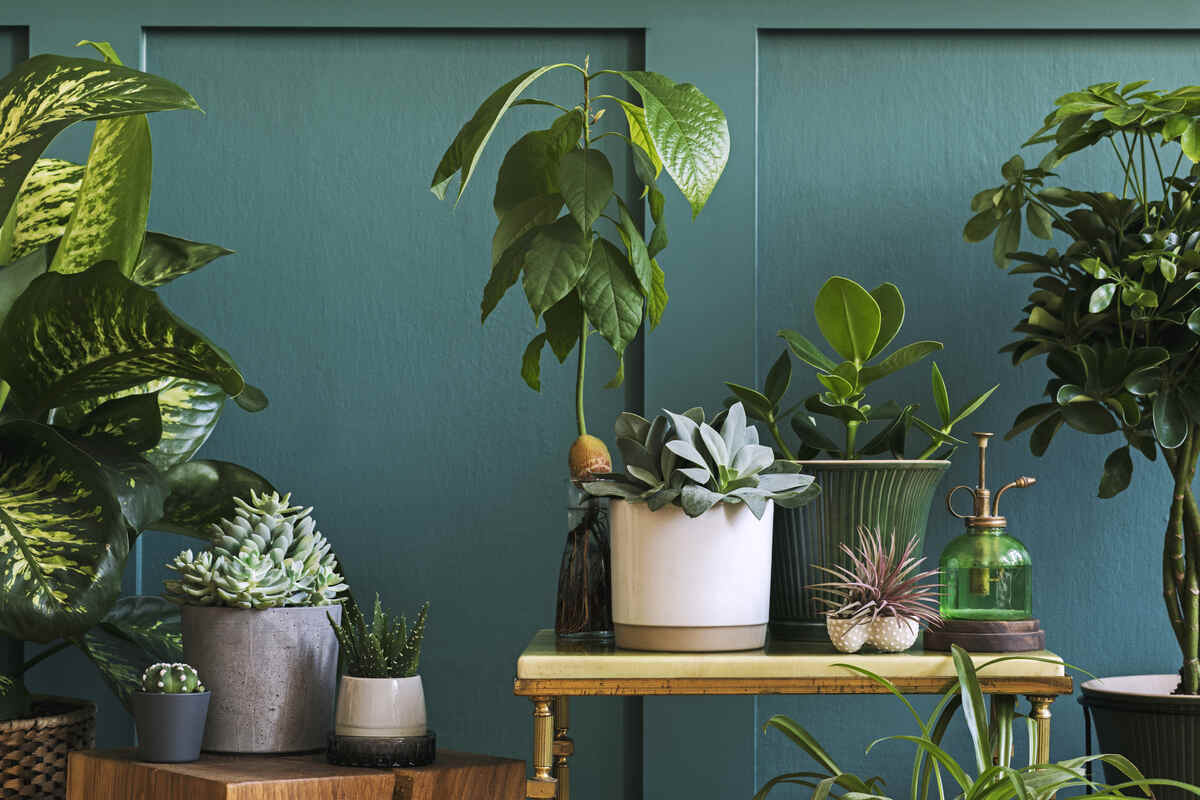
Household plants have been trending up recently since they both add visual appeal to a room while also acting as natural air fresheners. These green beauties quietly remove irritating airborne contaminants while consuming carbon dioxide and generating fresh oxygen. Consider them little, green superheroes who fight unseen toxins and accentuate your house. Learn all about their many benefits, how to care for them, grow them as well as some suggestions on the best varieties to add to your home or office.
The Benefits of Plants in Supporting Health and Wellness
Plants purify the air by absorbing carbon dioxide and producing oxygen as well as reducing atmospheric pollutants. Apart from their beautiful foliage, the leaves and roots are also natural filtration systems that collect airborne particles. Even the tiniest leaf structures, known as stomata, perform their function by straining out air impurities, making your environment as fresh as it can be.
Many consider air-purifying plant varieties as essential allies in promoting overall well-being – mind and body alike. A great advantage is their efficient expulsion of formaldehyde and benzene, which aggravates headaches and tiredness.
Research shows that certain types of plants can clean a whole host indoor pollutants, which are listed in the section below “Creating a Plant Synergy for Cleaner Air.” Some plants also regulate humidity levels, which tend to offset dryness during colder seasons.
Caring for houseplants, moreover, can offer a gentle lift to your mood and concentration, subtly enhancing your daily routine.
Also, interacting with these green friends instills a sense of mindfulness, which is great for mental health in the long term. These botanical pals subtly relieve the stress of a busy office or cosy study by revitalizing the air you breathe.
They provide a familiar environment that improves your attention and productivity. It is like having a soothing partner who is always available to help you find your balance in life.

Get the Green Building Project Checklist
Use this handy checklist on your next project to keep track of all the ways you can make your home more energy-efficient and sustainable.
Creating a Plant Synergy for Cleaner Air
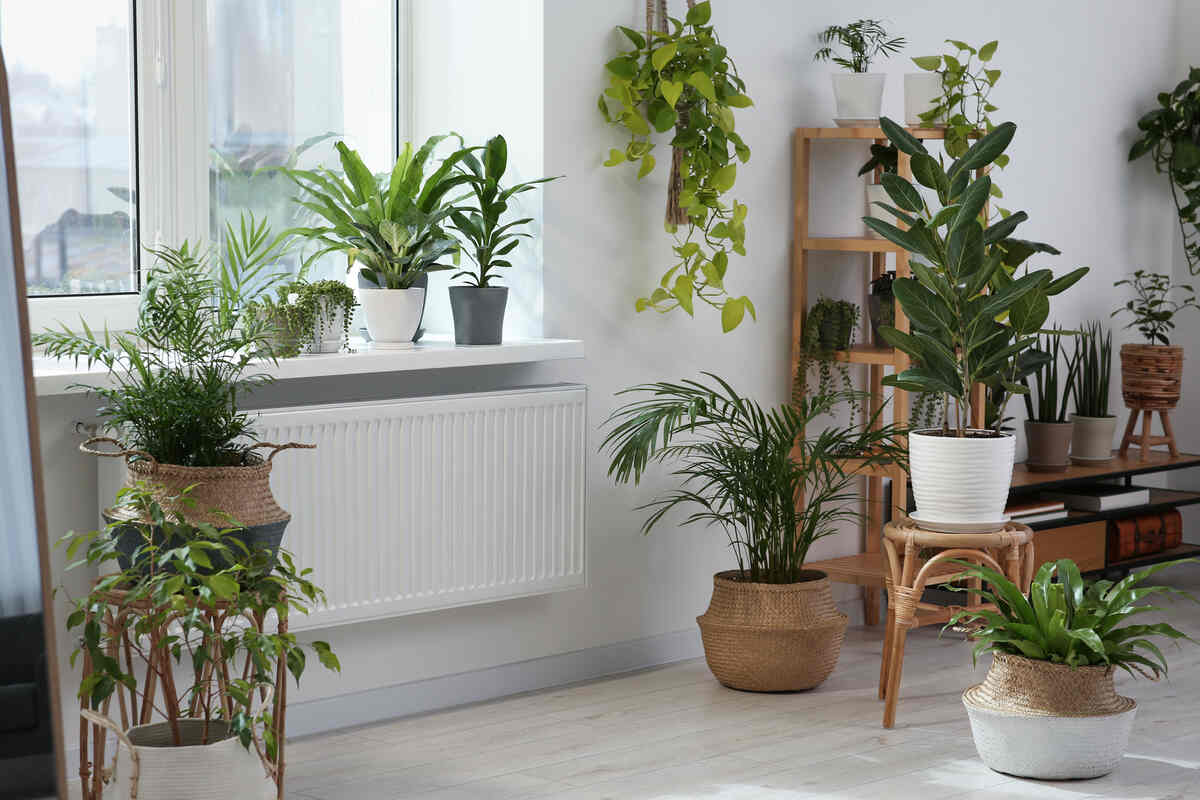
Putting together the best possible air purifying plants is like building a superhero team. Every member battles a specific airborne toxin to help you maintain clean air in your home. Here are some suggestions that filter a range of pollutants.
Snake Plant (Sansevieria trifasciata)
Filters – Formaldehyde, benzene, xylene, trichloroethylene, toluene
Best for – Bedrooms (it converts CO₂ to oxygen at night)
Spider Plant (Chlorophytum comosum)
Filters – Carbon monoxide, formaldehyde, benzene, xylene
Best for – Offices, kitchens (tolerates neglect and removes CO)
Peace Lily (Spathiphyllum spp.)
Filters – Formaldehyde, benzene, trichloroethylene, ammonia
Best for – Bathrooms, low-light areas (also reduces mould spores)
Aloe Vera (Aloe barbadensis)
Filters – Formaldehyde, benzene
Best for – Kitchens, sunny windowsills (also useful for burns)
Areca Palm (Dypsis lutescens)
Filters – Formaldehyde, benzene, xylene, toluene
Best for – Living rooms (adds humidity, good for respiratory health)
Pothos (Epipremnum aureum)
Filters – Formaldehyde, benzene, toluene, xylene
Best for – Bedrooms, offices (thrives in low light and is hard to kill)
Bamboo Palm (Chamaedorea seifrizii)
Filters – Formaldehyde, benzene, carbon monoxide
Best for – Living rooms, entryways (adds humidity and is pet-friendly)
Chrysanthemum (Chrysanthemum morifolium)
Filters – Benzene, formaldehyde, ammonia
Best for – Sunrooms, bright indoor areas (only purifies air when flowering)
Knowing what each plant is good at helps you place them just right to boost air quality. Putting them in the right spots around your interior can give your space a lift. Try different heights and spots to make the most of their air-cleaning skills. Mixing different leaf shapes and colours makes your house not only visually pleasing but also healthier. On a general note, think about each plant’s needs and benefits to set them up in a way that matches your style and makes your place feel great.
How to Care for Air-Purifying Plants
If you want your air-purifying plants to thrive, a little attention to their basic needs will go a long way.
Light matters. Though certain plants, such as peace lilies and snake plants, flourish in low light, they indeed do best in indirect sunshine. Hence, placing them near a window with filtered light or in a shaded corner will help prevent scorched leaves.
Furthermore, watering requires balance. Overwatering is a common mistake that can lead to root rot – often signalled by yellowing leaves and persistently damp soil. Underwatering, on the other hand, leaves plants looking parched, with crispy edges on their foliage. Check the top layer of soil – if it feels dry, it’s time for a drink.
Beyond that, soil makes a difference. A well-draining potting mix is key to avoiding soggy roots. Adding perlite or sand can improve drainage, ensuring your plants stay healthy. By monitoring soil quality, you can adjust your care regimen to keep your plants purifying the air.
Frugal Suggestions for Indoor Gardening
Growing more air-purifying plants does not have to be expensive. You can easily grow plants like spider plants and pothos at home. Just pick a healthy stem with some leaves, cut it below a little bump, and stick it in water or soil. In a few weeks, roots will pop out. When they are about 5 centimetres long, move them to a new pot and watch them thrive.
You can also check out local plant swaps or visit nurseries during sales to find new plants without spending much. These events are excellent for scoring unique plants and learning from fellow plant lovers. Keep an eye out or ask at local gardening centres for deals on your favourite plants.
Placement Tips for Maximum Effect
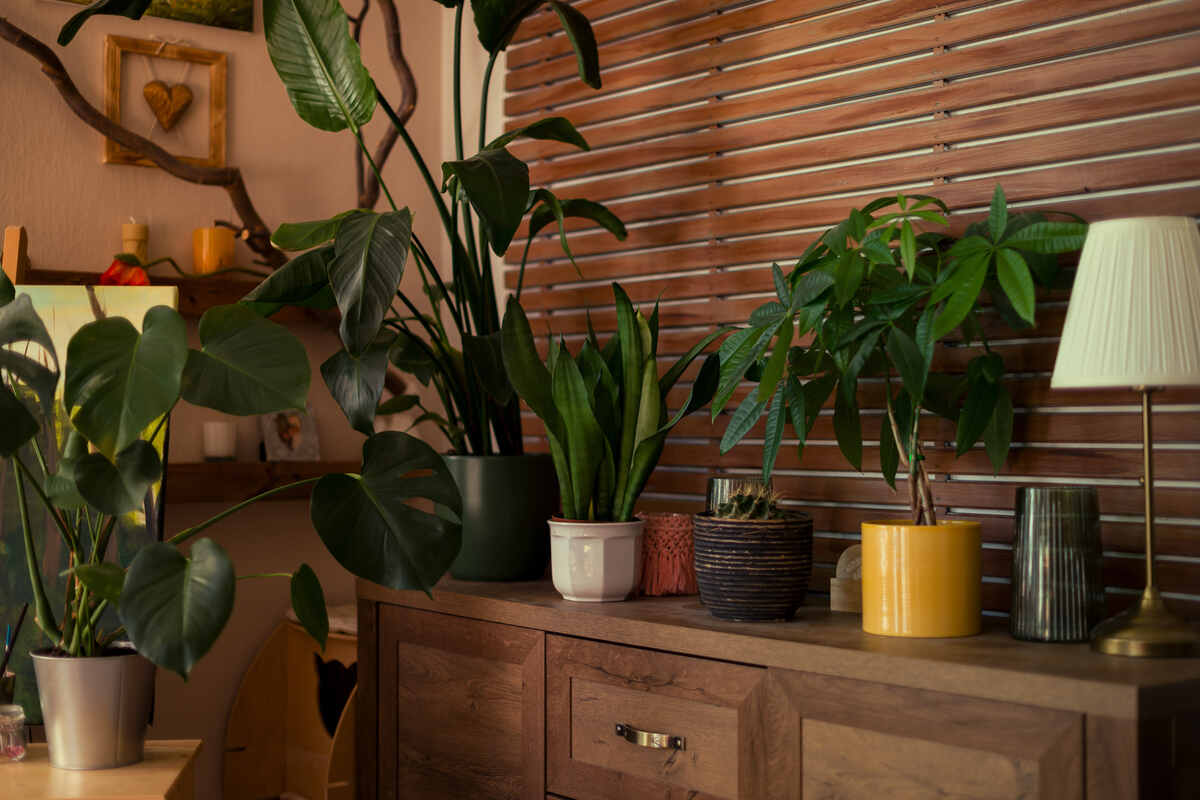
You can make ordinary areas more breathable and more visually stimulating by carefully placing greenery.
High-traffic spaces, such as offices and living rooms, often suffer from stagnant air – much like that one colleague who always forgets to wear deodorant! Introduce leafy buddies, such as peace lilies or spider plants, to clean the air and provide a little natural splendour to counter this problem.
Experiment with varying plant heights and pot designs that align with your decor for a truly harmonious ambiance.
To add a compelling visual element, you can arrange them in a stack on shelves, collect them on stands or even hang them from the ceiling. Just be sure to leave sufficient light for the plants and sufficient room to grow.
Time-Saving Plant Care Techniques
If you are someone who occasionally forgets to water your plants, the ZZ plant could be your best friend, as it thrives on minimal irrigation and adapts well to partial shade. For another long-lasting option, pothos is also quite forgiving, with a very high level of resistance to poor conditions, from rare watering to changing light levels.
If you really have a problem remembering to water your plants, or you’re not around the house much, self-watering pots can be a complete lifesaver, keeping the soil perpetually moist and freeing you from the constant watering chore.
Images from Depositphotos