
In the face of a growing housing crisis and a pressing need for modernization, artificial intelligence (AI) and robotics are paving the way for a new era in Canadian construction.
These technologies, initially slower to penetrate the construction sector compared to industries like manufacturing and automotive, are now offering innovative solutions to increase efficiency and productivity.
By automating labour-intensive tasks, they promise not only to reduce construction timelines but also to address the severe shortage of skilled labour in the country. This technological leap could play a critical role in meeting Canada’s ambitious housing targets and providing much-needed relief in an overheated real estate market.
Promise Robotics: Leading the Charge with AI
One of the companies at the forefront of this shift is Edmonton-based Promise Robotics, a trailblazer in integrating robotics and AI into construction.
The company has developed a system where robotic arms, equipped with AI, autonomously read blueprints and execute tasks like cutting, nailing and drilling. This technology eliminates the need for pre-programming, allowing the machines to adapt dynamically to various building requirements.
Unlike traditional prefabrication factories, Promise Robotics’ portable systems can be deployed in warehouse spaces near construction sites, significantly cutting transportation costs and setup times.

Get the Green Building Project Checklist
Use this handy checklist on your next project to keep track of all the ways you can make your home more energy-efficient and sustainable.
By slashing the average home construction time from ten months to just five, Promise Robotics exemplifies how AI-driven solutions can dramatically enhance productivity.
Their modular approach and cost-efficient setup make them a compelling option for Canadian builders aiming to scale operations amidst a labour shortage.
The implications are significant: faster construction could help close the gap in Canada’s housing deficit, which requires nearly four million homes by 2031.
Horizon Legacy: Revolutionizing Concrete Construction
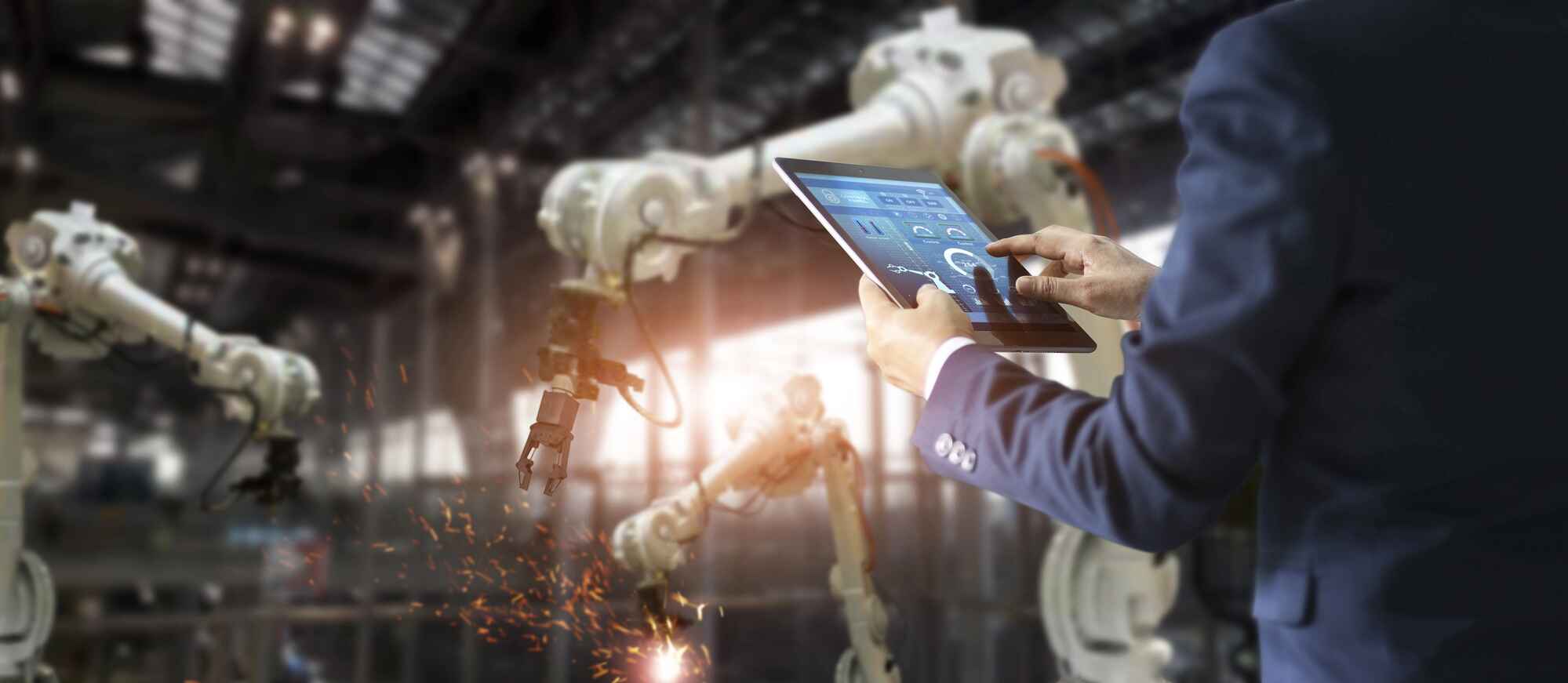
Another Canadian innovator, Horizon Legacy, is using robotics to rethink how houses are built on-site. Their robotic arm, Val 2.0, functions as a portable 3D printer, using a specialized concrete mix to create walls with advanced insulation properties.
Controlled manually but designed for maximum efficiency, Val 2.0 has already completed a 26-unit housing project in Gananoque, Ontario.
With a smaller crew and reduced labour costs, this system demonstrates how robotics can make housing projects more affordable and accessible, particularly in rural and underserved areas.
Horizon Legacy’s approach not only speeds up construction but also helps to attract new talent to the industry by reducing physically demanding tasks. By combining advanced technology with improved working conditions, companies like Horizon Legacy aim to modernize the construction workforce and address its aging demographic.
University of British Columbia’s Smart Structures Lab
Beyond robotic arms, AI is enabling the automation of heavy construction equipment. At the University of British Columbia’s Smart Structures Lab, researchers are retrofitting cranes, excavators and loaders with sensors and wireless connectivity to create autonomous machines.
These AI-driven systems can perform tasks such as material handling and precision placement, reducing the need for direct human operation in hazardous environments.
While still in the experimental stage, this technology could soon become a staple on Canadian construction sites, further improving safety and efficiency.
Global AI and Robotics Innovations with Local Impact
While Canada is advancing in AI-driven construction, several global technologies are setting new standards in automation. These innovations, from precision layout robots to autonomous rebar-tying machines, could significantly impact Canadian homebuilding and help address the housing shortage.
Dusty Robotics has developed the FieldPrinter system, which translates digital building plans into precise, on-site markings with 1/16-inch accuracy. This eliminates human errors, accelerates workflows, and has already cut $3 million in costs and shaved three months off a U.S. project timeline. If adopted in Canada, it could streamline large-scale developments.
DEEP Robotics has introduced four-legged AI-powered surveying robots that perform high-precision mapping and safety inspections, reducing the need for workers in hazardous areas. These could expedite land assessments in Canada’s housing sector.
Built Robotics’ RPD 35 is an autonomous pile driver that installs 300 foundation piles per day, drastically reducing labour costs and project timelines. Similarly, Civ Robotics’ layout robots mark up to 16 miles of construction lines daily, enhancing site precision and efficiency.
Finally, TyBOT, a rebar-tying robot, automates one of construction’s most physically demanding tasks, achieving 99 percent accuracy while tying 1,200 rebar intersections per hour. These technologies, if implemented in Canada, could accelerate construction, reduce labour shortages, and lower costs in an industry that urgently needs modernization.
Canadian Construction and AI: The Road Ahead
The adoption of AI and robotics in construction represents a monumental shift for Canada, bridging the gap between traditional building methods and modern innovation.
By streamlining processes, reducing reliance on labour and offering cost savings, these technologies hold the potential to reshape the industry. Importantly, they address Canada’s dual challenges of labour shortages and housing demand, offering a path towards faster and more affordable home construction.
Images from Depositphotos