
The Emergency Readiness Guide
Download this Free Step-by-Step Checklist to Prepare Yourself for Extreme Weather Emergencies

In this weekly Q&A column, retired builder/building inspector Cam Allen answers readers’ questions about home renovation and climate resilient homes. Have a question? Enter it in the form below.
There has been some amount of media reaction to the recommendations in Europe and Great Britain about emergency preparedness. The real response should be long before you really need to react to any sort of climatic issue. You should learn what to do, in what timeframe and how to respond to individual climatic occurrences as they arrive.
For years the government and first responders used a structured time period, starting with 72 hours and then moving to 48, then 24 hours and then to the actual time to be ready for hunkering down or evacuating, as the conditions determine for your individual case.
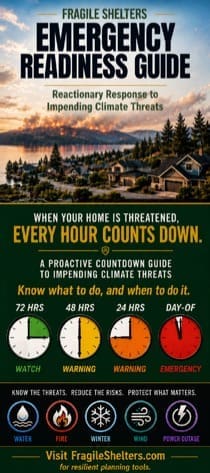
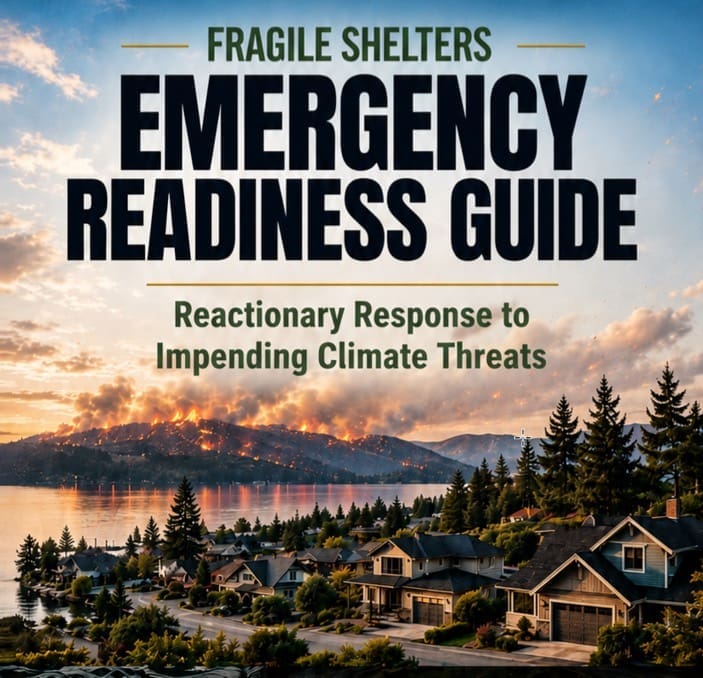
You will see a pamphlet embedded in this week’s column that you can download called the “Emergency Readiness Guide”. This is part two of a three part series of pamphlets we have produced to help Canadian homeowners understand what is necessary to prepare for a major storm (Here is a link to part one: The Home Resilience Triage Guide). These brochures were written with a clear objective, providing a basic and simple explanation as to how to prepare your home. We broke down the five major climate conditions and how to react to them.
We modelled the brochure using the 72hr-48hr-24hr-now process so it blends with some existing government information. Where this brochure is different is the crisis breakdown and you can actually use this as a preparation guide.
Each climate issue has a number of conditions that are relevant to one another and understanding the priorities is fundamental to reacting to the threat. Flooding is the most common climate issue in Canada, making up 80 percent of weather disasters. It is also the one that requires the most regular
maintenance if you intend to stay in your home.
Before we get to your home, you should be aware of your own property, surrounding properties and the community you live in.
What goes on outside your home dictates a lot of how you can or if you should remain in your home. Don’t assume you will have all the necessary municipal support you now enjoy. In fact, assume it will not be operational during a major climate upheaval. If you live in an urban area, document what emergency services they offer and how to avail yourself of them should you need to use them.
Now let’s address your home with respect to extreme rain and the accompanying flooding. Managing the groundwater around your home is the number one pre-planning you must do. Make sure extensions on eavestroughs, drainage ditches or culverts on your property are clear of debris.

Get the Green Building Project Checklist
Use this handy checklist on your next project to keep track of all the ways you can make your home more energy-efficient and sustainable.
If you are planning any extensive landscape improvements, put groundwater drainage upgrades high on the list. Inside your home, never assume your sump pump will manage any major flooding. Move any personal storage up off the floor. It is documented that the majority of flooded basements rarely fill to the ground level. Most common water invasion depth is under 36 inches. Never store valuable documents, data storage, electronics or important personal items like jewellery in your basement. Follow the guide for proper
reaction times.
Winter extremes are becoming more common – climate change is not limited to rising temperatures. The primary step for any extreme cold, snow or the increasing effects of accumulated ice are to have heat. As in the case of rain and flooding, having enough food and medical supplies is essential, enough for at least 72 hours for your entire family. Follow the guide section for winter
preparedness.
Severe wind has risen into the top four of climate conditions: hurricanes and tornadoes are becoming more common. Especially the areas where they were already known, only now they are more repetitive. Securing the outside of your home should be primary, move what you can into your garage or home. The number one insurance claim from a wind storm is downed trees and branches.
While it’s next to impossible to predict, any large branches that currently overhang your home, cut them down.
Wildfire is predominantly in the rural areas and northern parts of our provinces and territories. There are multiple wildfire protection programs available from the federal and provincial governments. The best in Canada is called “Fire Smart” and hands down it is one of the most respected in the world.
If you are in an area where wildfire is a possibility, get involved in this program, especially if you live in an urban area. They have program called the “Neighbourhood Recognition Program” and it provides excellent guidance for any municipality.
When any climate crisis hits, with our reliance on electricity today a backup home generation system is simply becoming a necessity. This downloadable guide lists off the basic steps when your power goes out and how to react if you do not have a home generation system. While gas generators make up the majority of backup home power, it does not have to be a gas or propane powered generator. There are numerous options for secondary power today.
Home battery packs are growing in popularity as one option, so are
solar generators.
When I installed our home generation system about five years ago I took the time to calculate our weekly usage for electricity. I arrived at the calculation that we would need a generator with a capacity of 12,000W to provide us with a whole home backup system. Fully automatic generators are excellent, but they are also a lot of money so we opted for a portable gas generator.
I built a small shed on a patio stone base to house the generator. I anchored and cabled it to the ground. One side has two full sized doors with spring closers installed so they stay open when it’s running. We had a local electrician install a genset panel for safe operation. I built a solid platform inside so the generator was at a safe, comfortable working height. I secured it to the platform – the generator weighs 300 lbs. I added a shelf to hold gas cans in approved storage containers. I bought a dozen 5L gas cans and twice a year I replace the gas in storage, mixing it with a good make of fuel stabilizer. The reason for a bunch of 5L vs the bigger 20 or 25L plastic gas cans is simple.
Refuelling a generator and holding a large can, for example a 25L weighing over 40 pounds is awkward, especially outside during any kind of storm. Every October I follow the manufacturer’s recommendations to the letter for annual service.
In the past, we rarely had a power outage in this part of Western Ontario. Every year since 2021, we have seen power outages increase dramatically. This past year we were without power for nearly 90 hours, mostly over the winter. That is more than enough reason to have a home generation system.
Read more on this topic in Is a Home Generator Becoming a Necessity? How They Work, What They Cost and How to Install One Safely»
Images from Depositphotos
Have a Home Renovation Question?
Write it down below and we’ll get back to you. All questions get answered – every week, we’ll select one for publication in the column.


