
Choosing the Right Systems for Better Indoor Comfort, Clean Air and Early Fire Detection

In this weekly Q&A column, retired builder/building inspector Cam Allen answers readers’ questions about home renovation and climate resilient homes. Have a question? Enter it in the form below.

This week I am going to touch on three subjects that see more use and need more understanding with winter approaching. It is no secret that energy costs are rising with no apparent levelling out on the horizon.
Management of your home heating system is essential, as is maintaining a healthy air flow from your furnace. Not only does this help your pocket book, it has side benefits of helping your system save energy and improve indoor air quality.
Programmable Thermostats
Production model programmable thermostats have actually been around for over 100 years. We can thank a gent by the name of Mark Honeywell for inventing a clock-based thermostat in 1906. However it was comfortably into the 1970s before digital and microcomputer programmable kinds became popular. Smart thermostats as we know them now were first available around the early 2000s. Programmable really has two meanings, you can program either a wifi or a smart thermostat to heat or cool your home. So what is the difference? All smart thermostats are wifi capable and utilize the internet to operate their programs. However not all wifi thermostats are smart. Wifi thermostats function on your settings. Smart thermostats are the next step up in the evolution of remote home temperature control. A smart thermostat
has the capacity to recognize your occupancy habits and adjust your temperature accordingly.
There are actually three kinds of thermostats in the marketplace today, a standard manual digital readout thermostat, next up is a wifi model that allows you to remotely set up the operation and level of temperature and the top of the design today are smart thermostats. They are reputed to reflect energy savings in the 10-20 percent range, depending upon the make or model. Smart thermostats know when to adjust temperature settings when you are not home – it will know if you are home or not or asleep. They are often marketed as “smart wifi” and can be linked with room sensors that allow you to
select the temperature in a specific room for sleeping for example.
When these thermostats first came out they were well over $300. Today I have seen them around $200 and one model I know of came with a smart room sensor in that price range.

Get the Green Building Project Checklist
Use this handy checklist on your next project to keep track of all the ways you can make your home more energy-efficient and sustainable.
Furnace Air Filters
The other “getting ready for winter” question I often get is the type and cost of decent pleated air filters for your furnace. If you want a higher MERV rating they do cost more.
First lets understand what that term MERV is. Minimum Efficiency Reporting Value is the industry method to measure how effective a furnace filter is, the higher the number the more effective the filter is. While most homeowners are aware of the pleated style, I do get questions about the other type, known as electrostatic filters.
Electrostatic filters have actually been around for nearly as long as programmable thermostats. They were first invented to catch industrial particle mists and fumes in 1907. Known as passive electrostatic filters they use a woven media that generates a static charge from airflow, capturing particles in the air. They are available in two kinds: powered electronic air cleaners and the passive washable type. The passive type will fit into the standard filter rack on most conventional furnace ductwork.
WATCH | How to Choose the Right Furnace Air Filter
The largest difference is the long-term cost and the waste produced by standard pleated filters. Both kinds have one major consideration, if they are not cleaned, as in the case of an electrostatic or replaced as in a pleated filter, they can restrict the airflow and affect their filtration ability and lifespan of the fan motor.
So which one should you choose? If you are looking for cleaner air in your home then look at using a pleated filter with a MERV 13 or higher rating. The negative is your long-term waste and cost of replacement every 1-3 months and at least twice in the summer if you have a conventional air conditioner.
If you are looking for less waste, long-term cost savings and are prepared to wash your filter out every month, then an electrostatic may work. They must be dry before you reinstall them however as they can promote mould if they are used while still damp. If you can accept a MERV rating of 10, then a passive electrostatic may be suitable for you.
If you want a MERV rating over 10 then your only option is to install an electronic electrostatic air cleaner. While they are very effective, the upfront cost is pricey. I have seen decent ones installed ranging from $800–1500. It does come down to your own standards and occupancy health. If someone in the home has allergies or asthma then the higher the MERV rating your system can handle the better and this generally means a pleated HEPA style filter. If less waste and long-term savings are important and you can accept a rating of 10 then give an electrostatic filter a look at.
Smoke Detectors
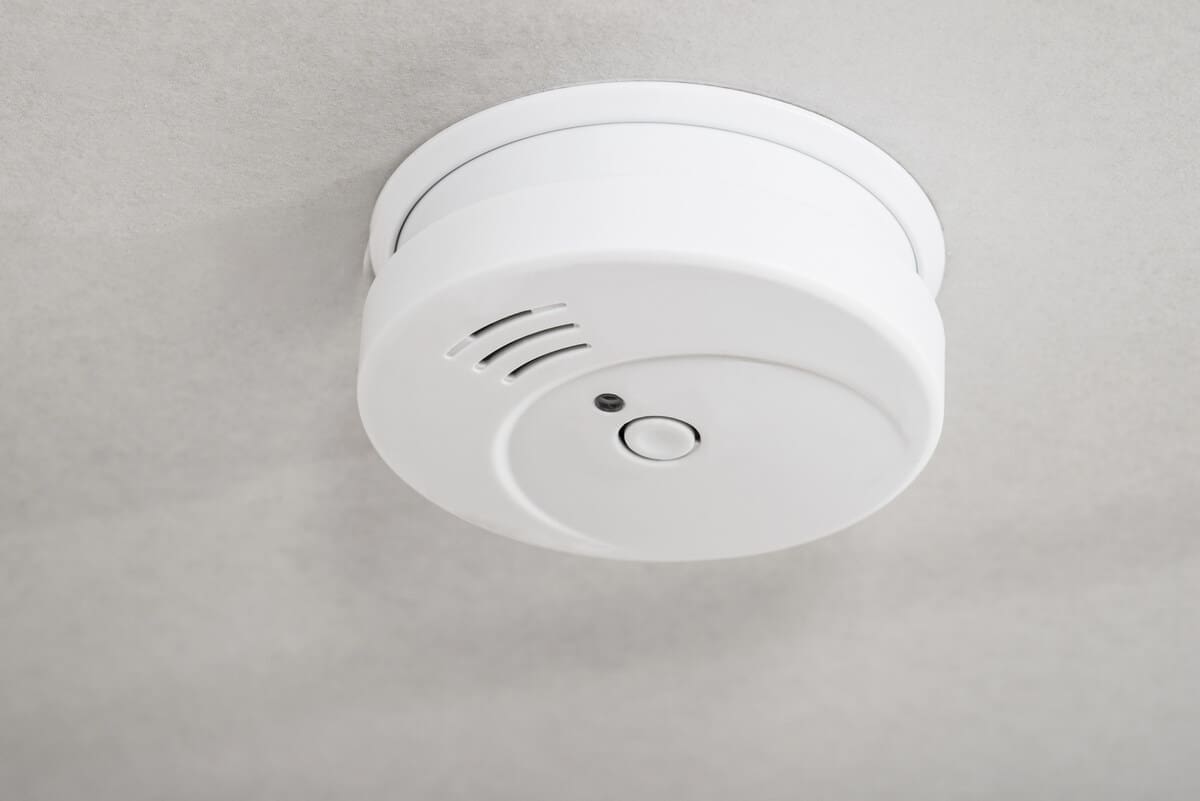
There is a blitz by most fire departments that happens in the fall, checking homes for smoke detectors. If your home was built after a specific date, say for example Ontario in 1990 or some provinces going farther back to 1982 like New Brunswick then interconnected smoke detectors on all levels were the law. There were some municipal regulations well back into the 70s. So what is someone with an older home to do, especially if your home is two or three storeys when a smoke detector is mandated for every level, especially outside bedrooms.
You can install battery-operated smoke detectors on each level. The drawback has always been, if one goes off on one floor it does not necessarily mean the rest do, significantly reducing the alarm time for occupants on the other floors.
Today wireless interconnected smoke detectors using RF communications to link alarms on every floor are readily available. They all sound simultaneously when smoke is detected. When they first became available they were expensive but not anymore. Today I have seen reputable wifi interconnected smoke detectors with the now mandated carbon monoxide option selling for under $200 for two detectors and if you need more they run around $50–60.00 each.
The most important thing to remember, you must buy the identical make as most I am aware of are not compatible with other brands. Accessories for home energy savings, air quality, maintenance and safety have evolved significantly in the past 10–15 years to the benefit of all occupants of any home.
Images from Depositphotos
Have a Home Renovation Question?
Write it down below and we’ll get back to you. All questions get answered – every week, we’ll select one for publication in the column.
