
Access Control Security Trends Reshaping Businesses

Article Summary
Commercial security is moving away from plastic keycards towards phone-based credentials, contactless readers and software that interprets video in real time. The payoff is faster entry, tighter audit records and fewer false alarms. The question is no longer whether to modernize, but which combination fits the building, the budget and the daily flow of people through the doors.
Most commercial buildings still run on entry technology that predates the smartphone in your pocket. Plastic cards get cloned, lost or passed between employees, and the readers that scan them were designed for a threat model fifteen years out of date.
As businesses reassess how they protect staff, inventory and data, access control security has shifted from simple door locks towards connected entry systems. Three trends lead the change: mobile credentials turn an employee’s phone into a secure key, contactless readers remove shared touchpoints and AI-assisted monitoring flags unusual behaviour before it becomes an incident.
Adoption rarely happens all at once, so knowing where each delivers genuine value matters more than chasing the newest product on the market.
Why Mobile Credentials Are Replacing Physical Cards

Get the Green Building Project Checklist
Use this handy checklist on your next project to keep track of all the ways you can make your home more energy-efficient and sustainable.
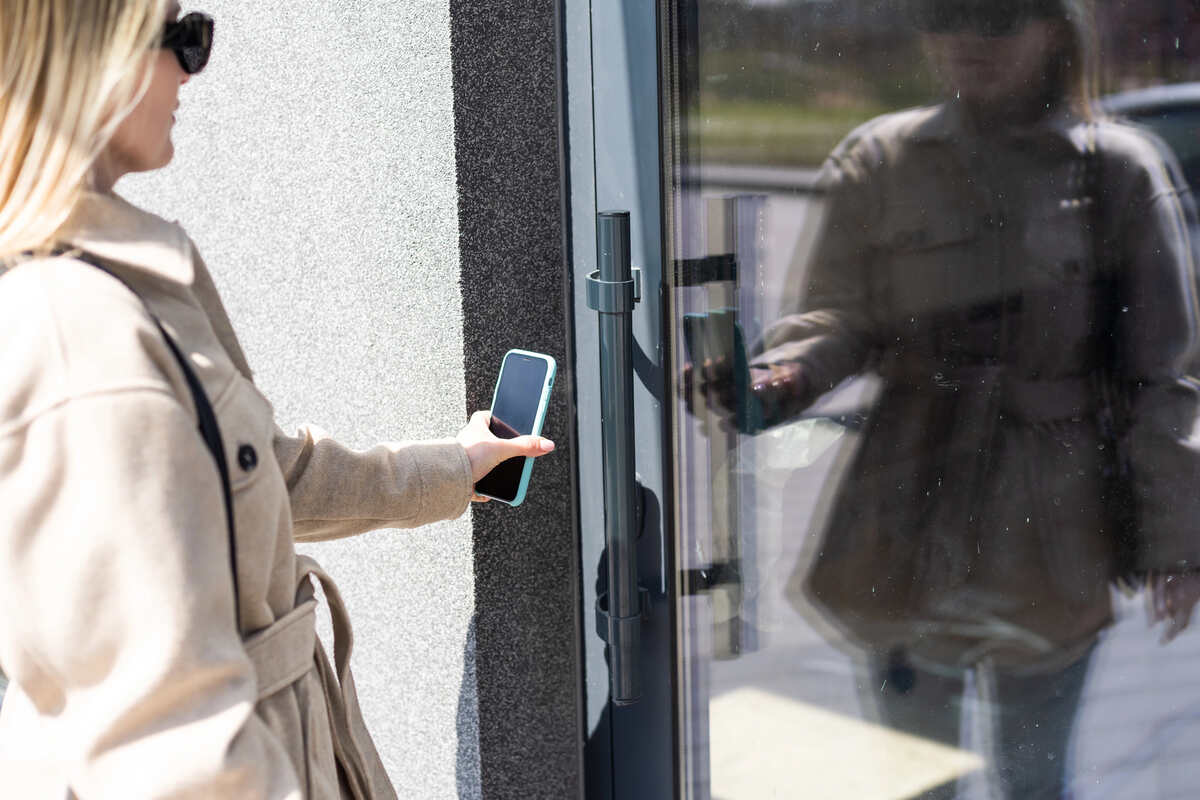
The plastic keycard has served buildings for decades, but most security managers know its failure modes by heart. A phone-based credential closes those gaps because it lives on a device the user already guards carefully, protected by biometrics and encryption.
What Changes When the Phone Becomes the Key
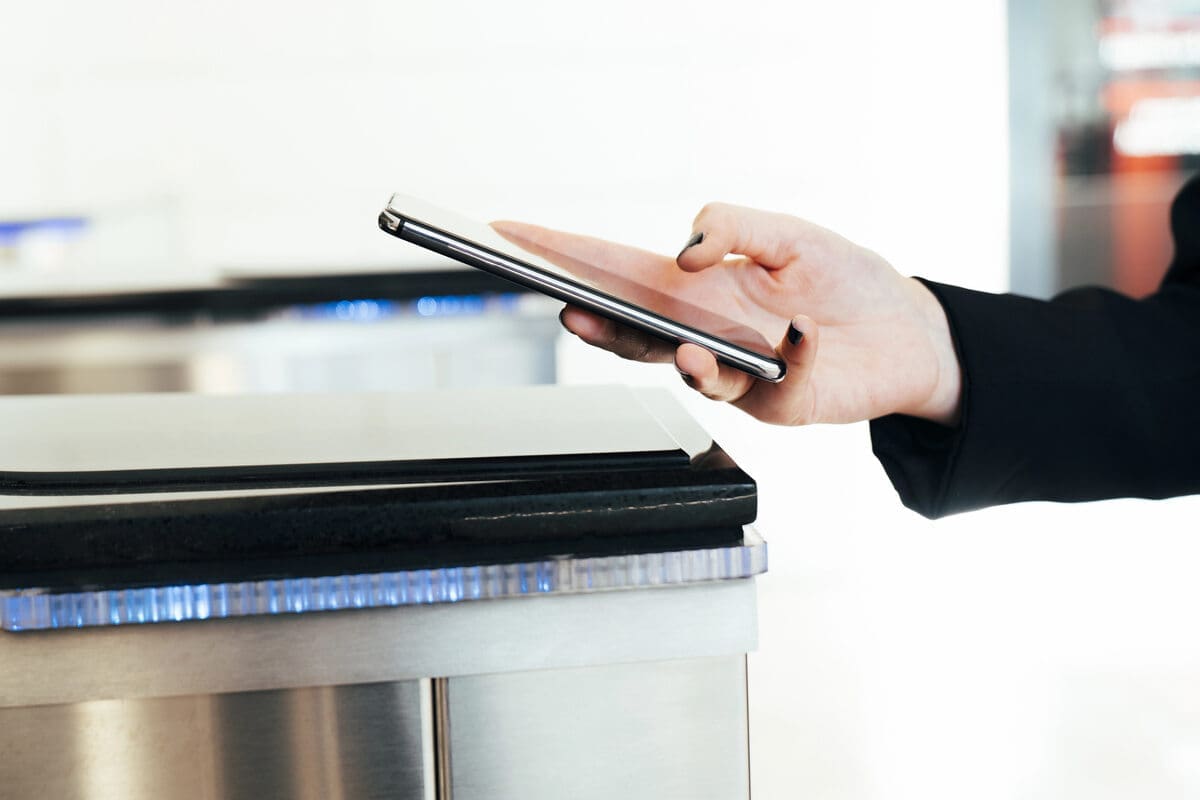
Mobile credentials communicate with readers through Bluetooth or Near Field Communication, and they can be issued or revoked remotely in seconds, which suits sites with rotating contractors or multiple branches.
When an employee leaves, an administrator deactivates the credential from a dashboard rather than chasing down a missing fob and most people are far less likely to misplace a phone than a card. This responsiveness is where modern access control security outperforms the legacy approach.
Weighing the Trade-Offs Against Legacy Hardware
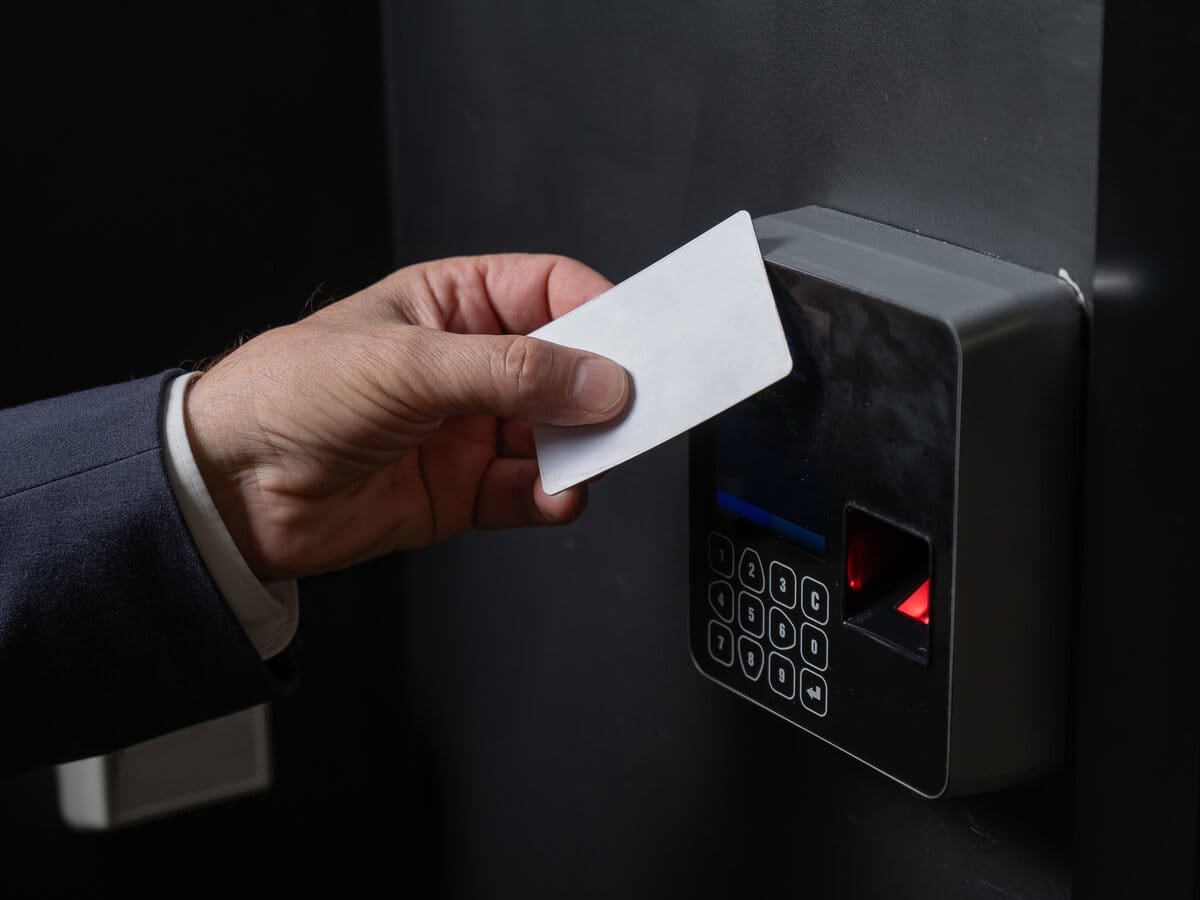
Older card access systems still hold an advantage in pure simplicity, and they do not depend on a charged battery. The practical comparison looks like this:
| Factor | Mobile Credentials | Traditional Cards |
| Issuance speed | Instant, remote | Physical handoff required |
| Cloning resistance | High (encrypted) | Low to moderate |
| Cost per user | Lower over time | Recurring card expense |
| Failure point | Dead battery | Lost or demagnetized card |
| Audit detail | Granular, timestamped | Limited |
Pro Tip: Before committing to a phone-first rollout, audit how many of your access points support reader firmware updates. Retrofitting older readers is often cheaper than full replacement, and it protects equipment you have already paid for.
Touchless Entry and the Shift Towards Frictionless Access
Demand for contactless movement through buildings accelerated sharply in recent years, and it has not retreated. Hygiene aside, touchless entry moves people through busy thresholds faster, which matters in lobbies, parking structures and corridors where queues form at shift change.
How Frictionless Readers Actually Work
A touchless access control system detects an approved credential as the user approaches, then releases the lock without physical contact. The technology ranges from long-range Bluetooth and wave-to-open sensors to facial recognition at higher-security doors. The result is smoother flow and less wear on shared hardware such as keypads and handles.
Matching the Method to the Door
Not every entrance needs the same level of sophistication, and over-specifying wastes budget. A practical hierarchy helps:
- Perimeter doors benefit from medium-range detection that balances convenience against tailgating risk.
- Interior sensitive areas justify facial or multi-factor verification where the protected space carries high value.
- Common amenity points, such as gyms or bike rooms, work well with simple wave sensors.
Frictionless design does introduce a familiar concern. When doors open easily, tailgating becomes the weak link, so pairing touchless readers with anti-passback rules or video confirmation keeps convenience from undermining control.
How AI Monitoring Adds Intelligence to Building Security
Cameras have always recorded, but until recently, a human had to watch the footage for it to mean anything. AI-assisted monitoring interprets video as it happens, distinguishing a delivery driver from a loiterer and a propped door from a routine exit.
From Passive Recording to Active Detection
Modern analytics establish a baseline of normal activity, then surface deviations for human review. A door held open past a threshold, movement in a restricted zone after hours, or a vehicle circling a lot repeatedly will trigger an alert. Layering this intelligence onto a door access control system turns scattered events into one security picture that staff can act on quickly.
Reducing Noise So Alerts Stay Meaningful
The persistent failure of older video setups was alarm fatigue: so many false triggers arrived that operators stopped trusting them. Better classification solves much of this:
- Object recognition separates people, vehicles and animals, cutting nuisance alerts.
- Behavioural patterns flag intent, such as someone testing multiple locked doors in sequence.
- Forensic search lets investigators find a specific event in hours of footage within seconds.
Providers integrate cameras and alarm systems with entry hardware, so a flagged event and the credential used at that door appear in the same record, which shortens investigations.
Video analytics offer a number of benefits. According to Calgary-based Supreme Security, “Video analytics can include motion detection, facial recognition and object tracking. In turn, it reduces security breaches and enhances employee safety and the ability to make data-driven decisions for operational improvements, ultimately leading to increased security and efficiency.”
Building a Smarter Entry Strategy for the Years Ahead
The move towards phones, contactless readers and intelligent video is less a single purchase than a sequence of upgrades. Each addresses a specific weakness in legacy hardware, and the strongest deployments combine them according to how a building is actually used.
For decision-makers planning their next step, the lasting value of modern access control security lies in systems that adapt to risk rather than reacting to it after the fact.
Images from Depositphotos

