
How to Find the Right Eco-Friendly Home Builder in Calgary


During Alberta’s deep cold snap in 2024, temperatures dropped below -30°C. Cold-climate heat pumps across the province kept running without a wave of reported failures. That result matters in Calgary, where winter is the real test of any green building claim. The best sustainable builders here are the ones whose homes perform when heating demand is highest, and they are easier to identify than most buyers expect.
This guide sets out the standards that separate a genuine eco-friendly builder from one that uses the language for marketing. None of it depends on a brand name. It depends on certifications, building-science numbers and provincial programs that any buyer can check.
The Marks of a Sustainable Builder
Calgary’s strongest eco builders work to recognized certifications rather than slogans. Built Green Canada, an Alberta-based program, certifies homes against a checklist that covers seven areas: energy use, materials and methods, indoor air quality, ventilation, waste management, water conservation and overall home durability. Homes earn a rating of Bronze, Silver, Gold or Platinum based on how many measures they meet.
The program’s Net Zero Energy+ label sets a higher bar. A home with that label must produce as much energy as it uses across a year and also reach Built Green Gold or Platinum on the wider checklist.
The Canadian Home Builders Association also runs a Net Zero Builder qualification while ENERGY STAR and other certification organizations also offer recognized standards for new construction. A builder who holds certifications such as these has been audited by a third party. That audit is the difference between a sustainable home and a home described as one.

Get the Green Building Project Checklist
Use this handy checklist on your next project to keep track of all the ways you can make your home more energy-efficient and sustainable.
The Building Envelope
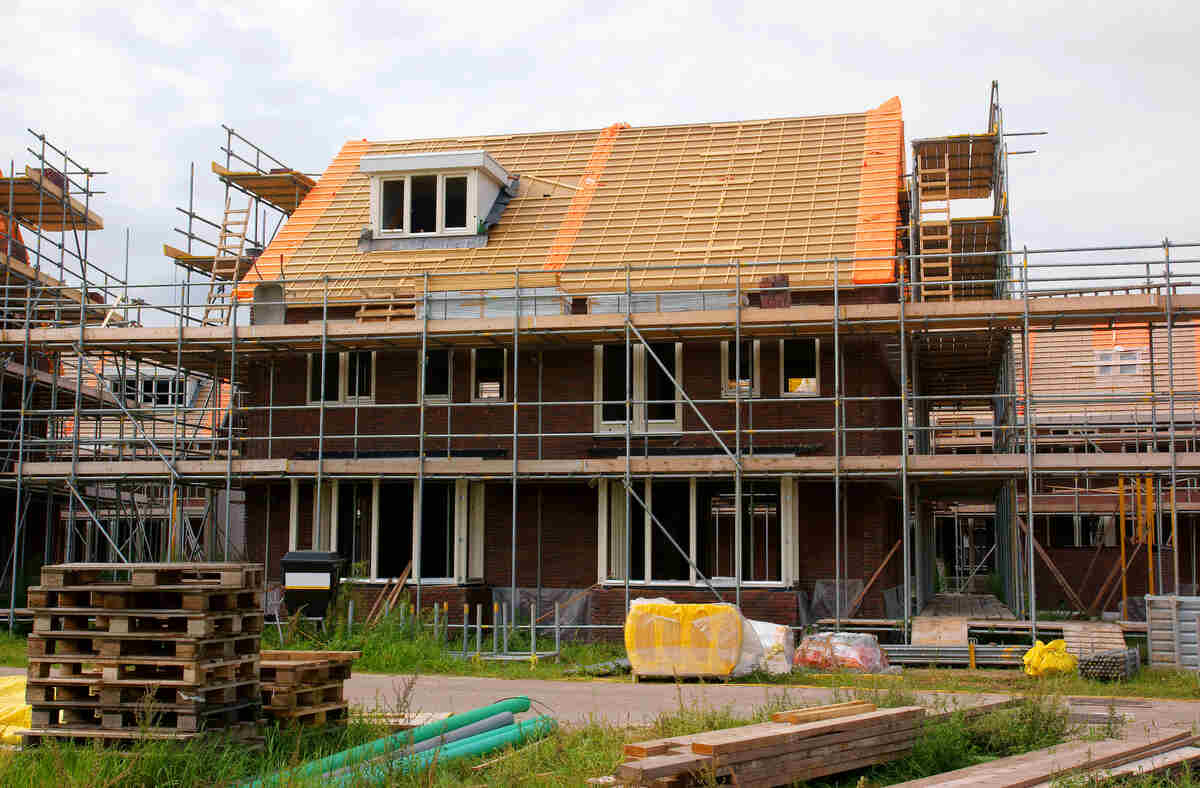
Most of the work in a green home is hidden inside the walls. A net-zero house in Alberta typically uses R-40 walls and an R-60 roof, against R-20 and R-40 in a conventional build. Triple-glazed windows and careful detailing around joints reduce the heat that escapes at the weak points of a standard house.
Airtightness is the other half of the equation. A certified home reaches under 1.0 air changes per hour, while a standard new build measures 3 to 5. The tighter the envelope, the less energy the home needs, and the smaller the heating system can be. A builder who treats the envelope as an afterthought cannot reach net zero regardless of the equipment installed later. This is why the best builders test airtightness with a blower door before they finish the interior.
Heating in a Cold Climate
Heating is where Calgary buyers worry most, and the recent data is reassuring. A modern cold-climate air-source heat pump is far more efficient than a gas furnace. Independent analysis of heat pumps puts their coefficient of performance between three and five, so each unit of electricity returns three to five units of heat. Households moving off oil or gas heating save between $700 and $3,500 a year on utility bills, depending on the system they replace.
A builder who sizes the system correctly can heat a Calgary home through the coldest weeks on electricity alone, with a backup only for the rare extreme. The same equipment also cools the home in summer, which a gas furnace cannot do.
Choosing a Certified Builder in Calgary
Certification gives a buyer a short list to work from. If you’re buying a home in Calgary, you can ask a builder for green building credentials such as Built Green, LEED, Net Zero and confirm it directly with the certifying body. The same approach can work for a resale home, as many certifications remain associated with the property rather than the original owner.
The second question is performance data. A serious builder will share the modelled annual energy use and the blower-door test result for its homes. Those two numbers tell a buyer more than any showroom visit. If a builder cannot provide certification, test results, or other third-party verification, buyers have little independent evidence to confirm that the home performs as claimed.
Water, Materials and Indoor Air
A net-zero rating measures energy, but the better builders go further. Built Green’s checklist credits low-flow fixtures and drought-tolerant landscaping that cut water use in a dry prairie climate. It rewards low-emission paints, sealants and flooring that keep indoor air cleaner, which matters more in an airtight house where less outside air leaks in. Because a sealed home cannot rely on leaks for fresh air, better builders install heat-recovery ventilators, a standard feature of high-performance building practice.
Construction waste is the part buyers rarely see. A certified builder diverts framing offcuts, drywall and packaging from landfills and documents the amount diverted. None of these measures changes the look of the finished home, yet together they mark the line between a genuinely sustainable build and one that is only efficient on paper.
The Cost of Building Green

The premium is real and worth stating plainly. A net-zero home in Alberta costs roughly $65,000 to $90,000 more than a standard build, and about $35,000 to $40,000 of that is the solar array. Lower energy bills offset part of the gap each year, and a smaller heating system recovers some of the upfront cost. The savings case is well documented. One British Columbia study estimated that switching homes to heat pumps could save about $675 million a year, though the upfront premium still keeps these builds out of reach for many.
The monthly math is closer than the sticker premium suggests. When energy use falls far enough and solar covers most of what remains, the combined mortgage and utility payment can be close to that of a standard new build. For a buyer who plans to stay for many years, the case is strong. For a buyer who expects to sell soon, the premium is harder to recover.
Rebates and Financing
Alberta offers tools that lower the entry cost. The Clean Energy Improvement Program lets owners finance solar, insulation and heating upgrades through their property tax bill, with no money down. A cold-climate heat pump can qualify for rebates between $2,500 and $5,000. Programs like these, along with other home energy rebates, ease the cost for owners who cannot cover every upgrade at once. Discover more rebates in our Incentive Finder.
Buyers who finance an energy-efficient home through a CMHC-insured mortgage can claim a refund of up to 25 percent on the insurance premium. These programs change the calculation for anyone weighing a green build against a conventional one, and a good builder will know which ones apply to a given project. Find out about green home financing options in 9 Green Loans and Mortgages You Can Use to Finance Your Green Building Project.
Images from Depositphotos

