Why Don’t More Homes Have Green Roofs?
Architect Bruce Greenway on What Drives Homeowner Adoption of Green Roofs

In November 2025, Toronto’s Green Roof Bylaw was repealed, which required green roofs on new buildings with a gross floor area exceeding 2,000 square metres. Since 2009, the bylaw had enabled more than 1,200 green roofs across the city, diverted an estimated 550 million litres of rainwater annually and seeded a local industry worth over $90 million in gross output.
The repeal came months after the Insurance Bureau of Canada reported that 2024 had shattered all records as the costliest year for severe weather losses in Canadian history, with insured damages exceeding $8.5 billion, twelve times the annual average from the previous decade, driven in part by flooding in the Greater Toronto Area.
The benefits of green roofs are well-established. They reduce stormwater runoff, moderate the urban heat island effect, extend the lifespan of roofing membranes by shielding them from UV exposure and thermal cycling and provide habitat for pollinators. Studies show that adding green roofs to urban buildings can reduce air temperatures by 1.5 to 2 degrees Celsius.
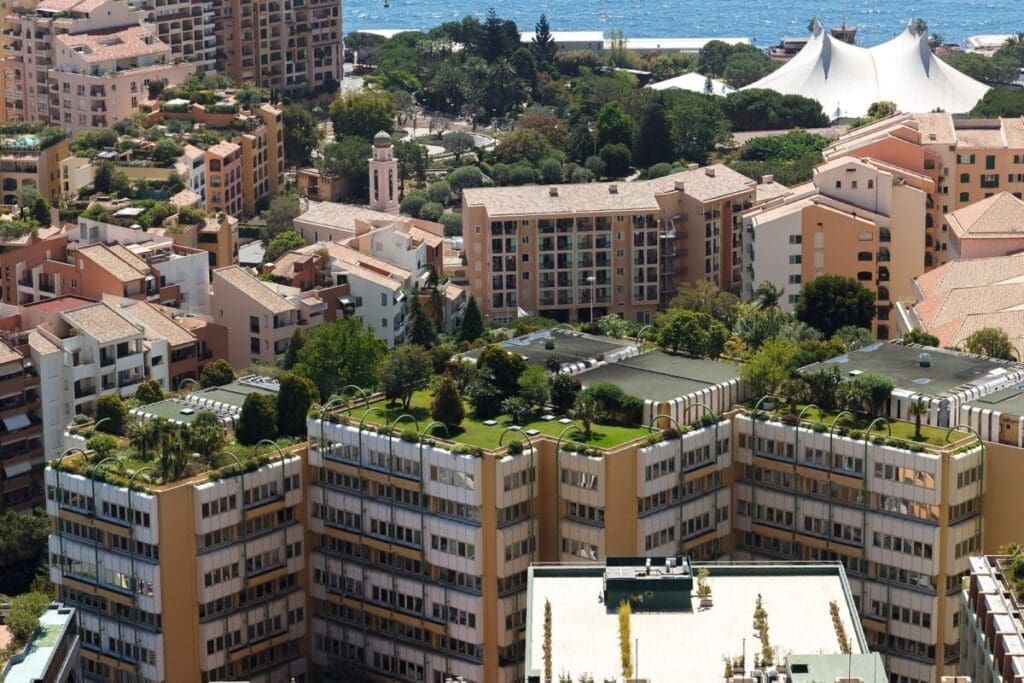
Urban planners and large developers understand these benefits and recognize that for mid to high rise buildings, green roofs are a modest percentage of total construction cost, and its stormwater and thermal benefits are proportionally significant.
For one- or two-storey homes and other small buildings that make up most of the low-density fabric of Canadian cities and rural communities, the motivation is different. The motivation to install green roofs in smaller buildings is primarily based on the client’s emotional connection to their building and landscape, and not due to the benefits of green roofs themselves.
Bruce Greenway is the founder of Greenway Studio Architecture, a Victoria-based architecture firm. He explains that in his experience, his clients don’t often ask for a green roof because of their functional benefits.
“The client’s ideological or environmental motivation is rarely strong enough to overcome the increased, accentuated barriers of cost,” he says. “For example, the roof’s cost spread over 2 floors vs 8 floors. Seeing and experiencing the roof day to day is the base to build that emotional motivation from.”

Get the Green Building Project Checklist
Use this handy checklist on your next project to keep track of all the ways you can make your home more energy-efficient and sustainable.
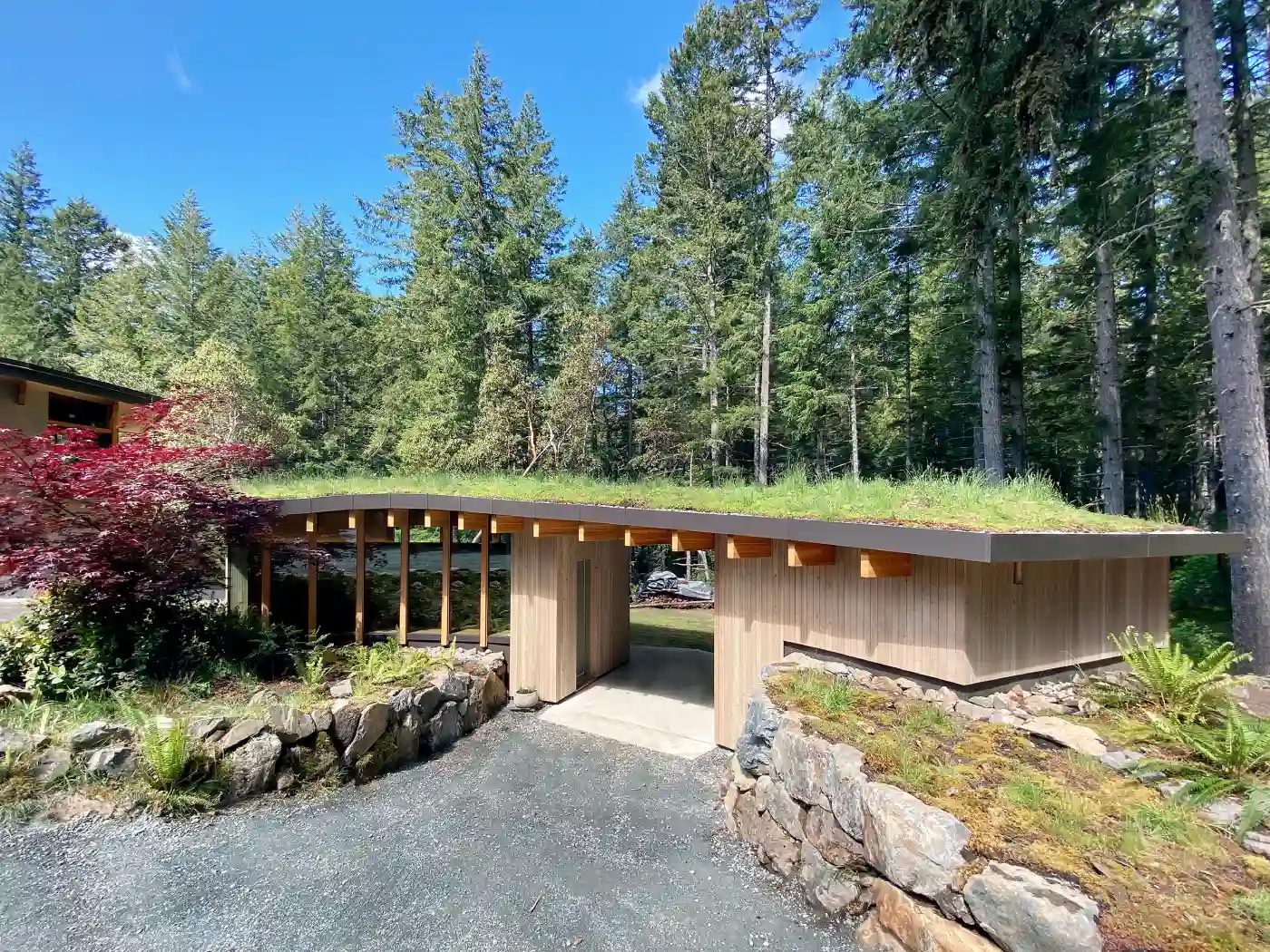
Green roofs on smaller buildings have advantages like lesser structural span and therefore lesser load pressure. The cost and maintenance barriers can be mitigated by enabling simple ways to access the roof for installation, maintenance and simple planting.
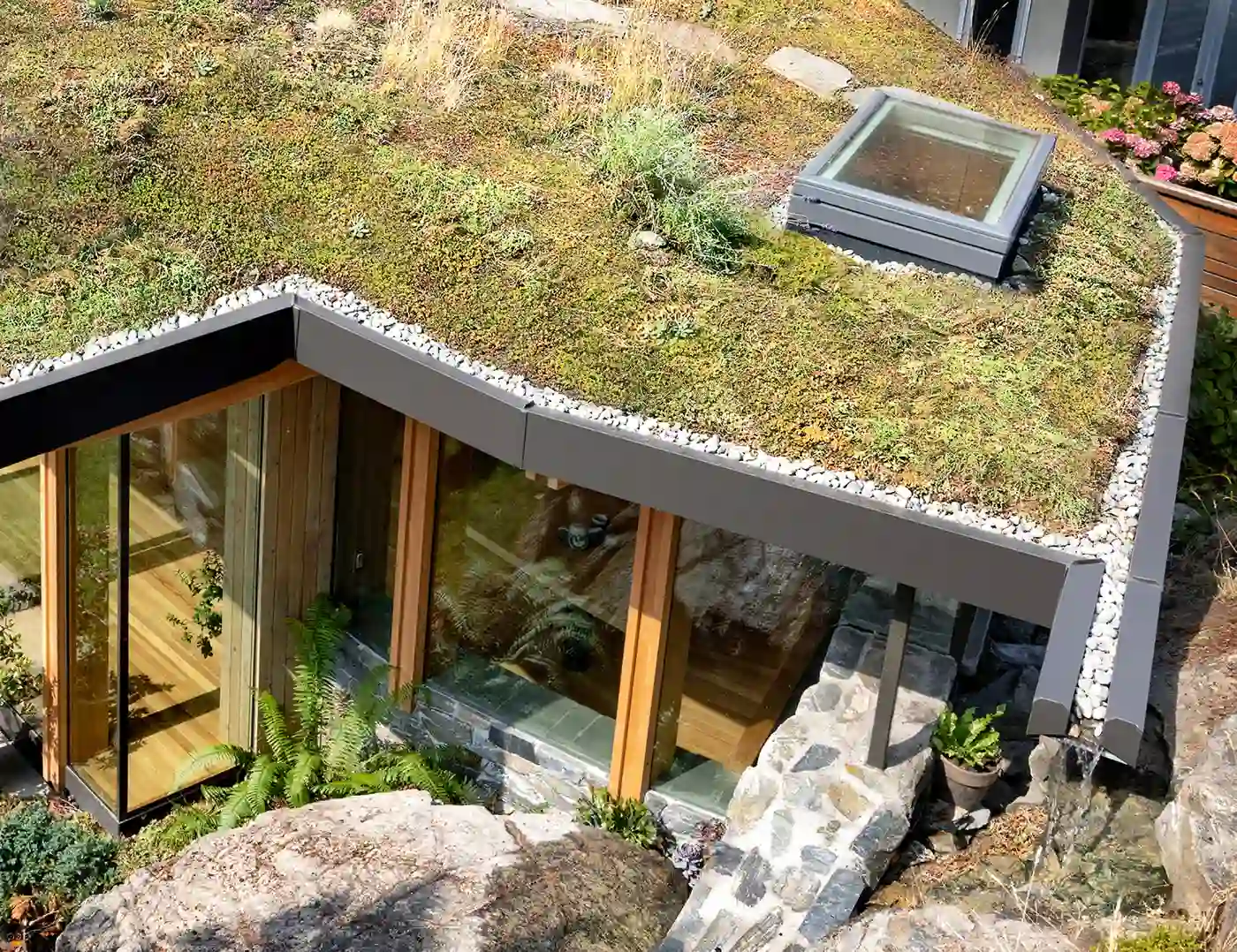
Green roofs, in Greenway’s experience, are an interesting and reliable way to create a connection with his clients. When he tours a site with a client and they start looking at the plants that have evolved to survive thin soil and harsh sun, his clients are often left inspired. They start asking questions and begin forming opinions about what should grow where, and why, and a sense of curiosity develops, and the word spreads. Conversations about plants on roofs, then become conversations about roof overhangs optimized to admit winter light while blocking summer heat, solar panels, battery storage and more. While these conversations impinge on practical motivations rather than ideological ones, they are far more likely to hold through the pressures of a construction budget.
“They can be motivated, to a point, by energy efficiency,” Greenway says. “Control of the summer sun and the winter sun. When the power goes out, they want electricity.”
According to Greenway, one of the most important barriers to green roofs on small buildings is whether clients can see and experience them. A roof that a client cannot see from anywhere they spend time is, in his experience, a roof that doesn’t exist. “Unless they’re just motivated by either idealism or just have a lot of money,” he says. “They’re going to look up there and realize they’re never going to see that roof.”
A client who has been walked through a site, who has collected plants with their own hands and begun to understand what they are building and why, has a fundamentally different relationship to the project than one who has been handed a sustainability checklist.
Greenway points out this visibility of green roofs are critical. He likes to design green roof solutions that are integrated into the building’s geometry in a way that keeps it within the occupants’ field of experience. He often tilts rooflines enough that a green plane becomes visible from a garden path or a kitchen window. He looks for opportunities where a roof can visually dissolve into a hillside or terrace into a landscape. He keeps the planting low-key or “low charisma,” with species that naturally belong to the site. He explains that an intricate rooftop garden looks impressive in photographs, but without a dedicated maintenance it wouldn’t hold the same aesthetics five years later.
Greenway cautions against conflating green roofs with rooftop gardens. A green roof is primarily a planted surface meant to be looked at or moved through with grasses and low-growing natives that require minimal intervention. A rooftop garden, on the other hand includes growing vegetables or herbs, needs more soil depth, more structural support and regular attention. The distinctions ripple through cost, maintenance and building code. Greenway has integrated gardens alongside green roofs on some projects, but he keeps them separate systems.
Expectation management, he says, is where a lot of green roof projects succeed or fail. He shows clients photographs of roofs in November when they are grey and dormant, quite different from what one would see in the design renders. He explains to his clients that some plants will die, and natural selection is indifferent to the drawings. What he has found is that this honesty actually deepens enthusiasm in clients, and once they understand that a green roof is a living system that will change, lose some things, and find its own equilibrium, they are more committed to it, than if they were sold a vision they later feel deceived by.
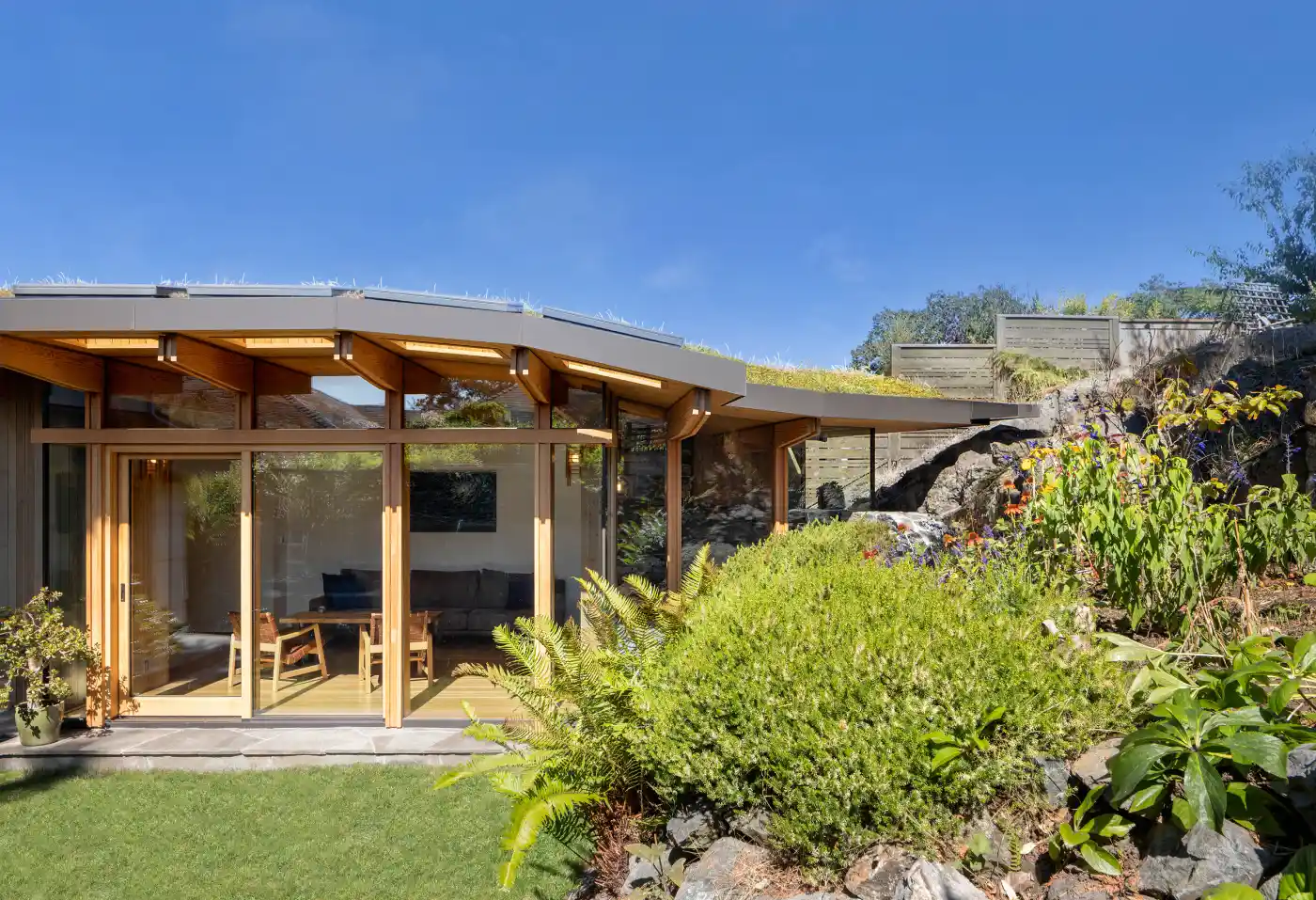
Greenway recollects a project that he worked on, a cabin with a shady roof. The builder handled waterproofing, drainage and the growing medium. Then about 30 people from the surrounding neighbourhood arrived, each carrying plants gathered from the surrounding forest. The roof was planted in an afternoon, and everyone gathered for dinner later. He also brought his children. The result was a substantially reduced budget, a client deeply engaged with the land they were building on and a roof that was made together by a community. While this is not a scalable model in the conventional sense, the principle it demonstrated showed that involvement in the making of a green roof can change the nature of the relationship to it afterward. This has real implications for how architects approach smaller projects, where instead of a mandate-driven motivation, the building and its roof carry the argument on its own.
Retrofitting an existing structure with a green roof is a meaningfully different problem from building one in from the start. For Greenway, the primary consideration is structural, the span of the roof. Existing structures may not be designed to carry the load and may have water or material vulnerabilities. “Not impossible, not insurmountable,” he says. “It’s case-by-case.” In his experience, the motivation question reasserts itself here too. He has worked on a handful of retrofits, but the conclusion is usually that if the client cannot see the roof, the barriers to doing it on an existing building rarely make it worth doing.
The federal government published an updated National Building Code in late 2025 that introduces greenhouse gas emissions limits for new buildings for the first time, with a target to incorporate additional climate resiliency considerations by 2026. It still contains no guidelines on green roofs specifically, but it signals the direction of federal policy and creates a relevant contrast: the NBC is tightening on emissions while remaining silent on green roofs.
At a provincial level, in Alberta, Calgary and Edmonton have no green construction bylaws comparable to pre-2025 Toronto. In Quebec, while Montreal boroughs have pushed for rooftop greening requirements in some areas, no citywide mandate exists. In British Columbia, Vancouver has taken the most deliberate municipal approach, integrating green roofs into its Greenest City Action Plan and offering stormwater fee discounts and priority permitting as incentives. New rainwater management requirements that came into effect for most new BC buildings in July 2025 created an indirect structural incentive. But outside Vancouver, adoption across the province is voluntary.
Germany, where green roof policy has been embedded at the municipal level since the 1980s, now has roughly 10 percent of all roofs greened, with major cities such as Berlin, Hamburg and Munich mandating coverage on new builds. Canada has no equivalent national or provincial framework.
Toronto’s bylaw did what well-designed policy can do at the scale where the technical case is already strong. It produced a mature construction standard, a trained workforce and more than 12.5 million square feet of green space. Its scrapping means green roof adoption outside large urban development depends almost entirely on the decisions individual architects and clients make together.
Greenway does not force green roofs on his clients or even attempt, directly, to sell their benefits. Instead, he designs a building the client connects with that often has a green roof. The site walks, the plant conversations, the careful and unromantic expectation setting, has already made the client want something that the roof then helps to fulfill.
Images courtesy of Greenway Studios