Heat Pumps vs Direct Electric Heating
Comparing Your Options for an All-Electric Home

The advent of electrification was a tectonic shift in how energy can be used, transported and consumed by our species. Highly portable and infinitely flexible, it should be the “go-to” resource for activities like conditioning your home.
Especially in a world where it is easier than ever to create your own electricity at home, thanks to technologies like rooftop solar panels, home batteries, small-scale wind power and combined heat and power (CHP) systems.
Yet fully electric homes are still relatively uncommon in many parts of Canada where natural gas remains dominant for heating. So, are homeowners overlooking a potentially smarter long-term option?
As geopolitical events like the US-Iran War and the war in Ukraine are making abundantly clear, personal energy security should be foremost in most of our minds. Any perturbation in fuel supply (be it oil or gas) can, and will, eventually come to bite your bank account.
So, should you consider taking the plunge and fully electrifying your home? Let’s find out.
To Electrify, or Not to Electrify?

Get the Green Building Project Checklist
Use this handy checklist on your next project to keep track of all the ways you can make your home more energy-efficient and sustainable.
Before we get into the weeds, the first thing homeowners need to ask themselves is whether electrification makes financial and practical sense where they live.
Unlike other countries with relatively predictable energy prices, the provinces in Canada tend to have very different electricity grids, climates and utility costs. For some, it might be a no-brainer, while for others, it’ll likely not make economic sense to do so.
WATCH | The Future of Home Heating and Cooling!?!
As a rule of thumb (and do take this with a pinch of salt), provinces with abundant hydroelectric generation (such as Quebec, British Columbia and Manitoba) tend to have relatively low electricity prices and comparatively “clean” grids. If you are fortunate enough to live there, electrifying home heating and cooling is probably a good move. Especially if you consider installing heat pumps.
However, if you live in provinces with higher electricity costs or greater reliance on fossil fuel generation, you may see smaller savings. Especially if you already have access to relatively cheap natural gas.
And this is critical for those who live in colder regions where reliable, cheap heating is not an option. If electricity costs are high, electrifying your heating system will cost you an arm and a leg over the long haul.
That said, any calculation shouldn’t rule it out completely, simply alter whether more of a hybrid approach could work.
For many Canadian households, hybrid systems can offer the best of both worlds. These setups typically combine a heat pump with a conventional gas furnace or boiler. During milder weather, the heat pump handles most of the heating extremely efficiently while also providing air conditioning in summer.
Not to go too far off topic, but it is becoming increasingly possible to also replace the fossil fuel system with more sustainable options like biofuels where the fuel could be purchased externally or produced on-site using digesters.
When temperatures drop (especially below freezing), the gas system can take over to ensure consistent, reliable and cheaper heating. A win-win on all fronts.
WATCH | Major Advances with Heat Pumps in the Extreme Cold
But that’s just part of the story; reliability needs to also be a major part of any planning of this kind. Fully electrified setups tend to also need backups like generators and storage batteries, especially as insurance against storm outages.
It’s not just electric appliances that are affected by power outages. Certain gas appliances rely on electricity for ignition systems, controls and blowers, meaning they may also stop functioning during power outages.
Ultimately, the “best” approach depends on several factors, including your local electricity prices, climate, existing heating system, insulation levels and long-term goals.
Champion of Electrical Champions: Heat Pumps
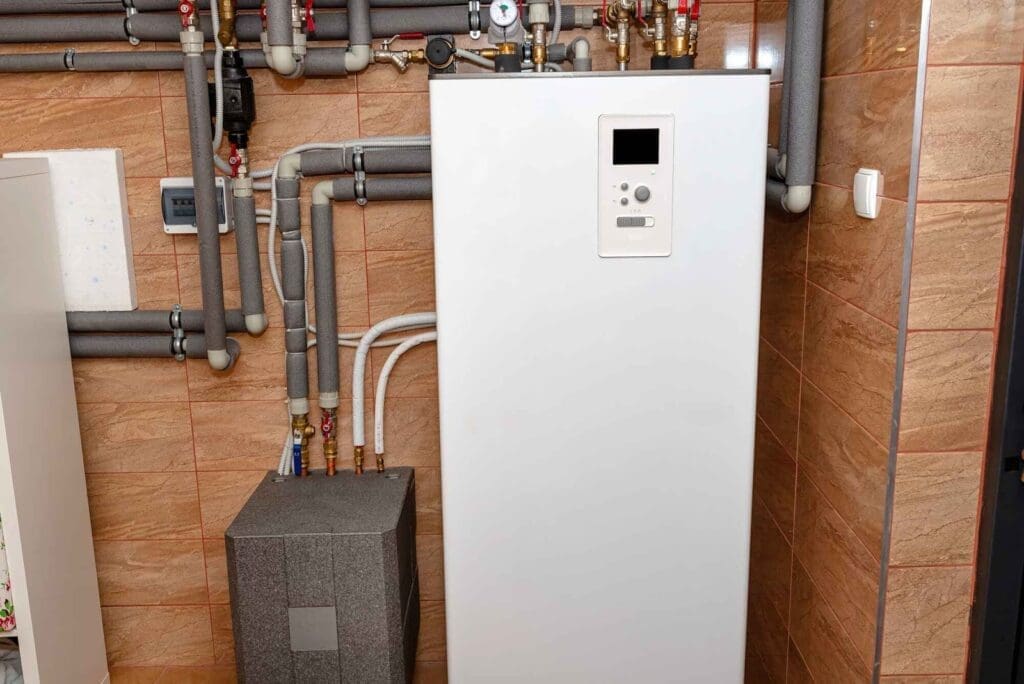
What if we told you that there exists a technology that can give you 2x, 3x, or more output for the energy put in when it comes to heating and cooling? Well, that’s exactly what heat pumps offer.
Usually associated with cooling in hot climates, heat pumps are actually reversible, meaning they can be used for heating too. And when it comes to cold climate performance, they have come a long way over the years.
Highly efficient, heat pumps are also nearly infinitely flexible in scalability. They can be used for a single room or for large office buildings. Many manufacturers also have cold climate-specific models capable of operating comfortably in climates as low as -30°C.
Such systems are able to extract heat from outdoor air (even when below freezing) to provide internal heating. This is done using special chemicals that can absorb or release heat energy when squeezed (compressed).
WATCH | How Do Heat Pumps Work?
When Direct Electric Heating Makes Sense in Canada
If you are not sold on heat pumps (they are not without their downsides), then another option is direct electrical heating. Systems like electric baseboards, wall heaters, radiant panels and electric furnaces are often cheaper to install upfront and mechanically simpler than heat pumps, even if they usually cost more to run over time.
But, like any heating system, they also have their pros and cons.
Condos and Apartments
For smaller dwellings like condos and apartments, heat pump installation can become tricky (limited space for ductwork or outdoor locations for heat pump outdoor units), meaning direct heating could be a better option.
Here, electric baseboards or fan coil systems (FCUs) could be a better option. These tend to be compact, relatively inexpensive and easy for building operators to maintain.
This is especially the case where newer, well-insulated condo buildings have heating demand that is also relatively low. This means the higher operating cost of resistance heating may not have as much impact as it would in a detached home.
Small and Highly Efficient Homes
Smaller homes, passive houses and other highly insulated modern properties can also be good candidates for direct electric heating. If a home loses very little heat in winter, the simplicity and low installation cost of electric resistance systems may outweigh their lower efficiency.
In some ultra-efficient homes, heating requirements are so modest that installing a full ducted heat pump system may simply not make financial sense.
WATCH | Do electric radiators use a lot of electricity? – Electric panel heaters vs oil filled radiators
Milder Climates
In regions with relatively mild winters (particularly coastal areas of Canada), direct electric heating can sometimes remain economically viable too. This is because systems do not need to operate at maximum output for extended periods.
That said, even in milder climates, heat pumps often still provide lower running costs while adding the major advantage of air conditioning during summer.
Cabins and Occasional-use Properties
Other good candidate properties for direct electrical heating include cabins, vacation homes and intermittently occupied properties.
Electric baseboards and wall heaters are inexpensive, require little maintenance and can quickly heat individual rooms when needed.
For properties left empty for long periods, the simplicity of resistance heating can also reduce concerns around servicing and mechanical failures compared to more complex HVAC systems.
Homes Without Ductwork
Many older Canadian homes were built without forced-air duct systems, particularly those originally heated with boilers or electric baseboards. Retrofitting ductwork into these homes can be disruptive and expensive.
In these situations, homeowners may opt for targeted electric heating solutions or combine direct electric systems with ductless mini-split heat pumps rather than undertaking a major renovation.
What Options Do You Have for Direct Electric Heating in Canada?
Deciding to go all-electric at home is an important step, but ultimately just the first of many. As we hope you have now come to appreciate, the best option for you will depend on factors like climate, home layout, insulation quality, upfront budget and whether cooling is also a priority.
However, there are many options out there to tailor your property just to your liking. Here are some of the most common options.
Electric Baseboard Heaters
The first, and very common option in Canada are electric baseboard heaters. In case you are unaware, these systems use electrical resistance to generate heat directly inside individual rooms.
Low cost to install, these systems don’t require ductwork and are easy to zone room-by-room. They generally require very little maintenance, too, which makes them particularly popular in condos, apartments, cottages and older homes without central air systems.
But, and it is a big but, baseboards are also among the most expensive electric heating systems to operate. This is because they convert electricity into heat at a one-to-one ratio.
While technically nearly 100 percent efficient at the point of use, they cannot multiply heat output the way heat pumps can. They also provide no cooling during the summer.
WATCH | Electric Baseboard Headers: Pros & Cons
Electric Furnaces
Another common option in Canada is electric furnaces. These work in a similar fashion to conventional forced-air gas furnaces, but use electric resistance elements instead of combustion burners to heat air.
Such systems then distribute warm air throughout the home using ductwork and can integrate easily with existing central ventilation systems.
Furnaces are mechanically straightforward and generally cheaper to install than full central heat pumps, especially in homes that already have ducts in place. They can also provide strong heating performance even during extremely cold weather.
But, once again, a major downside is the operating cost. Since they rely entirely on resistance heating, electric furnaces can become expensive to run in colder provinces with high winter heating demand.
For this reason, they are often used as backup or supplemental systems alongside heat pumps rather than as standalone primary heating systems.
WATCH | What is an Electric Furnace and How Does it Work?
Fan Coil Units (FCUs)
Another increasingly common option in homes when it comes to direct electrical heating is Fan coil units (FCUs for short). Very common in large commercial buildings (they are hidden in the ceiling voids usually), these use electrically powered fans to move air across heated or cooled coils connected to a central energy source.
These systems can provide both heating and cooling and are often compact enough for buildings where space is limited. However, performance depends heavily on the central system supplying the hot or chilled water, and comfort levels can vary depending on airflow and building design.
For homeowners, fan coils are usually more common as part of larger multi-unit building systems rather than standalone heating solutions. They may be a little “over the top” for smaller homes, self-contained condos and apartments, however.
WATCH | Fan Coils 101: How Fan Coil Units Work
Emerging Technologies
Beyond heat pumps and direct electrical heating, other emerging technologies you might want to consider include, but are not limited to:
Ceramic core heaters – These use a central ceramic heating element that heats up as electricity passes through it. This enables them to release heat gradually, enabling consistent and comfortable temperature control throughout the day. They are highly energy efficient and come with smart controls to tailor their on-off cycles to your needs and wants.
Thermal batteries – These units effectively store energy in the form of heat or cold, rather than electricity. They can capture this energy off-peak from various sources, including renewables. Stored energy can then be released into your home to provide space heating and cooling, water heating, etc.
Sand batteries – As the name suggests, these units are another kind of thermal energy storage unit that “stores” energy using, yes, you’ve guessed it, sand. They work similarly to thermal batteries, and, likewise, can be connected to renewable systems for maximum cost savings.
Beyond heating and cooling, if you want to consider going all in on electric for your home, there are other appliances and services that can benefit from full electrification.
This includes, but is not limited to, things like electrical water heating (or combined solar/boiler cylinders), induction hobs for your cooker, battery storage, or even considering vehicle-to-home (or vehicle-to-grid) connections for your electric vehicle.
If you do go for options like heat pumps, you can even install heat pump clothes dryers. You really are spoiled for choice.
As you can see, there is no silver bullet when it comes to home electrification, far from it in fact. What will work for you is the option that best suits your wants and needs, the type of home you live in, and, of course, your budget.
But, whatever option you choose, one thing is becoming increasingly clear: the future of home heating and cooling is likely to be far more electric than it is today.
Images from Depositphotos