
Energy Myths Debunked
Do you know what will really give you the most bang for your energy buck?

In this weekly Q&A column, retired builder/building inspector Cam Allen answers readers’ home renovation questions. Have a question? Enter it in the form below.
The renovation world is packed with greenwashed products, statements of energy savings and hard to swallow “facts” about various upgrades. This inquiry comes up repeatedly at presentations I give, so I thought it was high time to clear the air about a few myths.
Can New Windows Save You Energy?
The energy savings that window manufacturers advertise often make me chuckle. I’ve seen claims of up to 50 percent savings in energy. In reality, the average retrofit thermal pane window offers about 5 percent in savings. What’s more, only the best of these windows reach energy savings that close in on 10 percent when compared to standard double slider windows. If you were to calculate the cost of the windows versus the energy savings, you’d find that it would take years – make that at least 50 – to recover the replacement costs for most complete home window upgrades.
So why are windows promoted so much as a major energy saving benefit to a home? In an older home, 99 percent of the rough openings between each window and its frame are filled with nothing at all, if they’re original; otherwise, they’ve been stuffed with loosely fitted strips of early fibreglass batt insulation that’s been pushed in with a piece of wood or a screwdriver with no barrier between the air and the frame. This is where most of the major heat loss is happening.
If you’re convinced that new retrofitted thermal windows are in your budget, the most important upgrade is a proper self-adhesive air wrap around the rough opening of each window’s wood frame. It’s essential that each one is fitted to the exterior wall that surrounds it as precisely as possible.
Following that, you’ll add two applications of low-pressure, closed-cell “window-rated” spray foam. The first one will fill about half the space, and the second one will overfill the remaining space. Allowing a full cure between each application and the overfill will allow for a clean, flat trim of the foam between each window frame and the corresponding wall. Done carefully, this will pretty much eliminate air loss around any new windows.
Are Smart Thermostats More Energy Efficient Than Older Ones?

Get the Green Building Project Checklist
Use this handy checklist on your next project to keep track of all the ways you can make your home more energy-efficient and sustainable.
Programmable thermostats are a great addition to any HVAC system as a replacement for the older dial style with the mercury bubble, as these older thermostats are well-known for their inaccuracy.
Various marketing efforts from thermostat manufacturers claim that an energy savings of 20 percent or more is associated with programmable thermostats. However, a few years ago, the U.S. Environmental Protection Agency revoked the Energy Star label for programmable thermostats not because they don’t work but because people weren’t using them correctly. They state that programmable thermostats are an important way to save energy, there just needs to be more education as to how to use them.
Programmable thermostats are more accurate than dial-style thermostats and can be set to raise and lower your home temperature in accordance with the occupants’ use. There are various studies showing that energy savings of $50 to $100 a year are possible when the thermostats are used properly.
The newer smart thermostats will learn your temperature preferences and adjust the temperature accordingly, and you must use these capabilities to their full extent to reap any energy benefits.
Another quick point: In the dead of winter, overriding the way your thermostat is programmed and raising the temperature to 25 degrees Celsius won’t make your home warmer any quicker. Every heating system has a maximum capacity, which is usually arrived at by a heat loss calculation done by the HVAC designer who has set the duct capacity and the size of the furnace for the home. Once it’s running, all the thermostat will tell the furnace to do is stop once the maximum temperature is reached.
An additional myth that’s been debunked is the idea that you should close the floor duct or shut off the electric baseboard heater in a room to save heat. In fact, HVAC systems are designed to be balanced, and if you do this, the system will try to compensate for the temperature imbalance.
Do Fans Really Cool (or Warm) the Air?
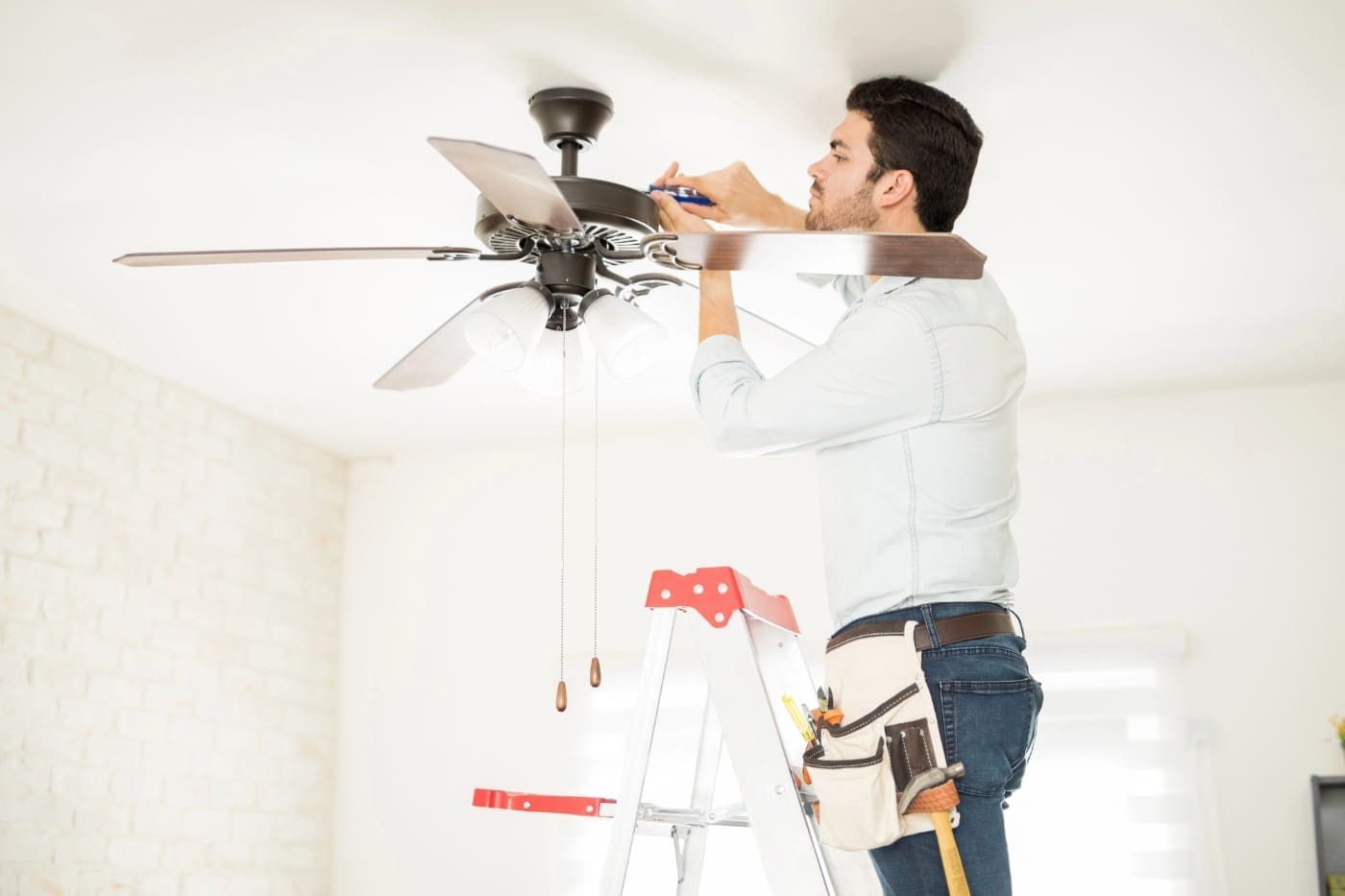
I’m a strong supporter of ceiling fans, especially in the winter or during the scorching hot days of summer. The value of air flow can’t be overstated. Air flow that’s created by a properly sized fan (yes, different fan sizes are more appropriate for different rooms or air flow preferences) will cool the occupants and help balance a room’s temperatures.
One other myth to keep in mind: Fans don’t really make air cooler or warmer. Instead, they circulate the existing air by moving it up from the floor or down from the ceiling. This circulation is felt on our skin, which makes us feel cooler or warmer.
Will Leaving a Light on Actually Save Energy?
Old wives’ tales about lighting would fill a book, so let’s debunk some of them. Some people think that leaving a light on in a room instead of turning it off, even if you’re only leaving the room for 10 minutes, will save energy. That’s fiction – regardless of whether you’ve made the switch to LED lighting, you’ll save a bit of energy by turning the light off.
Another myth about lighting that you may have heard is that there’s only a minimal surge of power for a fraction of a second when you turn a light on. The bottom line is, turn the lights off if you leave a room, and if you haven’t made the switch to LED lighting, make it one of your first energy upgrades.
LED lights use anywhere from 75 to 90 percent less energy than the original incandescent lights. If you have any compact fluorescent or “pigtail” lights in use, change them, as most of them contain mercury. Once you’ve changed them, be sure to double-check your municipality’s waste guidelines and dispose of the old ones properly.

Caulking, Sealing and Weatherstripping: How Useful Are They?
Practically every home improvement show on TV, along with almost every media article about energy savings, expounds on the merits of caulking, sealing and weatherstripping. They’re right about the merits, but when asked about these techniques, I answer by recommending that you look at your home as an energy conservation saving package.
Homes breathe by what is known as the stack effect, where the air flows up or down (mostly upwards) throughout the building. Controlling the leakage of that conditioned air by reducing the necessity to replace it is the primary reason for energy conservation.
Should Windows Be Prioritized as a Home Energy Project?
Recently, I was asked to provide a list prioritizing home energy projects for an older home. The gentleman questioned the fact that I put new windows at number six on the list.
His list started with cost basics, LED lights, a programmable thermostat, ceiling fans (he has large rooms with ceiling lights) and “water sense” shower heads. The second step was to seal, caulk and weatherstrip every area where air leakage happens – and don’t forget wall openings like the dryer vent. This step is time-consuming and painstaking, but it’s an important step to take before you begin tackling the larger-budget items.
Third on the list was the attic, and don’t forget that the attic must breathe, so add vent baffles as needed. The fourth step was tackling the basement rim joist areas and walls. Number five was adding blown-in insulation to the main exterior walls as needed. This is one step where a professional insulation company is recommended, as most are equipped with thermal imaging cameras to detect where a lack of insulation is present.
Number six was window upgrades. Dollar for dollar, you’ll get more “bang for the energy buck” by going through all these other steps before you spend the big dollars on windows.
Images from Depositphotos
Have a Home Renovation Question?
Write it down below and we’ll get back to you. All questions get answered – every week, we’ll select one for publication in the column.


