How Renewable Energy Digital Services Are Transforming the Industry


Solar panels are cheaper than they’ve ever been. Wind capacity keeps breaking annual records. And somewhere between the turbine and the power outlet, a stack of software is quietly doing the heavy lifting. Digital tools, from predictive analytics to AI-driven grid management, are quickly becoming central to how clean energy gets generated, distributed and sold. This article breaks down what’s actually happening on the technology side, which companies are building it and why any of it matters for the green building sector.
The Market Right Now: More Capacity, More Complexity
The sun doesn’t shine at night. Wind doesn’t always blow when demand peaks. That intermittency has always been the core challenge for renewable energy. What’s changed in the past five years is the scale of that challenge.
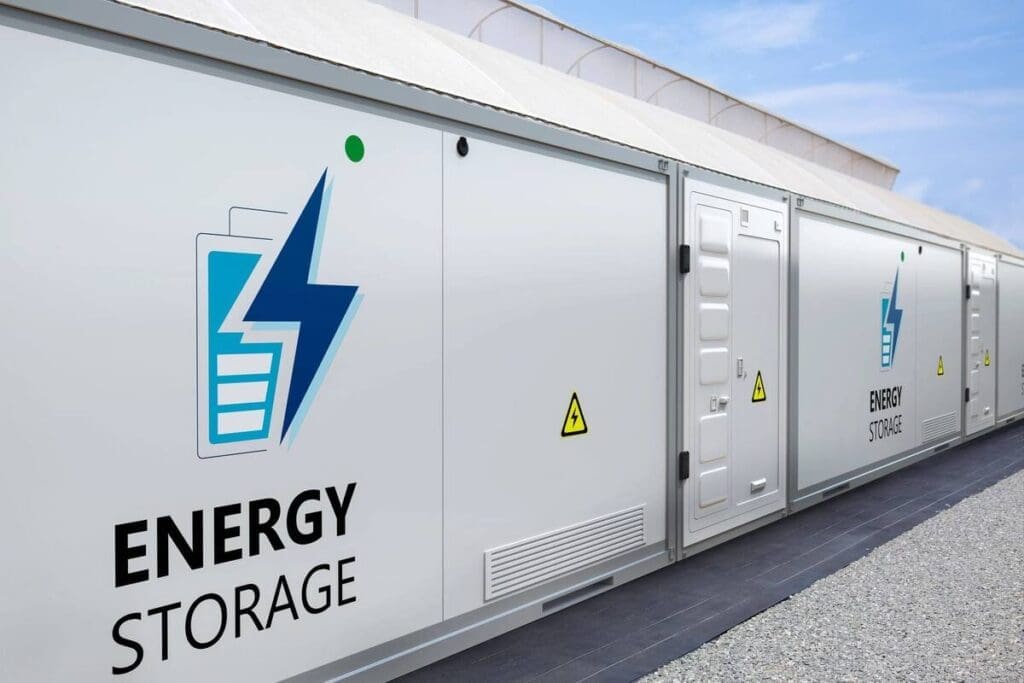
Today, grid operators manage dozens (sometimes hundreds) of distributed energy assets simultaneously. A utility in Alberta might be balancing solar farms, wind turbines, battery storage units and active demand response contracts all at once. Without serious software infrastructure, it becomes slow, manual and increasingly inefficient.
That’s where renewable energy digital services come in. Enterprise providers have built platforms specifically for this kind of complexity – the type of renewable energy software solutions that now cover everything from asset performance management to regulatory compliance automation. Tools that once required multiple teams can now be coordinated through a single operations layer.
Digital transformation in renewable energy has moved from theory into real capital spend and operating results. According to Wood Mackenzie, digitalization investment in the energy sector exceeded $18 billion globally in 2023 with renewables accounting for a rapidly growing share of that spend.

Get the Green Building Project Checklist
Use this handy checklist on your next project to keep track of all the ways you can make your home more energy-efficient and sustainable.
What “Digital Services” Actually Means in Practice

“Digital services” can sound like marketing language. So let’s get concrete.
Asset Performance Management (APM)
APM software monitors wind turbines, solar inverters, and storage systems in near real time – tracking temperature, vibration, output degradation and other operational variables continuously.
Rather than guaranteeing failure prediction, APM systems identify emerging patterns and flag elevated risk conditions, enabling predictive maintenance. In practice, this can mean detecting issues like bearing wear weeks in advance, turning an unplanned failure into a scheduled intervention.
The financial impact is significant. Major offshore wind failures requiring heavy-lift vessels and component replacement can reach into the millions, while planned maintenance interventions are typically orders of magnitude lower.
Companies like GE Vernova and Siemens Gamesa operate proprietary APM platforms. At fleet scale, these systems process large volumes of operational data to extract actionable insights.
Core APM functions include:
- Real-time fault detection and early warning alerts
- Degradation modeling and remaining useful life estimation
- Maintenance planning and work order integration
- Performance benchmarking across asset fleets
Grid Edge Intelligence
Grid edge refers to the interface between centralized grid infrastructure and distributed, customer-side resources such as rooftop solar, EV chargers and home battery systems. Managing this edge without digital systems is increasingly complex.
Companies like Itron and Landis+Gyr have developed advanced metering infrastructure (AMI) that enables bidirectional communication between utilities and end users. These systems go beyond simple meter reading, providing the data foundation for demand response, dynamic pricing and distributed energy management.
While AMI itself does not directly control load or voltage, it feeds into broader platforms, such as DERMS and ADMS, that enable utilities to shift demand, manage distributed resources and maintain grid stability at increasingly granular levels.
This is where renewable energy digital services are reshaping grid operations: not replacing physical infrastructure entirely, but optimizing and often deferring costly grid upgrades through software, sensors and real-time coordination.
WATCH || Intron’s video on grid edge intelligence
Energy Trading and Forecasting
Let’s talk money for a moment. Renewable energy operators don’t just generate power – they trade it. In deregulated markets like Alberta, Texas or the UK, accurate forecasting is worth actual dollars.
Even a 1 percent improvement in forecast accuracy can translate into hundreds of thousands of dollars annually for a 100 MW wind farm.
The Technologies Being Tested Right Now
OK, what’s still experimental? What are the pilots and prototypes worth actually watching?
AI-Driven Virtual Power Plants
A virtual power plant (VPP) aggregates thousands of small distributed resources (eg. home batteries, commercial HVAC systems, EV fleets) and manages them as a single dispatchable unit. Think of it like a compute cluster, but instead of processing jobs, you’re pooling electrons.
AGL Energy in Australia ran one of the more publicized VPP trials, connecting over 1,000 Tesla Powerwall units across South Australia. The result: the aggregated capacity could respond faster than traditional peaker plants, at lower cost per megawatt-hour.
Sunrun and OhmConnect are doing similar work in California, where the grid faces serious stress during summer heat events. These aren’t hypothetical projects anymore – they’re dispatching real power during real grid emergencies.
The software stack running VPPs is genuinely demanding: real-time state estimation, multi-objective optimization algorithms, settlement and billing systems and grid compliance logic – very little of it is fully off-the-shelf.
Digital Twins for Wind Farms
A digital twin is a real-time virtual replica of a physical asset. For a wind turbine, that means a software model mirroring actual blade stress, yaw angle, generator temperature and output, continuously updated with live sensor data.
Siemens Energy has been deploying digital twins across its offshore fleet. The pitch is straightforward: run simulations on the virtual turbine before making changes to the real one. Optimize blade pitch angles in software before applying anything to hardware.
Vattenfall and Ørsted have both publicly reported on digital twin integration in their operational frameworks. It’s not standard practice yet, but adoption is steadily expanding across large operators.
Blockchain for Energy Certificates
Often dismissed as hype, but it’s gaining traction in specific use cases. The problem: when a company claims it runs on 100 percent renewable energy, how do you verify that? Current certificate systems (RECs in North America, Guarantees of Origin in Europe) are clunky, centralized and have ongoing concerns around transparency and double-counting in some markets.
Blockchain-based platforms like Energy Web Chain have built systems where each unit of renewable generation gets a cryptographic token. Traceable, auditable and tamper-proof.
Microsoft, Google and Shell have all piloted blockchain-based energy traceability systems. Microsoft’s Energy Web partnership is specifically aimed at matching data centre consumption with verifiable clean generation on an hourly basis, not just an annual average. That level of granularity makes the system significantly more credible.
The Real Bottlenecks Nobody Talks About Enough
Here’s where it gets less comfortable. Digital transformation in renewable energy is moving fast in certain segments and crawling in others. The gap between the leading edge and the average operator is enormous.
Legacy Infrastructure Is a Massive Drag
Many utilities are running software that predates the smartphone. SCADA systems from the 1990s. ERP platforms never designed for distributed generation. Integrating modern digital tools on top of that infrastructure is not a clean API call, it’s months of custom integration work, often involving undocumented protocols and aging hardware.
The uncomfortable reality: the most sophisticated digital platforms in the world struggle to deliver value in utilities still relying heavily on manual workflows.
Data Quality Problems
Here’s something vendor presentations tend to skip: garbage in, garbage out.
Renewable energy digital services are only as good as the sensor data feeding them. And sensor failures, communication dropouts and calibration drift are common, especially in harsh offshore or desert environments.
A predictive maintenance algorithm trained on clean lab data performs very differently on noisy real-world industrial inputs. That’s exactly why companies like Cognite and AVEVA have built entire product lines around data contextualization – structuring and cleaning raw industrial data before it hits any analytics layer.
The Talent Gap Is Real
Who actually runs this software? That question doesn’t have a great industry-wide answer yet.
Wind farm operators who’ve spent 20 years in the field don’t necessarily have the background to interpret LSTM forecasting models or configure cloud-based SCADA integrations. It’s more a job for software engineers.
The intersection of deep energy domain knowledge and modern software skills is genuinely rare. Vestas and Enel have both invested heavily in internal retraining programs but building that talent base takes years, not quarters.
How This Is Relevant to Buildings
So, how relevant is all this to buildings? The answer is: more than most people expect.
A modern building isn’t just a structure that uses less energy. It’s an active participant in the energy system. An office tower in downtown Toronto with rooftop solar, battery storage and an EV charging garage is generating power, storing it, and selling it back to the grid depending on price signals. That building is a prosumer, not just a consumer.
The building management systems controlling HVAC, lighting and electrical loads now connect directly to the same grid-edge software platforms described above. Schneider Electric’s EcoStruxure platform and Johnson Controls’ OpenBlue both build integration between building operations and utility demand response markets. The building can respond automatically to a grid signal, curtail its HVAC load during a peak demand event, run it harder during an overnight low-price window to pre-cool the space, dispatch stored solar back to the grid when the marginal price spikes.
Without the underlying renewable energy digital services infrastructure making those signals available and actionable, very little of that works reliably. The building hardware can be perfect – the software connection is what makes it intelligent.
Numbers help here. A commercial building in Ontario participating in the IESO’s demand response programs can often cut annual electricity costs in the 10–25 percent range. Not through physical upgrades. Not through better windows or insulation. Through software that optimizes when and how the building uses and exports power. That’s a meaningful payback for any retrofit project that wants to stack financial returns on top of environmental ones.
Where Things Are Heading
The trajectory is fairly clear, even if the timeline isn’t. Sensor costs keep dropping. Cloud computing keeps getting cheaper. Machine learning models keep improving at working with noisy, incomplete industrial data. All of that points towards more automation, more real-time optimization and tighter integration between generation assets and end consumers.
The question is no longer whether digital tools matter, but where they become commoditized first.
Forecasting is already showing signs of commoditization: the gap between good and great weather models is narrowing fast. Asset performance management is likely next. What stays proprietary longer is probably the integration layer – the connective tissue between legacy utility infrastructure and modern cloud platforms. That layer is difficult to build and even harder to replace. It’s where the most durable competitive advantages are being assembled right now.
Digital transformation in renewable energy will keep accelerating. But it’ll be uneven: fast in well-capitalized markets, slow in regions with aging infrastructure and limited investment appetite. The green building sector sits at the intersection of these forces. Which makes it one of the more interesting places to be paying attention right now.
Images from Depositphotos