Q&A With Bruce Greenway of Greenway Studio Architecture

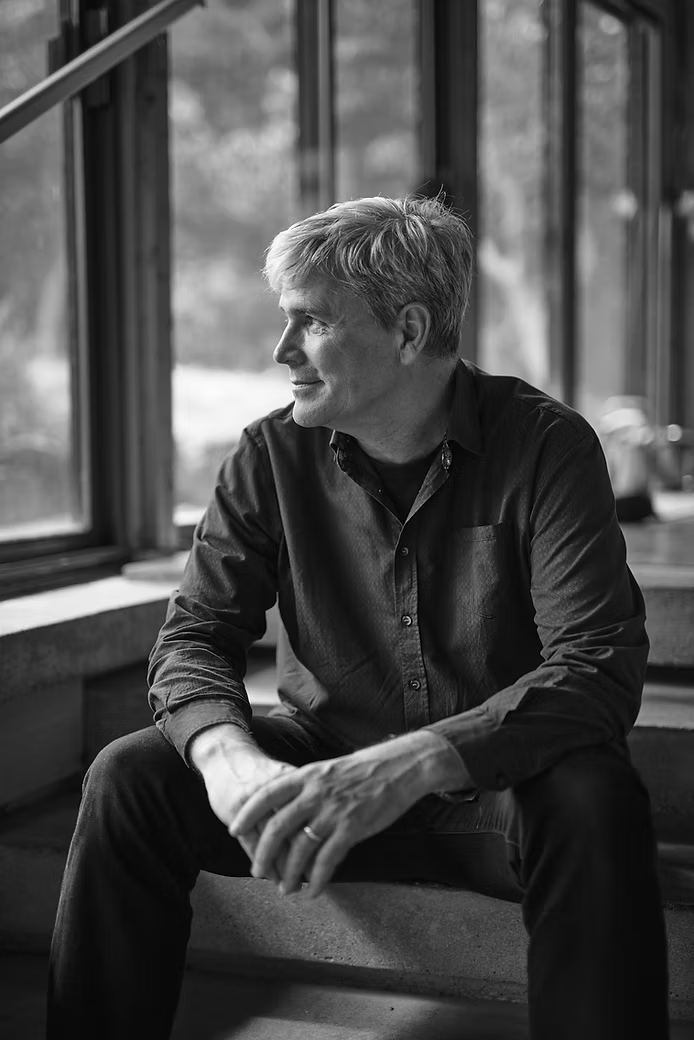
Bruce Greenway is the founder of the Victoria-based architecture firm Greenway Studio Architecture. In this Q&A, he discusses his approach to architecture and offers some advice both to aspiring architects and homeowners working on their own projects.
Was there a particular event that inspired you to become an architect?
When I was a kid I loved to make sandcastles when we went the beach every summer. My mother saw one of them that had four slender towers and flowing shapes and said it looked like a cathedral in Barcelona by an architect named Gaudí. She showed me a book that had pictures of it and other buildings by him and just I disappeared into that book for days. It kind of set the course of my life. I was 14 and told my mother I didn’t want to go to school anymore – I wanted to move to Spain and work for him. She was an English professor. While enjoying my enthusiasm, she knew me well and patiently told me I should learn a bit about the architect and not just look at the pictures. Then we could talk about it.
From Gaudí, I started learning about Frank Lloyd Wright as well as John Lautner, Bruce Goff and others who practiced North American organic architecture. Years later, I got a job that allowed me to go to Barcelona, teaching drawing and painting to undergrads, and I got to see La Sagrada Familia.
When I was 30 I travelled in the developing world for about two years. I guess you only see how that affects you in the rearview mirror, but broadening my worldview from a very narrow European influence has been a part of how I do buildings.

Get the Green Building Project Checklist
Use this handy checklist on your next project to keep track of all the ways you can make your home more energy-efficient and sustainable.
What’s a piece of advice you’d give to an aspiring architect?
Go work on a job site for at least 6 months, or longer if you can. Early on, a friend of the family told me that if I wanted to design the kinds of buildings I was drawing I had to actually learn how to build things. So, I worked as an apprentice carpenter while in university and later worked for a design-build firm as a project designer where my office was out on the job site during construction. I was teamed up with a building superintendent and was responsible to design and implement the sophisticated detailing required for a complex steel and glass modern house.
When the guys who are building what you are drawing are right there in the job trailer with you and freely tell you what they think of your designs, well let’s just say they will let you know, directly, if what you are drawing is going to work or not. It’s a rough way to learn, but it’s a good way to learn that led to a comfort in the construction process and a deeply felt respect for the people who build my projects.

I read on your site that you aim to merge your projects with the landscape they inhabit. What is the most meaningful thing about this approach to architecture for you?
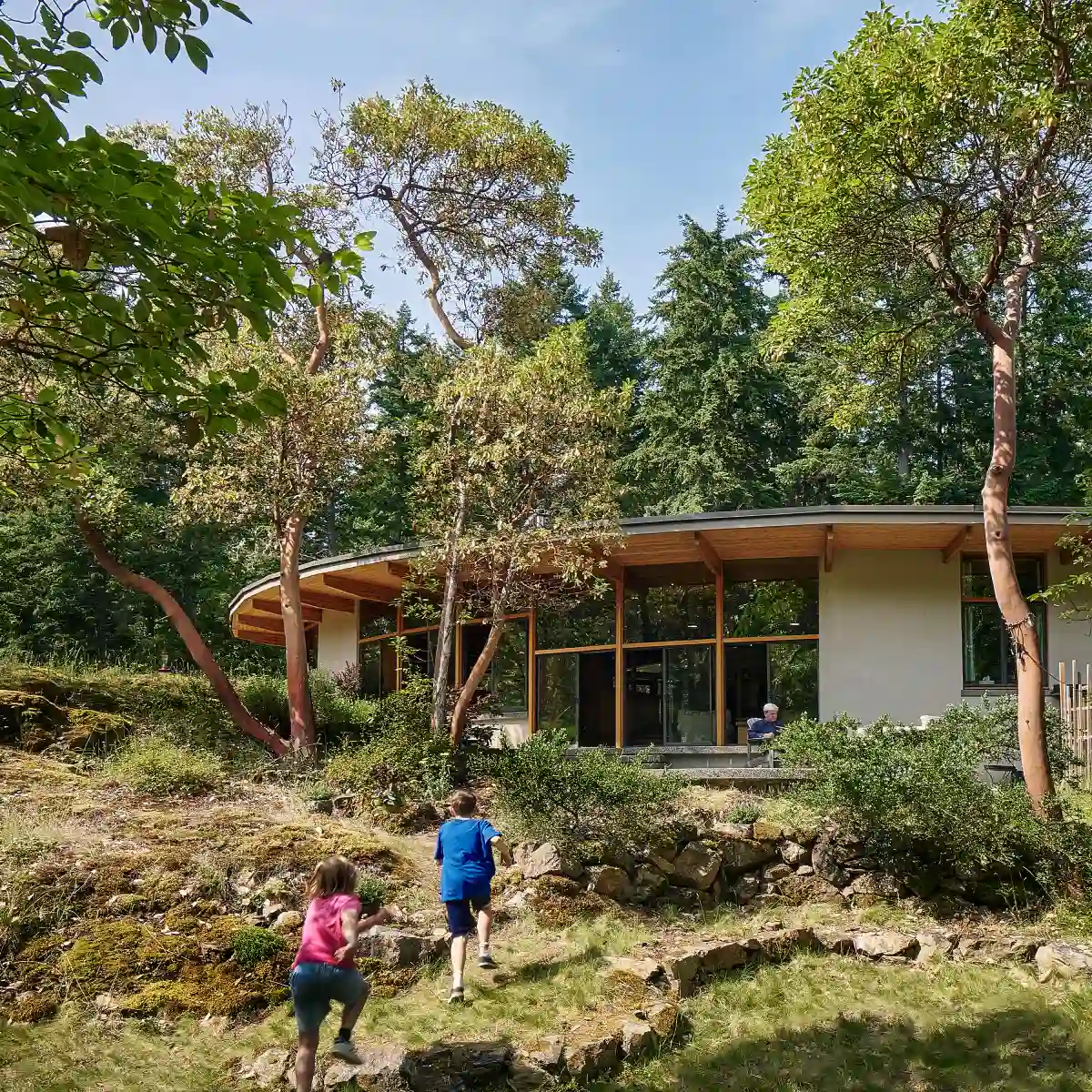
My most formative apprenticeship was with an architect named Terry Brown. When working with him, I saw how he approached a site. He saw lines in the landscape he was inhabiting – the verticals of trees, rock formations or maybe the horizontal of the ocean beyond. I realized I was doing the same thing but could not articulate it clearly. That’s how his buildings worked so well in the landscape.
Taking the time to see. It’s not landscape in an abstract sense like you’re connecting with nature with a capital N, you’re connecting with the landscape you are in, that rock there, those trees here, this view here, this place that you’re in, not nature in some abstract way separate from your lived experience.
A building is not a “jewel” in the landscape like we learned in architecture school, it is something that seeks to integrate with that landscape. It doesn’t pretend to be anything but human made, but at the same time it looks at the lines and shapes in the land and how they relate to each other to find its place.
I was looking through your projects and saw the Grotto House where the building is built into the bedrock. Whenever I’ve been in a building that had rock growing out of it or rock jutting out from right inside the house, I always thought, wow, this is cool. I appreciate the effort that went into working with the landscape rather than hacking it away. So what do you find are the greatest challenges to building this way and how do you handle them?
There just wasn’t room to do what the clients wanted because the building basically pushed up against rock. They loved the rock and blowing it up wasn’t what anybody wanted to do. We couldn’t build it anywhere else so we had to merge the building with the rock.
Grotto House
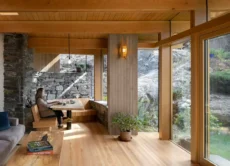


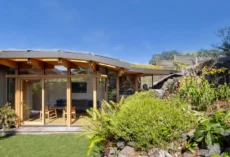

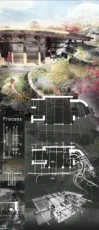
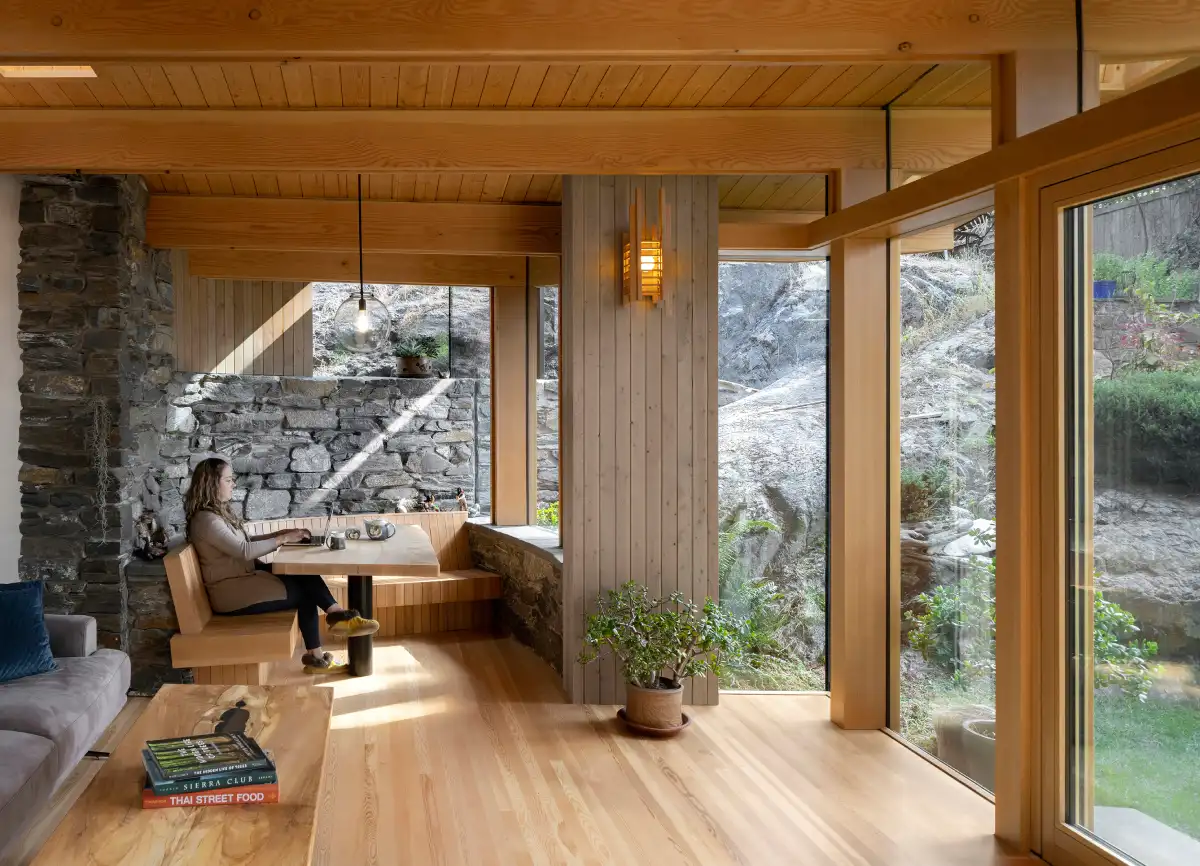
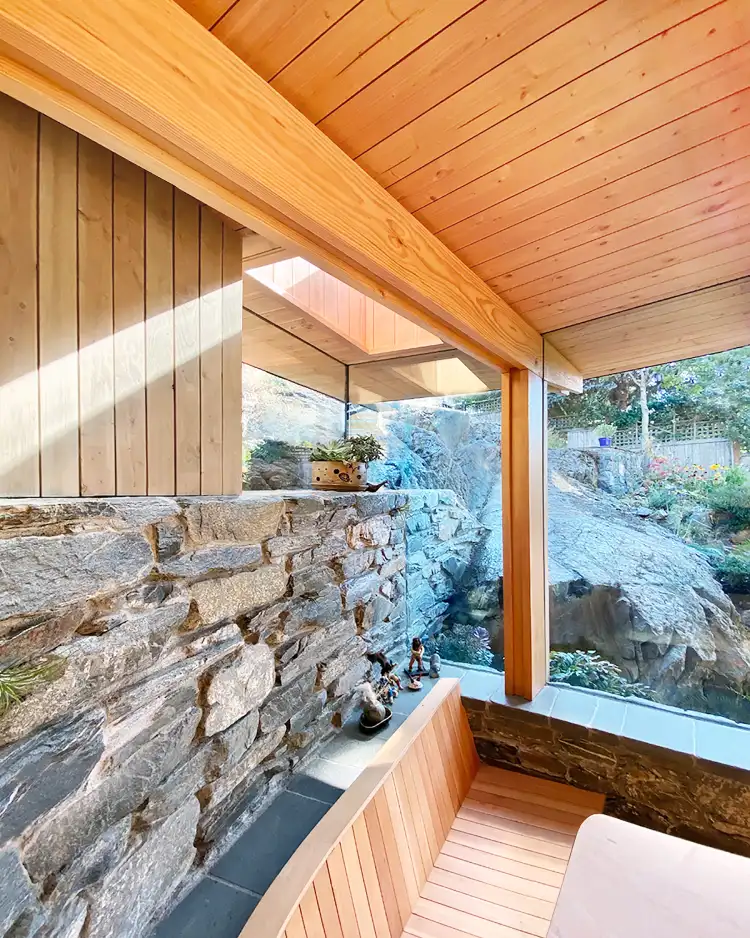
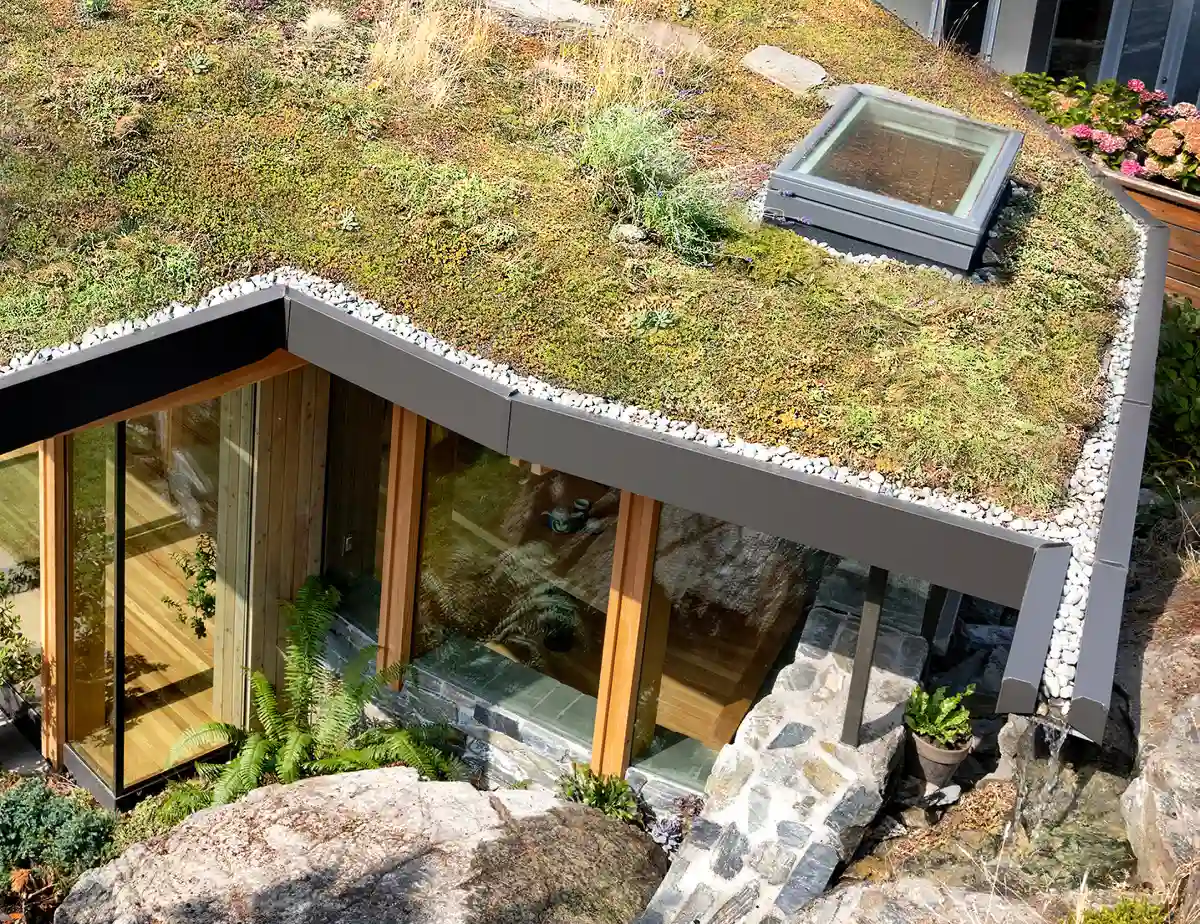
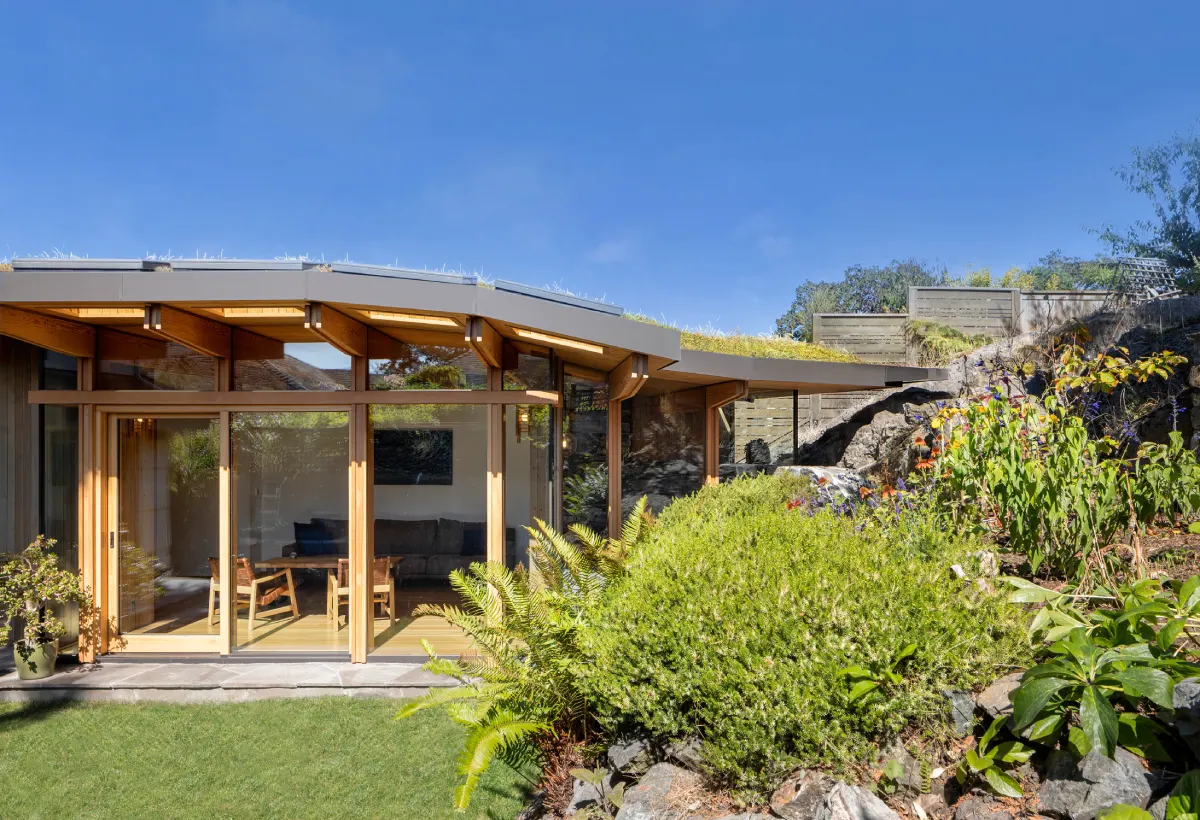
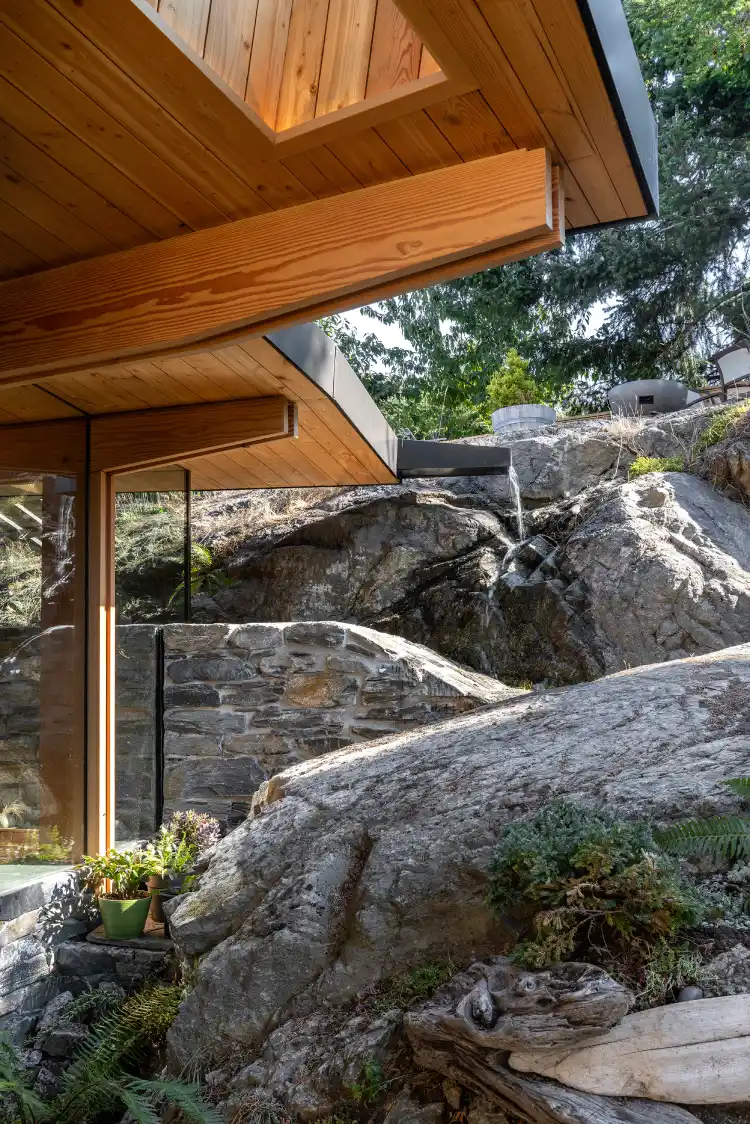
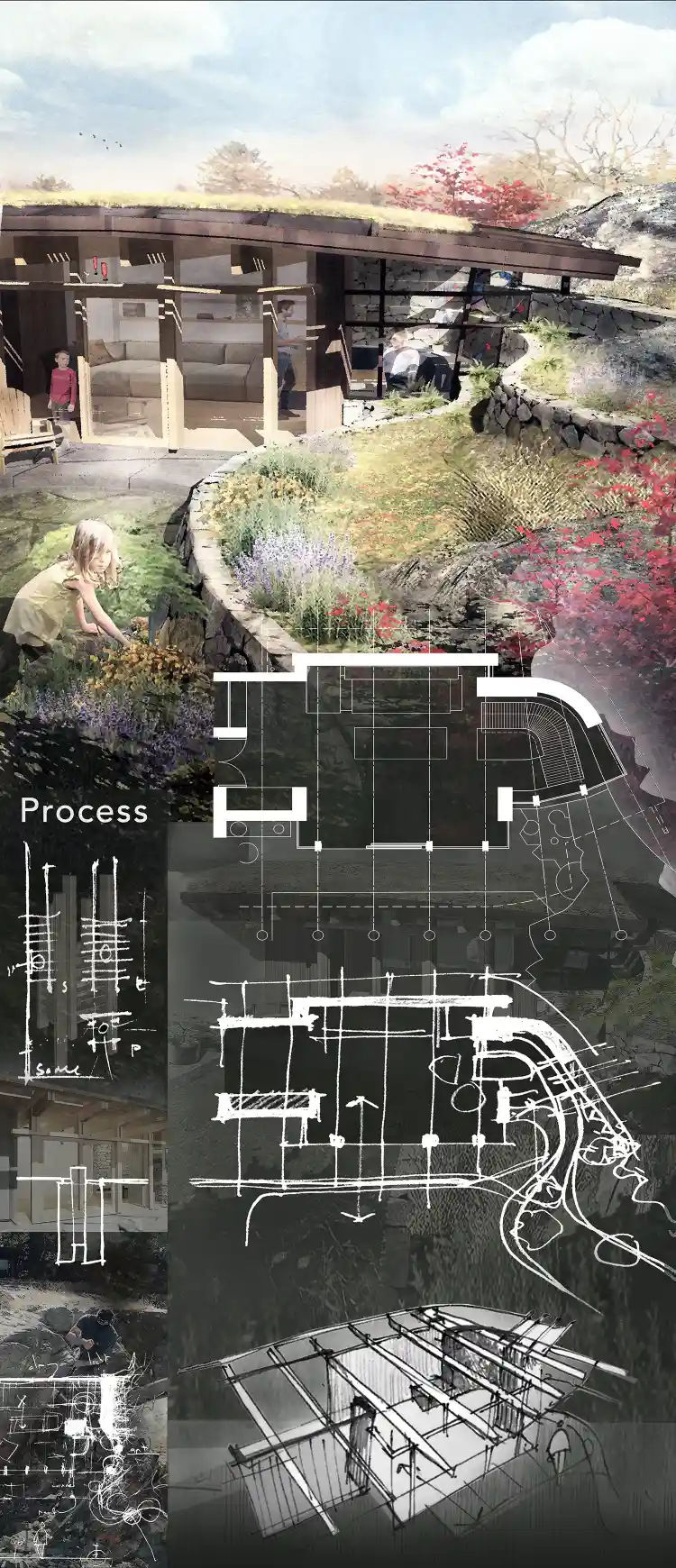
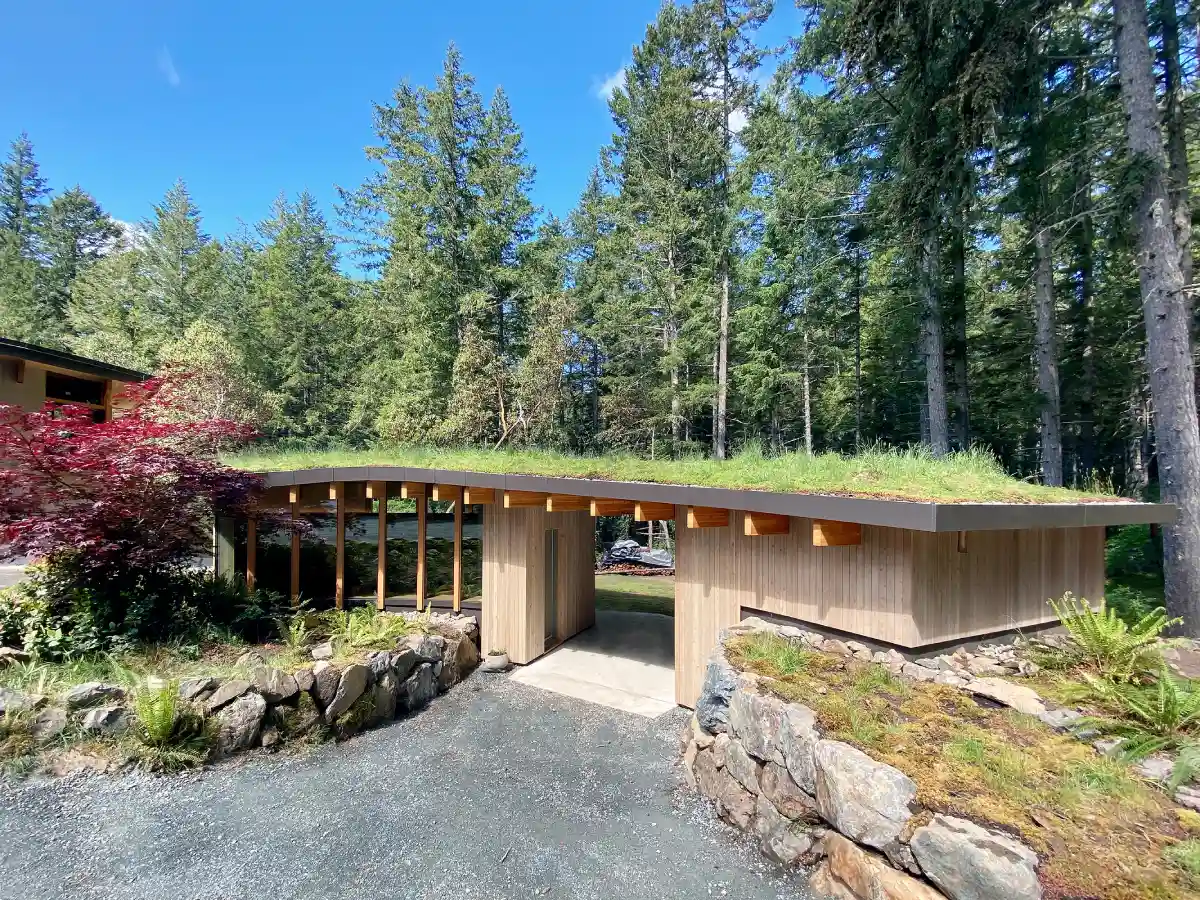
It started as a subtractive process of carefully cutting out a space in the rock, using those stones to make the stone wall that organizes the design and root it to the site. We took plants that were living on the rock next to it and put them on the roof. Their family, grandparents and neighbours came over and gathered plants and everyone helped out. That’s another aspect of doing green roofs – integrating into the clients’ social lives.
Integrating client DIY is a really tricky thing because it can hamper things and cause difficulty for the builder if done wrong, but it can also be wonderful for people to connect with their building because they were a part of it in a certain way.
When you’re talking about integrating the homeowners and DIY, you mentioned that it can hamper the process, yet it can also be something wonderful. Can you mention some more about that?
Client DIY seems like a great way to save money and to build it yourself. Builders sometimes have a different relationship with it because if the person who is paying your invoices is also on your critical path, it can get in the way of things.
So I’m very upfront with clients. You have to do it because you want to. If you’re a busy person, spending lots of hours to save 300 bucks on materials isn’t worth it. Also, if it costs the builder time, it may cost you money to do it.
So it has to be thought through. We have to find a way to balance, such as the builder moves the sedum mats on there, does the waterproofing and lays down a lot of the technical aspects of the roof while allowing time for the clients to collect plants and do the stuff that they found meaningful and they save money on it. Breaking the client works into doable bits.
Most of the green roofs we see are on commercial buildings, but you do a bunch of them on residential. In what scenarios would you recommend them to a homeowner?
The motivation to do green roofs on urban public buildings has a lot to do with the benefits of green roof themselves such as stormwater retention, heat island mitigation, parks and adding biodiversity. These benefits can be less relevant to smaller projects like the ones we do, such as homes and Yoga retreats in rural or suburban settings.
The motivation to build the green roofs we do is more emotional and has very much to do with how a green roof is integrated with the design. This has to be understood otherwise it puts all the motivation onto the client’s shoulders. Budget is a primary concern for all of our clients, so it has to be worth doing or it will be cut out. It is pretty rare, at least in our experience, that a client would go ahead with a green roof purely for, call it, environmental reasons.
The most important aspect that motivates clients to do a green roof is that can they can see and experience it in their day-to-day life in the building. A green roof that is two stories up and out of view has much less chance of getting built than a roof that can be seen, walked on or used in some way. In every single building we’ve done that has a green roof, the clients can see and experience it.

Green roofs can be one of the devices that connects the building to the landscape, which gets back to how the clients want to connect with the place where they live.
A good green roof design also has to mitigate the technical and practical barriers to feasibility such as costs and maintenance or it will probably not get beyond the conceptual stage unless the client has enormous resources or is quite idealistic.
For example, the growing medium adds weight. In our experience, spans between supports over say 4.5 to 5m, the added load on the roof structure increasingly begins to become a factor that adds to costs.
If the roof is thought through so it can be accessed by simple means, both installation and maintenance are much easier. A green roof with a 10m span between structural walls that needs more than a normal ladder to get to will require more resources to realize than most projects can support. It’s a give and take of many factors, motivations and barriers to see a green roof realized on a home or other small building.
Visit Bruce Greenway’s website at Greenway Studio Architecture.