
Sustainable Small Steps… Why Try?

In this weekly Q&A column, retired builder/building inspector Cam Allen answers readers’ home renovation questions. Have a question? Enter it in the form below.

This week is a bit off-the-beaten path as far as renovation advice goes. If you have followed this column at any time during the six months I have been writing it, you will see my objective is to be down to earth with respect to renovations, materials and how to slowly, patiently advance your house into a comfortable, affordable, sustainable home.
There are, based upon government statistics, something in the range of 16 to 17 million homes in Canada, of which less than 1 percent are truly energy-efficient residences. While I support and understand the drive for innovative, carbon responsible, net zero or any one of the other numerous programs or concepts for efficient homes, in reality most homeowners in today’s economy cannot afford nor understand how or where to start.
Every time I complete a two-hour public service presentation that we offer on housing and the climate crisis, inevitably during the Q&A period at the end I get numerous comments. Most common is “We can’t afford to make major changes in our home” or the toughest one to answer is “Why bother, it’s not going to make much difference.” I admit I have been criticized by a couple of readers for recommending less than optimum green materials. My basic
answer is this: every little step makes a difference and make that first step, remembering that what you can afford and understand, must blend.
Pay attention to all the things you buy for your home, aim for any energy efficiency, even the smallest amount. Check to see if the item you are buying has the “Energy Star” certification. This excellent program is a sound, basic benchmark for helping reduce your home’s operational costs ranging from something as simple as LED lights to a power bar with a timer for your home
entertainment/wifi equipment. Turning these off when not in use reduces the phantom electrical load that your home is quietly consuming. Phantom load is something most homeowners do not realize, how much power is used for that instant-on feature. There are many simple yet effective recommendations on energy efficiency, start here.
When it comes to an actual renovation, every home has a history of its own. If it’s an older home, give some consideration to this. One comment I heard some years ago is “renovation is house healing.” It’s your chance to fix the mistakes or methods of the past and integrate the sustainable. Be cautious about your plans and don’t get caught up in all the new ideas. Styles come and go. Be cautious about the amount of smart home gadgets. Some have their place but your renovation must be user understandable. Be careful about lighting, while a splashy row of pot lights may be impressive at first glance, you have to live with this.
Keep my favourite saying front and centre, “It’s the envelope!!” A home is a system made up of many parts, most not visible. We are what we breathe and if your air quality is poor, it could be the fanciest home on the street, but if it’s not healthy to live in? Before you even think of a major addition, get your existing home efficient and comfortable.
The number one upgrade should and always will be insulation. That said, how it’s integrated and blended with the envelope can make or break the expense of adding insulation. More is not always the answer. Lets take an average attic for example in a home built in the 60s. Once you get past a foot of cellulose or batt insulation, adding much more is only making the insulation contractor rich. A home in this era has limitations.

Get the Green Building Project Checklist
Use this handy checklist on your next project to keep track of all the ways you can make your home more energy-efficient and sustainable.
Be cautious about window replacement. Again if this is a 60s home, adding triple-glazed, tinted windows is simply padding the contractor’s pocket. A reputable, double-glazed window, wood or fibreglass is ideal but vinyl is acceptable. While some may say, don’t use vinyl, difficulty recycling etc., step back and look at the whole picture: vinyl is common and affordable. How much overall energy and related carbon savings will this change make in the long run, given the fact it can take decades to recover the cost of replacement windows. But if the budget does not permit it, don’t give up. I will give you an example.
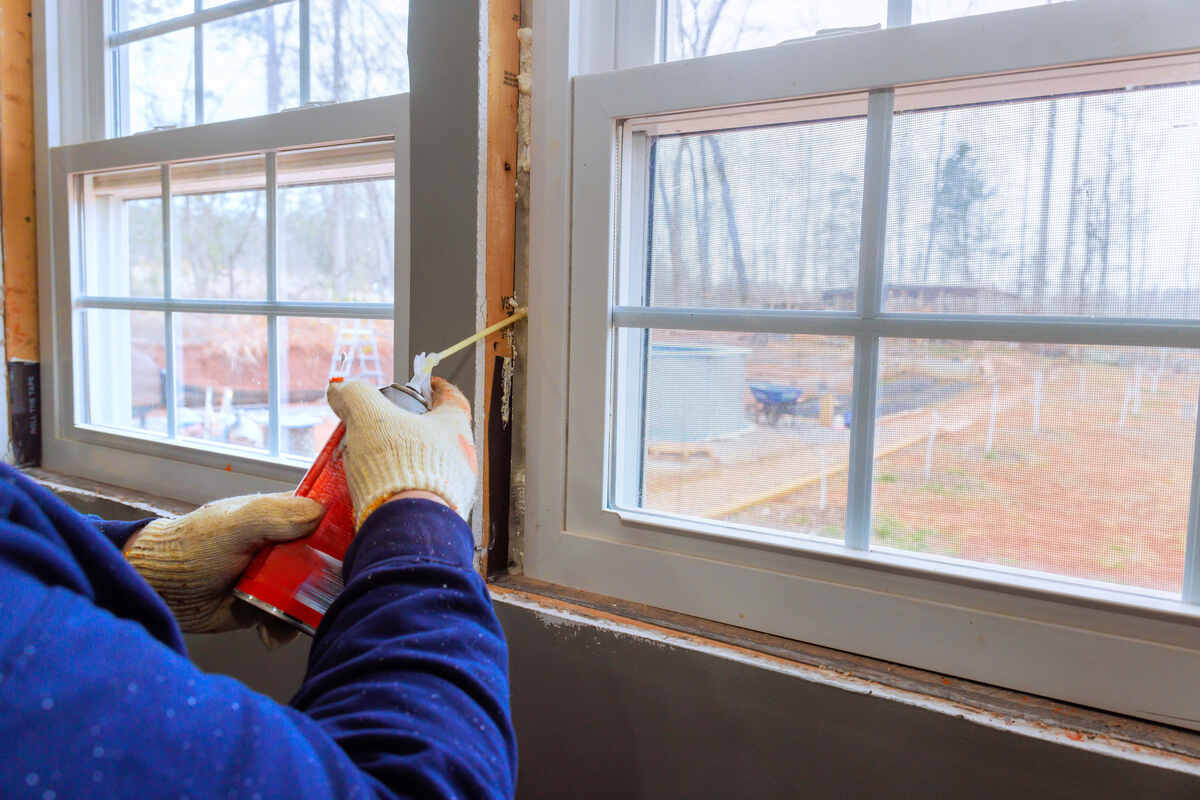
Windows in older homes were rarely properly installed. I went through an older home a while ago and gave the first-time homeowner a list of tips. His wife noted how cold the older double-glass slider windows were and how long it would be before they could afford to replace them. I came back a couple of days later with three cans of window foam, a large roll of foil tape, a roll of “water clear” plastic and a large roll of 3” painters tape.
We removed the trim around the window, took out the poorly fitted bits and pieces of fibreglass insulation, spray foamed the space between the window frame and wood frame, carefully taking two applications. Once cured, we neatly trimmed the excess foam away, level with the wall and window frame. Then carefully taped the foil tape to the edge of the window frame over onto the wall and replaced the trim. We cut pieces of plastic to fit the window, overlapping the window trim by an inch and applied this plastic with the painters tape to the trim. It was a cold day and you could feel the difference in the room.
Each year until they can afford new windows, this “internal storm window” can help with comfort level inside the home. This $80 “renovation” made a substantial difference inside this older home. It will reduce their heating bill, albeit not a huge amount. This translates into a tiny carbon reduction. If every home in Canada made this kind of small energy saving, can you imagine the amount of energy and carbon savings!
Renovations do not have to be huge, expensive and stressful home improvements. Taken one step at a time they can add up to major savings. This translates into a reduction in fossil fuels and the accompanying overall climate benefits. We all need to recognize not everyone has the dollars for the ideal upgrade, consider any improvement as a step towards a more energy-efficient home with the accompanying climate benefits.
Images from Depositphotos
Have a Home Renovation Question?
Write it down below and we’ll get back to you. All questions get answered – every week, we’ll select one for publication in the column.


