Windows That Think: How Smart Windows Are Rewriting the Rules of Solar Control
Electrochromic and Thermochromic Technologies Explained (and How They Compare to Standard Windows)

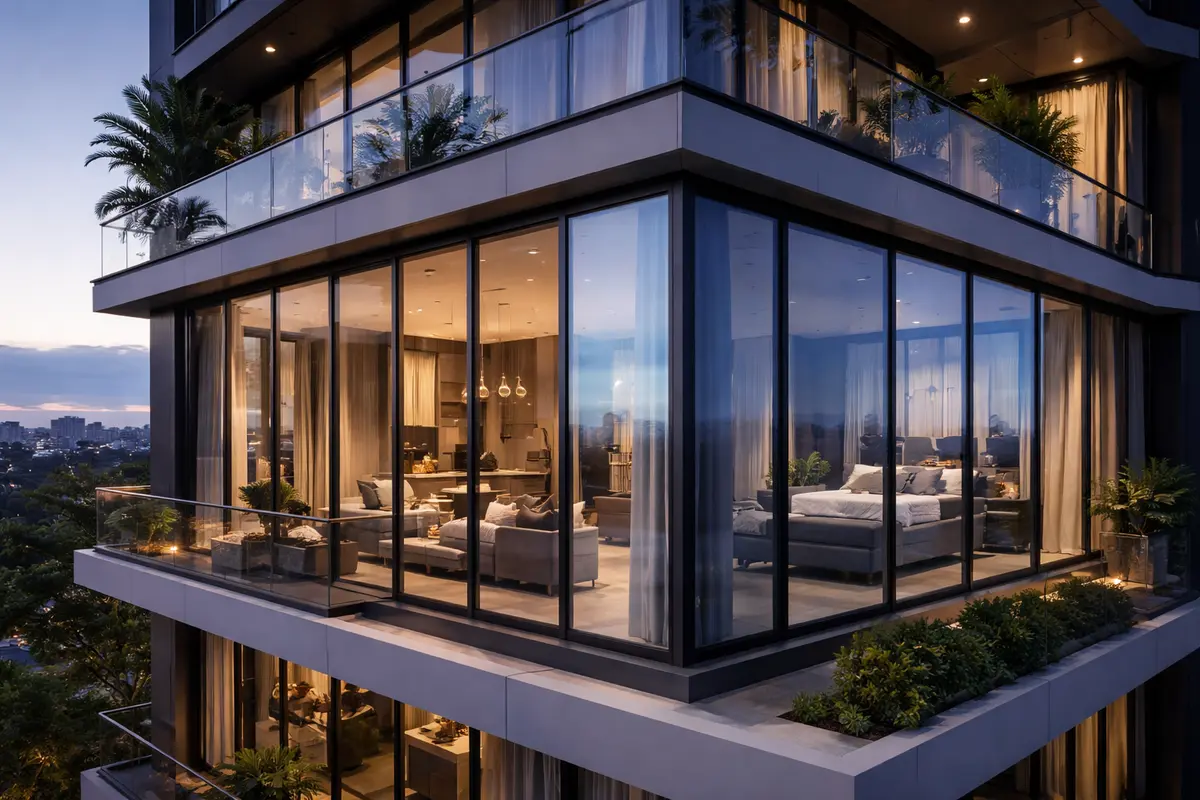
Windows and energy efficiency are intrinsically tied to each other. In Canada, windows and doors can account for up to 35 percent of total heat loss in homes, despite their relatively small share of the building envelope. Even so, the trend is clear. People want more glass, not less.
This creates a fundamental tension in building design: how to increase daylight and views without compromising energy performance. Smart windows are the next step in refining the balance in this relationship, offering greater control as the seasons and weather change.
What Are Smart Windows?
Right now, your windows commit you to a specified level of energy efficiency and natural light, but what if you didn’t have to make that commitment or compromise? Smart windows are a next-generation technology that can change their transparency and insulating properties in response to light and temperature changes, which means the windows can regulate heating or cooling depending on external environmental conditions. In winter, these windows are designed to maximize solar gain, while in summer they restrict excessive solar radiation, to reduce your reliance on central heating or HVAC systems.
The Science

Get the Green Building Project Checklist
Use this handy checklist on your next project to keep track of all the ways you can make your home more energy-efficient and sustainable.
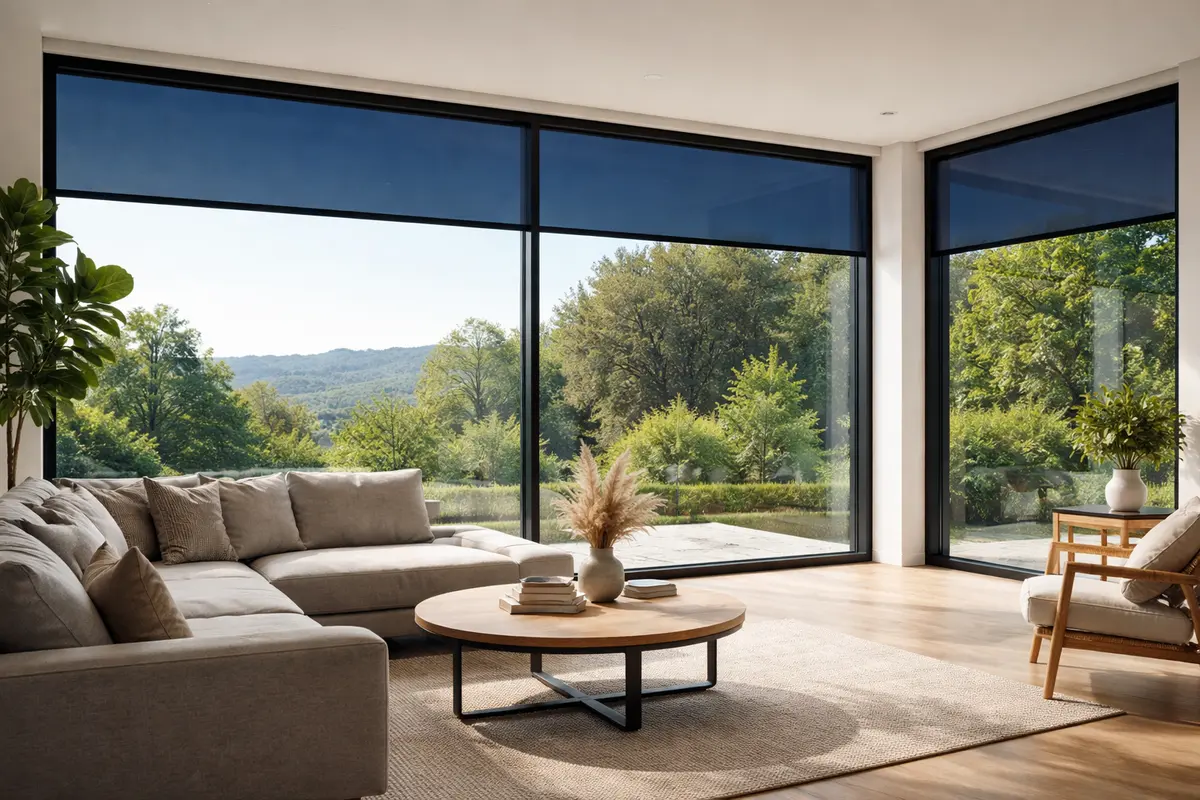
Half of the sun’s radiant energy falls outside of the visible spectrum. This non-visible light provides additional heat which is useful on cold days but unwanted on warm days. Smart windows can take advantage of this non-visible light.
There are two main types of smart window technology: thermochromic and electrochromic. This refers to the mechanism used to change the state of the window.
Thermochromic
Thermochromic windows adjust their optical properties depending on the temperature of the window surface, allowing them to move between two states in response to external conditions. Electrochromic windows require the input of an electrical current to trigger a state change. These windows use advanced materials to dynamically control the transmission, reflection and absorption of solar radiation.
Electrochromic
Electrochromic glass provides greater customizability because its optical properties can be actively tuned by applying an electrical voltage, enabling controlled transitions between different tint states. Thermochromic glass, by comparison, passively responds to temperature changes and is limited to the inherent switching behavior of the material.
With such versatile potential, electrochromic technology is a hot topic in the world of smart windows. Research is focusing on both improving the performance and expanding likelihood of commercial adoption:
- Hexagonal tungsten oxide nanorods enable sodium-ion electrochromic technology to effectively achieve near-infrared (NIR) light modulation as a replacement for expensive lithium-based systems.
- Carbon nanotubes modulate solar radiation while also maintaining charge. Continuous electrical input is not required to maintain the state, offering lower power requirements.
- Dual-band electrochromic smart windows improve on the slow phase-switching speeds of previous electrochromic variants.
The materials used need to allow the right amount of solar radiation to pass through at each phase to effectively control light and heat. During development of new window coatings, the materials must be tested with tunable light to confirm how much light is transmitted through the coating at critical wavelengths.
Comparing Window Technology: Smart Windows vs Standard
| Electrochromic | Thermochromic | Standard (Multi-Pane) | |
| Mechanism | Electrical current tunes optical properties to modulate solar radiation | Temperature initiates a chemical state change to modulate solar radiation | Insulating barrier reduces heat transfer |
| Control Type | Manual switches or automated via sensors | Passive | None |
| Customizable | Yes, optical properties of materials can be tuned to multiple states | Limited to thermally activated state changes | No |
| Energy Efficiency | Very high (if automated) | High | Medium to Low |
| Maintenance | Medium: the electrical/sensor system adds complexity if there is a fault. | Low; gentle cleaning is recommended to preserve thermochromic coatings. | Low; in older windows seals can fail which compromises the insulating ability. |
| Cost | Most expensive | Expensive | Affordable |
WATCH | Smart Windows vs Standard Windows
Windows that Control Themselves
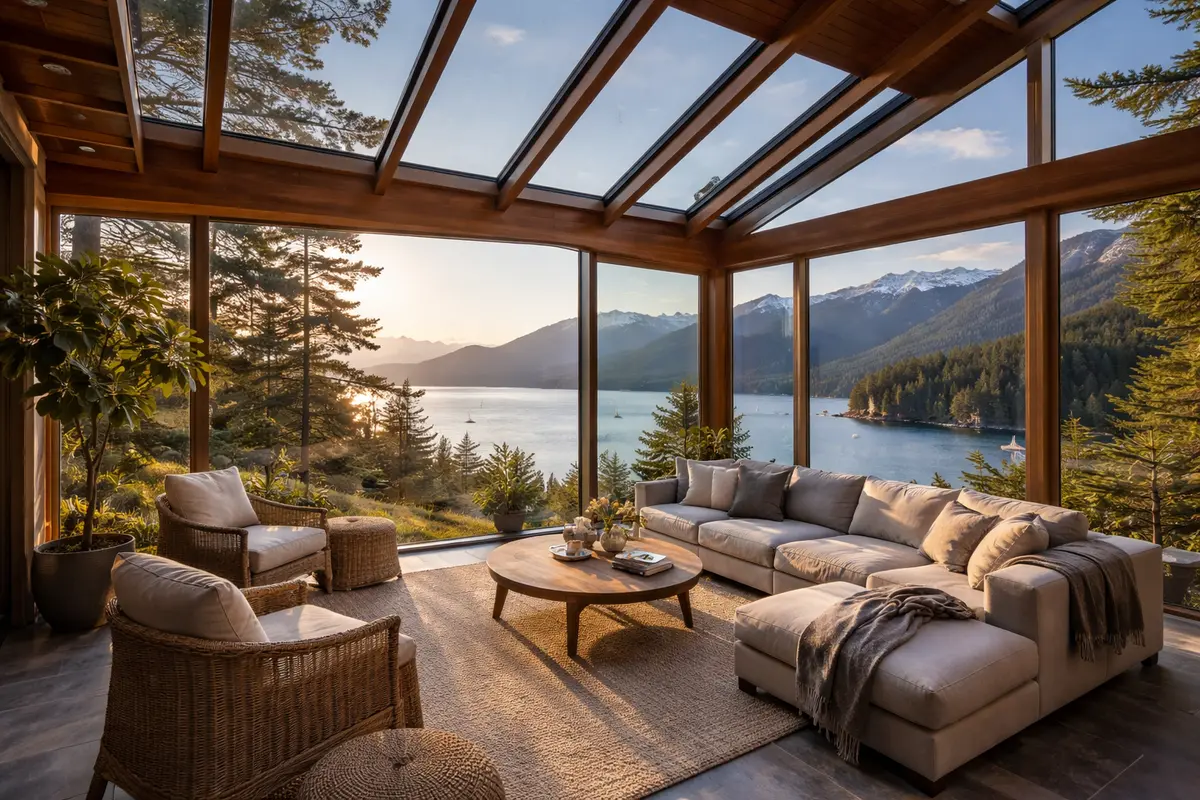
Smart windows can either be controlled by users or be self-regulating. Self-regulating windows feature sensors for automatic changes to the material composition, which allows them to optimize their energy efficiency according to a range of external conditions. They can respond appropriately to the cold and dark days in winter and the warm, sunny days in summer.
Electrochromic windows are one of the technologies that can be split into manual and automatic systems. In manual systems, the user is able to control the state of the window using a switch or remote which activates or deactivates the electrical current. For an entirely smart ecosystem, automatic windows are connected to sensors which monitor temperature and light. Depending on the environmental conditions, the sensors can trigger or disable the electrical current to change the state of the windows to optimize for the current conditions. In advanced systems, electrochromic windows can move into more than three or more states, and the sensor is able to trigger the most suitable.
To enable all-season energy savings, sensors integrated with Internet of Things capabilities are needed to allow the windows to respond in a timely manner to environmental changes. Waiting for manual input limits the potential energy efficiency of electrochromic technology.
So What?
In Canada’s heating-dominated climate with space heating accounting for about 60 percent of building energy use (and cooling a much smaller figure at 1.6 percent though growing with climate change), smart windows present a clear performance advantage. By improving energy efficiency, they will make it easier for contractors to meet legislated requirements on new building projects while also offering homeowners greater energy efficiency.
In new building projects, small windows or thermal blinds and curtains no longer need to be favoured for their energy efficiency. Instead, natural light in our living spaces can be equally important and achievable. And of course, they will make energy bills cheaper. With smart windows, homeowners can use them as a first response to the changing of the seasons, saving the use of heating and cooling systems for more extreme temperature and weather conditions.
Read more on this topic in Triple-Pane Windows in Canada – Are They Worth It?
Images from Depositphotos