
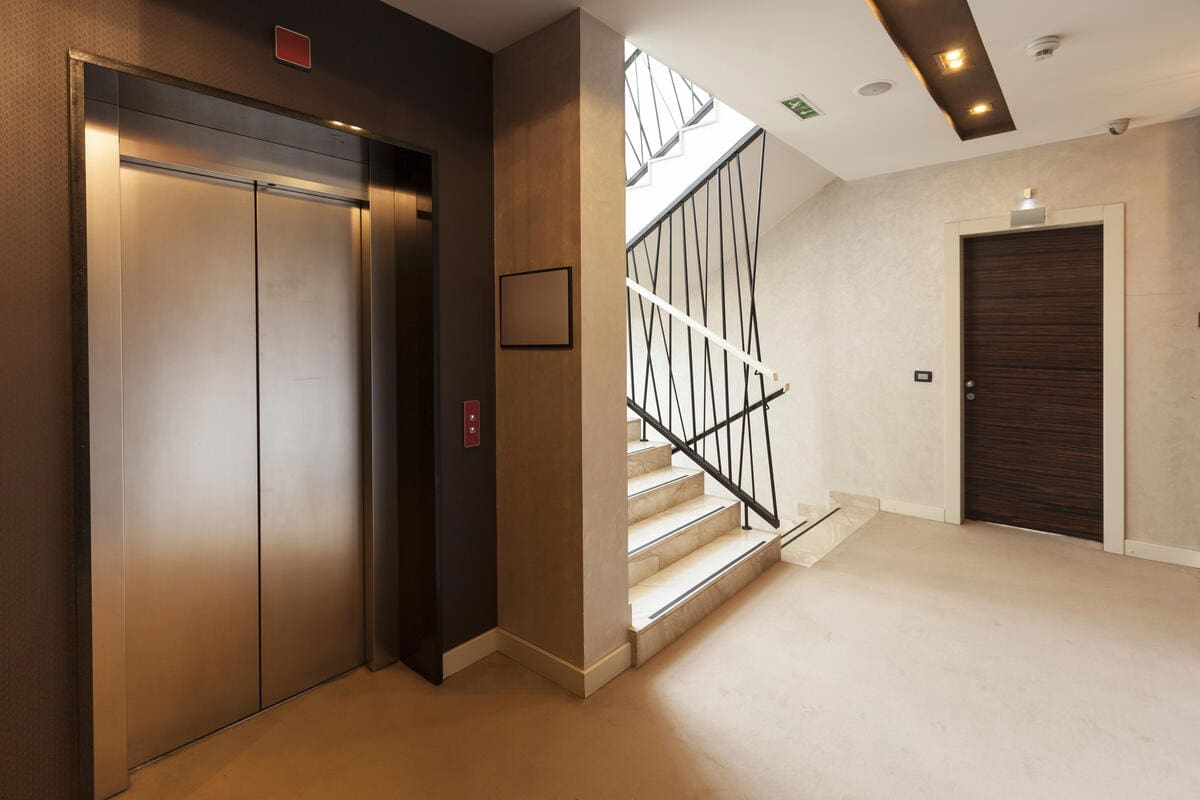
The combination of an aging population and contemporary home design has prompted the popularity of modern residential elevators. Today, residential elevators are a far cry from the clanking, trellis door-closing lifts that shuddered up and down the lift shaft balanced by counterweights a generation or two ago.
Modern residential elevators are sleek in design and sustainable in function. They support ‘aging in place,’ allowing aging residents to stay in their own homes rather than move because of mobility issues.
Aside from the increase in demand for residential elevators, other factors are also contributing to the increase in the number of elevators being installed. Countries are increasingly urbanizing and cities are growing denser, prompting buildings to reach higher into the sky. There’s also an increased awareness of accessibility needs for those who are less mobile, requiring elevators in more buildings.
Mirroring that increased demand in elevators is an increased appetite for sustainable, energy efficient options. Here we’ll explore innovations in sustainable elevators, in terms of technological innovations, designs, materials and manufacturing processes.
7 Sustainable Innovations in Elevator Technology
Modern elevators have embraced energy-saving and sustainable practices to provide environmentally friendly options for residents.
- Introducing motion sensors into elevators creates substantial energy savings by automatically switching the lights and ventilation system off when the elevator is not in use.
- LED lighting is ideal and uses around 80 percent less electricity than traditional fluorescent lights. In addition, LED lights have a long service lifespan.
- Solar-powered elevators have gained market share, particularly in areas with sufficient sunshine suitable for solar power. The electricity generated from solar panels is stored in batteries, allowing the elevator to operate even when no sunlight is available.
- Energy-efficient motors, such as gearless motors with variable-frequency drives, adjust to elevator load and speed demands. These systems reduce energy use by not running at full power continuously. Gearless motors, in particular, are more energy-efficient, require less maintenance, and have a longer lifespan, making them an eco-friendly choice for modern elevator systems.
- Smart maintenance systems utilize sensors and data analytics to monitor elevator performance in real-time. This proactive approach allows building managers to identify potential issues early, minimizing the need for unscheduled repairs and extending the life of components. Predictive maintenance reduces waste and enhances elevator system efficiency, contributing to overall building sustainability.
- Regenerative drives are more suited to high-traffic buildings. The technology is similar to that in hybrid cars – they capture the energy available when the elevator slows down and stops at each floor. The power saved during breaking can make the elevator as much as 30 percent more energy efficient.
- Another technology more suited to high-traffic buildings, destination control systems group passengers based on their destination before they enter the elevator. By minimizing stops and optimizing travel routes, this technology reduces energy consumption, waiting times and overall elevator travel distances. It improves efficiency by ensuring elevators only stop at necessary floors, providing smoother service with lower energy demand.
3 Innovations in Materials and Manufacturing Processes

Get the Green Building Project Checklist
Use this handy checklist on your next project to keep track of all the ways you can make your home more energy-efficient and sustainable.
- Elevator manufacturers are shifting to low-carbon footprint manufacturing processes by using renewable energy and reducing emissions in production. These sustainable practices reduce the overall environmental impact of elevator systems, making them greener from the manufacturing stage through to installation and operation. This supports buildings aiming for LEED or other building certifications.
- Sustainable materials such as recycled steel, glass and eco-friendly coatings are increasingly used in elevator construction. These materials reduce the environmental impact of manufacturing and transportation, promoting a more circular economy. Using eco-friendly materials helps buildings achieve sustainability certifications and minimizes waste, contributing to the building’s overall green profile.
- Elevators with advanced insulation and heat management systems reduce heat generated by motors and machinery. This ensures the elevator operates more efficiently while also lowering the demand for additional cooling in buildings. The result is reduced energy consumption for both the elevator system and the building’s overall energy usage, enhancing sustainability.
Different Types of Sustainable Elevators
Shaftless Elevators
The shaftless home elevator is one of the most adaptable and versatile elevator systems for homes with two floors.
Shaftless elevators eliminate traditional space requirements such as machine rooms, shaftways or elevator pits. They are extremely space-efficient, with integrated sliding doors and efficient safety controls.
The ‘hold-to-run’ feature ensures accurate control of the elevator, as it stops as soon as pressure is released from the activation button. Safety is further enhanced by the fitting of sensors above and below the elevator, which stops the movement of the elevator if any obstructions are encountered.
The shaftless elevator operates on a screw-driven system. The elevator is attached to the screw by a large nut that travels up and down the threaded screw depending on the rotational direction of the screw.
The average size of these elevators allows one or two people to use the lift simultaneously, and larger designs are also available to accommodate walkers and wheelchairs.
Since shaftless elevators are compact, they require minimal space and materials, making them a sustainable option for low-rise residential buildings. They do not need a traditional elevator shaft, reducing construction material use. However, they tend to use hydraulic or screw-driven systems, which may have higher energy consumption than traction systems, limiting their sustainability for larger, energy-intensive buildings.
Machine Room-Less Elevators (MRLs)
For buildings that require an elevator to service more than two levels, a machine room-less elevator can conveniently operate up to five levels.
MRLs don’t need a pit in a machine room, as the drive and controller are located at the top of the hoistway. An electric motor turns the chains that run over cogs and are connected to the elevator and the counterweight, which balances the elevator’s weight under half-load conditions.
Balancing the elevator’s counterweight with the passengers’ weight reduces the strain on the motor and saves a significant amount of power required to raise the elevator.
Since MRL elevators don’t have a separate machine room, the design saves space and reduces material usage. They use energy-efficient permanent magnet motors, which consume less power, and offer quieter operation with lower maintenance needs. Overall, MRLs are considered highly sustainable due to their energy efficiency, space savings and reduced environmental impact.
Belt-driven Lifts
Belt-driven lifts have raised the bar for sustainable, eco-friendly elevators in the low- to mid-rise market. The belt drive provides a quiet, stable operation and a smooth, vibration-free ride.
They offer a viable solution to vertical transportation by utilizing sustainable materials in the construction of the equipment, coupled with eco-conscious and smart technology.
The drive and controller are placed above the elevator, so a machine room is unnecessary. The efficient utilization of space allows for convenient placement in the home.
Belt-driven lifts are more energy-efficient than traditional cable-driven systems because they use synthetic belts, requiring less energy to lift the cabin. They also operate more quietly, have fewer mechanical parts and require less maintenance, contributing to their sustainability. Their compact design further minimizes material use, making them an environmentally-friendly option for elevators.
