
Canada is facing a housing crisis. This is probably not news to you, though. Affordable rentals are harder and harder to find. Record sales figures have priced many of us out of home ownership. And many of us have gone on the lookout for alternative housing ideas.
There are many pieces to the complex puzzle of the current shortage of affordable housing. The unsustainable demand for single-family detached homes within reasonable commuting distance of major urban centres is one. Another is what Kerry Gold calls “property hoarding,” i.e., very wealthy investors and corporations holding onto multiple homes until they gain value, or acquiring houses in order to generate rental income.
But unless and until policies shift to make the housing market more equitable and accessible, those of us without the means to get into the housing business ourselves might have to get creative. Here, then, are some eco-friendly, DIY-friendly alternative housing ideas that might open up some possibilities for you beyond hoping for the housing bubble to burst.
Yurt
A bit like a tent, a yurt is a portable structure with a fabric shell and a collapsible frame, although people use them as permanent shelters. They’re designed to be long-lasting and hardy in adverse weather conditions. Many companies make them, but you can also find a plan and make one yourself.
Modern yurts tend to be built on a platform of some kind and can be insulated to varying degrees. Traditional yurts have a woodstove in the centre for heat as well as cooking. Nowadays, it’s not uncommon to see yurts equipped with all the plumbing, electricity and heating of a conventional home.
Choose natural fabrics, a sustainably harvested wood frame and solar power and you’ll have a low-cost dwelling with a very small environmental footprint. You might find yourself limited in terms of design, or you might find a round, one-room dwelling the perfect canvas for your imagination to roam over.
Shipping Container
Get the Green Building Project Checklist
Use this handy checklist on your next project to keep track of all the ways you can make your home more energy-efficient and sustainable.
Shipping containers offer a unique living proposition for their owners—having a home whose shell is 100 percent repurposed. These structures are designed to withstand extreme weather, although they are made of metal and care needs to be taken to prevent rust.
They can be stacked, placed at right angles or otherwise arranged to create more usable space. People often use multiple containers because the standard 8 foot width of a single container can quickly become undesirably narrow by the time insulation, plumbing and electrical work are added in.
Container homes are a nice middle ground for DIY owners, in that they’re sound basic structures that just need finishing. You can also have a container home custom made, if you don’t trust your DIY skills and if your budget allows.
Treehouse
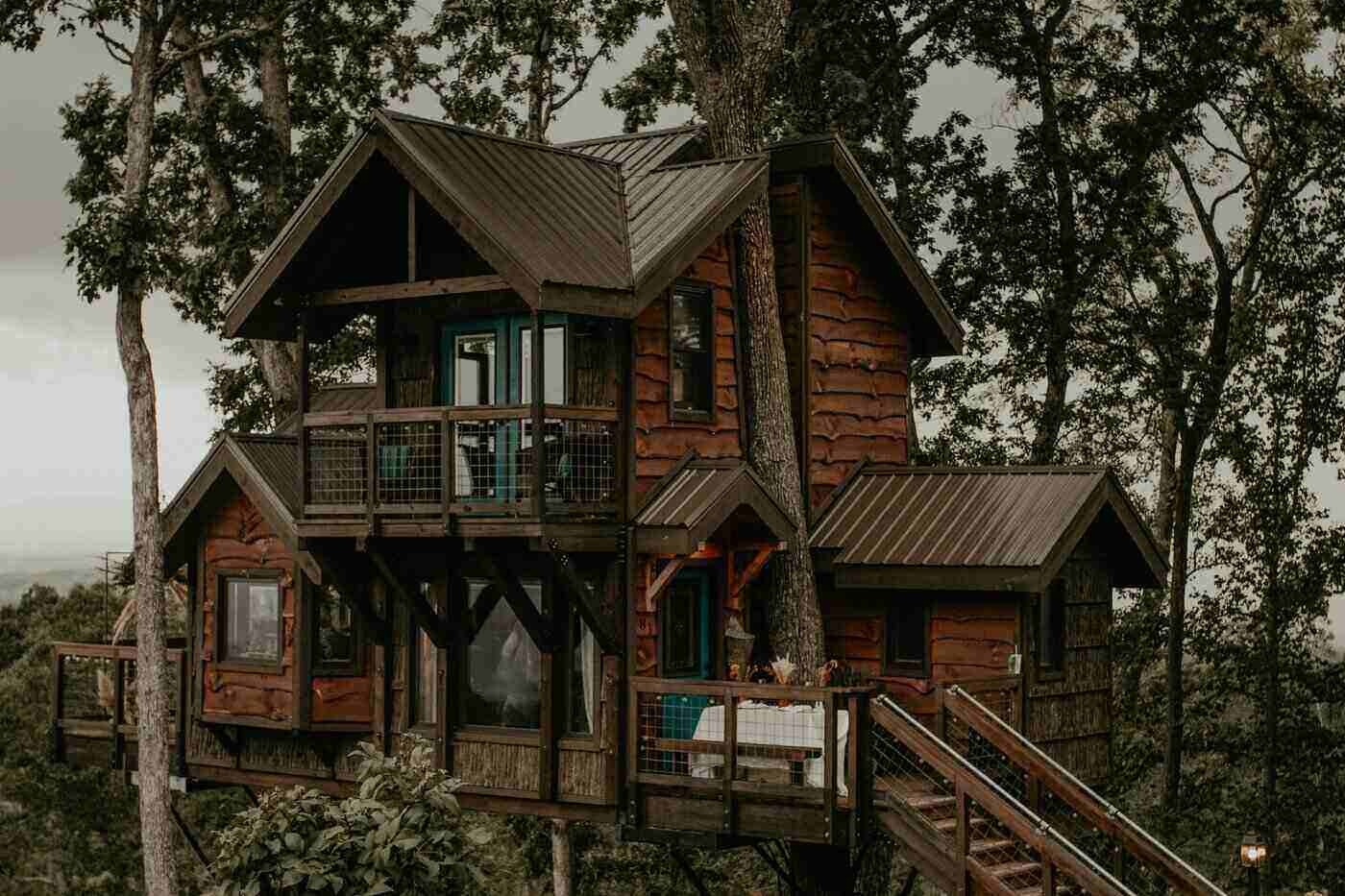
These are not just for play forts and protesting logging in old-growth forests. Permanent treehouses are rarer, especially in Canada, but they deserve a mention because they can be made entirely from reclaimed materials and have a low carbon footprint.
Treehouses are built on platforms. They can be bolted to the tree, hung from upper branches and/or supported by posts or piers. It’s typical to consult an arborist on this kind of project, both to help you pick the most suitable tree(s) for habitation and to plan for the tree’s continued good health.
Your treehouse could be single or multi-storey, with many separate rooms connected by bridges or a single central dwelling. It could be anywhere from a few hundred to a few thousand square feet. It could also be as simple or as luxurious as you wanted, including refinements like indoor plumbing, fireplaces, saunas, you name it.
Converted Bus
Once you take the seats out and convert it, a bus is like an inexpensive tiny house you can drive. With an average interior space of 200-300 square feet, this is indeed a tiny option. Fortunately, though, hundreds of people have gone before you and posted Instagram pictures of how they maximized space. You’ll find couples, families and folks with pets all living comfortably in their conversions.
People tend to use high-efficiency wood or propane stoves for heat and add extra insulation to keep them comfortable in cold weather. Solar systems can be used to for electricity and for hot water heating. Not everyone chooses to have a bathroom onboard. Those who do use plumbing with holding tanks for fresh and black water or composting toilets. You can overcome the larger carbon footprint of driving a bus by running yours on biodiesel.
Houseboat
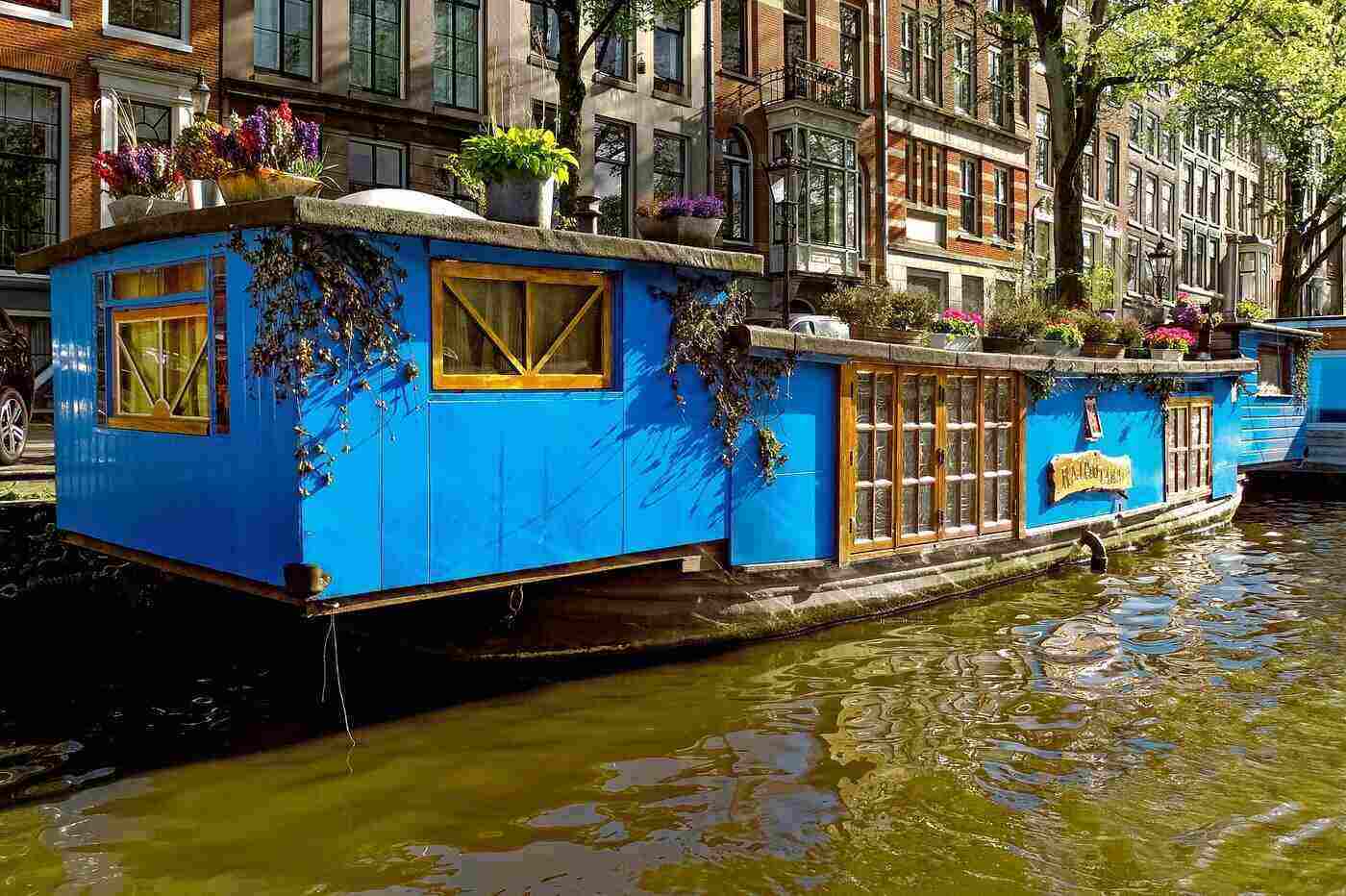
If you live near a body of water, a houseboat could be an adventure worth considering. Ranging from 200 to 2000 square feet and beyond, houseboats might let you stretch out more than you think. They also require more maintenance than you might think, too. That said, they can be winterized and made comfortable with running water, electricity, wifi and modern bathroom facilities.
There are new eco-friendly models on the market with hybrid electric propulsion systems, solar panels for electricity and solar collectors for heat. They tend to feature high-efficiency plumbing, as well as onboard water filtration and wastewater treatment systems. These models are, to say the least, not cheap.
Older model houseboats can be converted to biodiesel and can be fitted up like other sustainable homes. With solar technology, composting toilets, high-efficiency plumbing and rainwater harvesting systems, your houseboat could be very green.
Shared Housing
The bank does not care who comes up with the money. They just care that it’s there. More and more, people are going beyond the idea of single family ownership and buying homes with extended family and friends. If you think about it, for one person to buy a million-dollar home is outlandish. But for 4 friends to buy it and split the down payment and the mortgage in a way that seems equitable to them is to make that million-dollar home much more financially feasible.
This option requires a big of leg work. You’ll need to draw up legal agreements about what will happen if someone moves or can’t make payments. It also requires some honest conversations about what each person needs to be happy in a long-term co-living situation. Finally, it might involve some creative renovations and remodelling so everyone has a space they feel comfortable in, but good news! There is a lot of room in a million-dollar home.
The long-term way out of the housing crisis will be to narrow the wealth and income gap again. But as we wait and work for that to happen, we all have to live somewhere. It might as well be somewhere fantastic.
Here’s another idea: Capsule Homes. Learn more about them in our article “Capsule Homes: Accommodation That’s Affordable & Eco-Friendly“
Feature image: djedj; Image 1: Kadarius Seegars

this would be a good article if it were handed to the teacher by a 5th grader. Reads like you read a blog you liked and thought “I wanna blog like that” which, monkey see, monkey do, very 5th grader. are you a 5th grader?