

Windows are the weakest link in your building envelope. It doesn’t matter how high an R-value you have in your walls, if you don’t have the right windows you’re going to be bleeding heat out of them. So whether you’re looking to update your existing home or contracting a new build, it’s time to start thinking about them. Double-pane windows are a minimum requirement for Canada, but now that triple-pane has become commonplace, you might be wondering if they’re worth the investment?
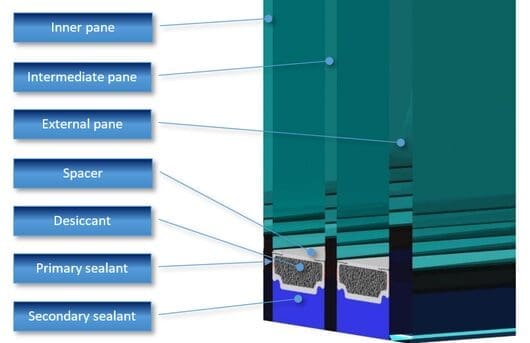
What is a Triple-pane Window? Triple-pane windows have three layers of glass with an air gap between each layer that’s filled with gas (usually argon). The additional panes of glass and gas increase both the energy efficiency and soundproofing of the window. Less heat is lost to the outside in the winter and less heat enters the home from the outside in the summer, reducing both heating and cooling costs.
The Benefits of Triple-Pane Windows
Though windows can be your enemy when it comes to energy loss, triple-pane windows can be one of your home’s greatest friends. They can reduce the energy loss problem and they come with a bunch of other benefits. Here are seven to think about.
Energy Efficiency
On average, triple-pane windows are about 20 to 40 percent more energy efficient than double-pane windows. If you live anywhere the climate is harsh, you recognize that even 20 percent more energy efficiency in your windows can add up quickly.
For maximum efficiency, you want a window that offers a high level of insulation. The metric most commonly used to assess insulation in windows is the U-value. The main thing to know is that the lower the U-value, the less heat loss. A good U-value is below 1.40. Anything lower than 0.30 is considered highly energy efficient. For a detailed understanding of U-values refer to the video below. Triple-glazed windows have a really great U-value, typically coming in at under 1.0.

Get the Green Building Project Checklist
Use this handy checklist on your next project to keep track of all the ways you can make your home more energy-efficient and sustainable.
Increased Comfort
If you’ve ever sat beside an old window on a cold day, you know how uncomfortable that can get. You might also have found yourself getting up from your chair to turn up the thermostat, only to find that you still feel cold.
That’s because your body’s radiant heat gets sucked out of you by the window. And that situation won’t change until the window gets changed. Triple pane is the answer to your problems. They are definitely worthwhile in this regard. Particularly if you live somewhere cold, and extra particularly if your home has a lot of glass.
Soundproofing
Triple pane windows offer the best soundproofing, particularly if you purchase noise reduction glass and insulated window frames.
Compared to single-pane windows, triple pane significantly reduces noise transmission from the outside – about 30 to 50 percent less. If switching from double pane, the difference will be negligible, however.
Reduced Condensation
Triple-pane windows will be less likely to fog up than single- or double-pane windows thanks to their greater thermal efficiency. The multiple layers of glass and insulating air spaces reduce temperature variations on the glass surface, minimizing both moisture buildup and mould growth.
Durability and Security
Triple pane windows are thicker and heavier than single or double-pane windows. That added mass translates to a more durable window that generally holds up better and lasts longer.
Since triple pane windows have three panes, they are less likely to break than single or double pane windows. Even if one of the panes happens to break, they can still perform with one or two panes intact. That added durability also means the window is more secure as it’s harder for an intruder to break into your home.
Increased Property Value and Marketability
Upgrading to triple-pane windows can increase the property value and marketability of a home. A good number of potential home buyers would pay more for a home that has energy-efficient features like triple-pane windows, which can contribute to a higher resale value and faster sale of the property. Just don’t expect your large cash outlay for new triple-pane windows to be compensated by the increase in resale value.
Remodeling Magazine tracks project cost vs increased resale value in their Cost vs Value Report. Though they didn’t track triple-pane windows, as a comparison, vinyl windows and wood windows are ranked the 11th and 13th most effective projects you can do in terms of recouping costs, at 67.1 percent and 62.9 percent, respectively.
Replacing windows are a little like changing the siding of a house. They give that curb appeal that can wow prospective homeowners. To a buyer who is more energy-efficiency minded, triple-pane windows can tip the scale between choosing one house over another.
Lower Greenhouse Gas Emissions
Increased insulation equals less energy usage, which results in lower greenhouse gas emissions. As previously mentioned, triple-pane windows offer 20 to 40 percent greater energy efficiency than double-pane windows. That’s a lot less GHGs we’re putting into the environment. And if you’re using an inefficient furnace while burning a highly polluting fuel, the environmental impact is even greater.
Drawbacks of Triple-Pane Windows
So, with all the benefits of triple-pane windows, there have to be some drawbacks, right? Yes indeed, but not many. Aside from their increased cost, know that triple pane windows are heavier, which makes them harder to install. They may also require stronger window frames and supporting walls – it’s something good to check before buying.
Just as with double-glazed, the seal on triple-glazed can also fail, leading to condensation buildup or fogging.
The increase in number of panes means the amount of light passing through the window is slightly less. Since triple-pane windows often have Low-E coatings (read below for more on that), that further reduces the amount of light, making them slightly less clear.
What Are Low-E Coatings and How Do They Improve Energy Efficiency?

Low-E coatings are thin, nearly invisible layers of metallic oxide applied to the surface of the glass that minimize the amount of infrared light and ultraviolet light passing through the glass, improving the energy efficiency of the window.
The “E” in Low-E stands for “emissivity,” which is a way of measuring how much thermal energy (in the form of sunlight or indoor heat) gets absorbed and transferred through the window. Windows with a high emissivity, like clear windows, transfer much heat from the sun through the window to the inside and lose a lot of heat from inside the building to the outside, which heats up your home in the summer and makes it colder in the winter.
On the flip side, Low-E coatings prevent much of that heat transfer from happening. Since they can be applied to both the interior and exterior panes of glass, they can give you the best of both worlds. The coating on the exterior pane reflects the sun’s rays in the summer, keeping your home cooler, and the coating on the interior pane prevents your home’s radiant heat from escaping outside.
The result is that in the winter you stay warmer and have lower heating costs. And in the summer your home stays cooler and you have less need for air conditioning.
By reducing heat loss and solar heat gain, Low-E coatings also maintain more consistent indoor temperatures, reducing drafts and hot spots near windows, which create improved comfort for occupants and a more pleasant indoor environment.
Low-E coatings also reduce ultraviolet (UV) rays from entering the building. UV radiation can fade interior furnishings over time, but with Low-E coatings you can rest assured your comfy couch will be protected from sun damage and last longer.
Though Low-E coatings are barely perceptible, they are not entirely clear. Some coatings are more visible than others. Refer to the specific window manufacturer’s Visible Light Transmittance (VLT) to get an idea of how clear the window will be. Also know that since triple-pane windows add an extra pane or two, that cuts down slightly further on the VLT of the window.
Many quality windows sold today have Low-E coatings. The price difference is only about 10 to 15 percent more than standard windows, but Low-E coated glass can save from 10 to 30 percent on heating and cooling costs. When you pair that with triple-pane windows you’re getting the greatest energy efficiency.
For a more detailed treatment of this topic read The Pros and Cons of Low-E Glass.
Are Triple-Pane Windows Worth the Extra Costs?
Doing a cost-benefit analysis of energy-efficiency upgrades such as triple-pane windows requires taking a number of factors into account besides just the cost of the windows. You have to consider the climate where you live, the cost of energy (and how much that will increase over time), the durability and lifespan of the windows, maintenance costs, the increase in resale value of your home, whether or not you’re financing the cost, and any government incentives available.
In general, triple-glazed windows cost about 10 to 20 percent more than double-glazed windows, so in temperate climates, it can take many years before the energy savings can cost-justify the windows. However, in Canada, with a much harsher climate than most countries, the savings are seen much faster, making them a worthwhile investment in most cases.
If you have a high glazing to wall ratio, it becomes more important to have thermally efficient windows like triple pane. As well, north-facing windows are more prone to heat loss, so if you have limited budget, start there.
But the most important decisions of them all are not necessarily economic. Space heating is the single biggest energy end-use in Canada and the country’s second-largest contributor to GHG emissions. If we want to cut down on greenhouse gas emissions, that 20 to 40 percent insulation boost that triple-glazed gives is no small difference to the amount of energy consumed.
Economic and environmental concerns aside, living in a home with triple-pane windows is more comfortable, quieter and secure. If those are things you value, then that could be reason enough to make the upgrade.
Factors to Consider When Buying Windows

OK, if you’ve gotten this far, you’re probably seriously considering going for triple pane. But before you buy here are some things you’ll want to think about.
Installation – You can fork out for the most expensive triple-pane windows with Low-E coatings, yet if they aren’t installed properly you can still end up with a drafty home with moisture problems. Take your time finding a reputable window installer that you trust.
Frame – When purchasing windows, consider not just the glass itself, but the frame. The frame makes a big difference in the energy efficiency of the overall window. There are two factors to consider: the material the frame is made of and whether it’s insulated or not.
Rating system – Be aware of the energy efficiency rating system the window manufacturer uses. Do they just specify the U-factor in the centre of the window or do they take the full window into account? It can be hard to compare windows if they use a different way of rating U-factor. The full window U-factor is the more important number because it takes not just the glass into account, but also the frame and spacer and is a more reliable gauge of a window’s energy efficiency.
Triple-pane windows deliver excellent energy savings and come with a number of other benefits. Payback can take awhile, but if you plan on living in your home for a good amount of time consider not just energy savings vs initial cost. Look at the other benefits that triple pane offers, particularly the added comfort you get from the reduction in heat transfer when you’re sitting near your windows.


This is a great summary on triple pane windows and many of the benefits can come from adding new secondary windows panes to the existing windows. There are a number of types for both the interior and exterior spaces. These cost much less and avoid the massive GHG embodied carbon of making and shipping the new windows. Contact me for more information and pricing.