

The design of a building plays a key role in how efficiently and sustainably it can function. While architects normally view each building’s design and functionality from a holistic perspective, sustainable architects specifically aim to design a building that will support the local ecosystem, be energy efficient and protect valued resources. Their goal is to assess what’s already there and design and build the structure in a way that effectively uses the resources available.
Sustainable architects also collaborate closely with commercial real estate developers to ensure that these eco-friendly designs align with broader development goals. This approach enhances the marketability of properties, meeting regulatory requirements, and addressing the increasing demand for green, sustainable spaces in both residential and commercial sectors.
These days, sustainable architecture involves not only an analysis of the efficient use of resources, but also an examination of the relationship between humankind and the environment within different geographical and political contexts. Regardless of the context, however, there are seven essential aspects of sustainable architecture that should be taken into account.
Green Building Certifications
We can’t talk about sustainable architecture without first talking about green building certifications. There are many different certifications a builder can pursue in Canada and around the world. Our Guide to Green Building Certifications lists 17 of them and there are far more than that around the world. The largest of them is LEED (Leadership in Energy and Environmental Design. In Canada the organization that administers LEED certifications for buildings is the Canada Green Building Council.
All over the world, many new buildings strive to meet the strict LEED ratings when it comes to their architectural design. This involves the highly efficient use of energy and resources, not only in regard to construction plans (construction is traditionally a massive source of waste and pollution), but more importantly, in terms of the functionality of the building itself.
Building Information Modeling
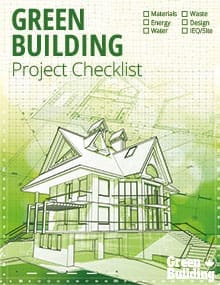
Get the Green Building Project Checklist
Use this handy checklist on your next project to keep track of all the ways you can make your home more energy-efficient and sustainable.
Building Information Modeling (BIM) provides a way for architects to quantify the environmental impact of a building from the time of its construction, all the way through its life cycle.
This type of modeling can have an impact on measures that might save land, water, energy and materials, by providing architects with modelled simulations during the design phase. Architects can explore a comprehensive list of 3d architecture design software to enhance these simulations and design workflows.
Read more on this topic in our article How Does BIM Improve Collaboration Between Construction Professionals?
Net-Zero Emissions
Net-zero buildings are becoming a highlight within the field of sustainable architecture. These buildings harness and effectively use renewable resources in such a way that negates the level of carbon emissions produced by the construction and maintenance of each building. Thus, net-zero carbon emissions!
Active vs. Passive Strategies
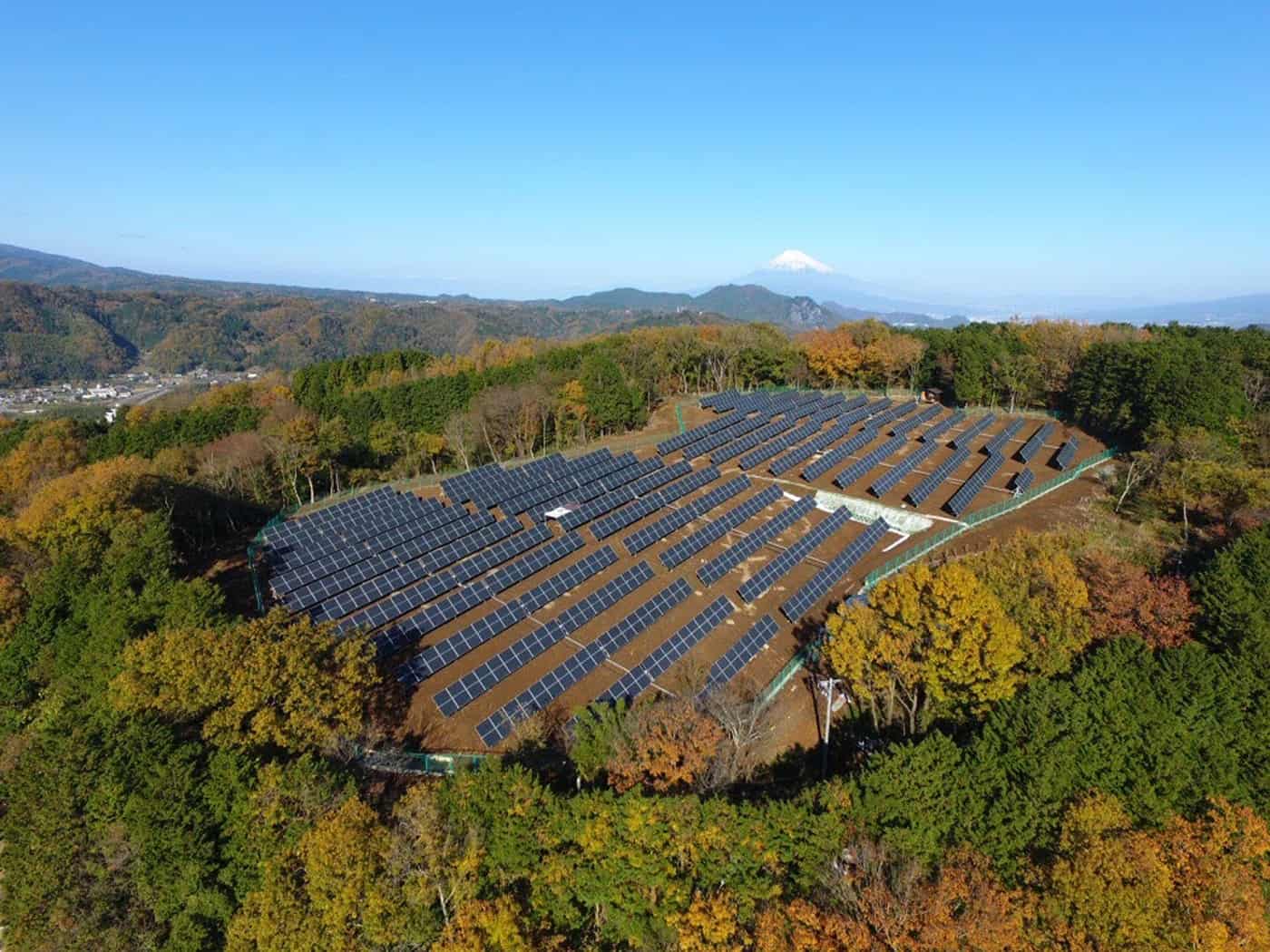
There are both active and passive components of sustainable architecture. Passive strategies involve designing something that’s efficient enough to provide an advantage without added effort or energy; for example, room designs that allow for passive ventilation, heating or cooling. Strategic building orientation and site selection play a large role in the passive strategies that will be available for a particular project.
A site analysis is an important part of sustainable architecture because it gives an architect the opportunity to assess the natural and renewable resources that are already available at a particular site. Aspects examined during this type of analysis might include:
- The amount of sun exposure available for solar panels
- The wind speeds available for wind turbines
- Whether there’s easy access to a natural source of running water that can be used in conjunction with a water turbine
Sustainable Energy and Air Flow Systems
Efficient heating, cooling and ventilation are cornerstones to sustainable energy, and effective insulation is vital to maintaining an acceptable temperature within a building.
Here are three fairly common examples of passive airflow systems:
- Strategic room orientation
- Utilizing a decreased surface area in favour of a more centralized building
- Selecting a certain ratio in terms of building height versus street width to allow for better air flow
Passive solar designs include window choices that can maximize the amount of heat absorbed in cooler months, while also preventing too much heat from entering in the warmer months. Vegetation around a building – or on top, in the form of a green roof – also adds to a building’s insulation and its temperature regulation. Choosing materials that have a high thermal mass, which can provide an added layer of temperature control, is yet another important element of sustainable architecture.
Active systems can include those that recapture energy waste, such as those that recycle hot water and stale air, combining each with new, incoming water and air to be recycled.
Active solar systems, such as photovoltaic cells and hot water panels, are commonly included in sustainable architectural design. These need to be installed strategically so you can make the most of any sun exposure that a building gets.
In addition to providing electrical energy, solar systems that heat water with hot water panels are also available. These are passive solar water heating systems; however, they provide far less water heating than an active system. Wind and water turbines are less accessible than solar power, but are still important considerations for sustainability-focused architects to think about during a site analysis.
Green Materials and Processes
Construction is a highly wasteful process, traditionally speaking. Thus, sustainable architecture necessitates choosing sustainable materials and processes. Sustainable building materials are becoming more and more mainstream, and any architect focused on sustainability and green buildings will be knowledgeable when it comes to appropriate options.
Recycled materials are being used more and more, in order to redirect waste from landfills after demolition. Reclaimed lumber, bricks and metals such as copper are popular recycled materials. Retrofitting and repurposing an existing building to prevent demolition and the associated waste, is generally the more sustainable option than new construction.
Other sustainable materials are those that are renewable in such a way that the supply can keep up with the demand. My favourite example is bamboo. Bamboo grows at a rapid rate, without the need for lots of harmful chemicals, which makes it an excellent material that can be used for a variety of products from flooring to furniture.
Volatile Organic Compounds (VOCs) are carcinogenic, irritant chemicals that are often included in traditional building materials such as paint and insulation. These compounds are not only harmful for humans, but also for the environment. There are now alternative types of insulation that are low in VOCs, such as wool and recycled denim, and these can be treated with non-toxic substances to ward off mould and pests. There are also low-VOC paints, such as organic and milk-based paints.
Eco-Friendly Waste Management

Finally, sustainable architecture also needs to account for the waste we produce. Greywater management systems that collect and recycle non-harmful grey water, composting toilets that reduce sewage, composting for gardens and other recycling systems are all sustainable features that should be included in the design of a green building.
Remember – Chemicals Aren’t Always Bad!
It’s important to note that just because something is “natural,” that doesn’t mean it’s inherently harmless, and just because we call something a “chemical,” that doesn’t mean it’s necessarily harmful. We must make the distinction between what’s truly toxic or harmful, and what’s not, when we look into sustainable and safe materials.

3.5