
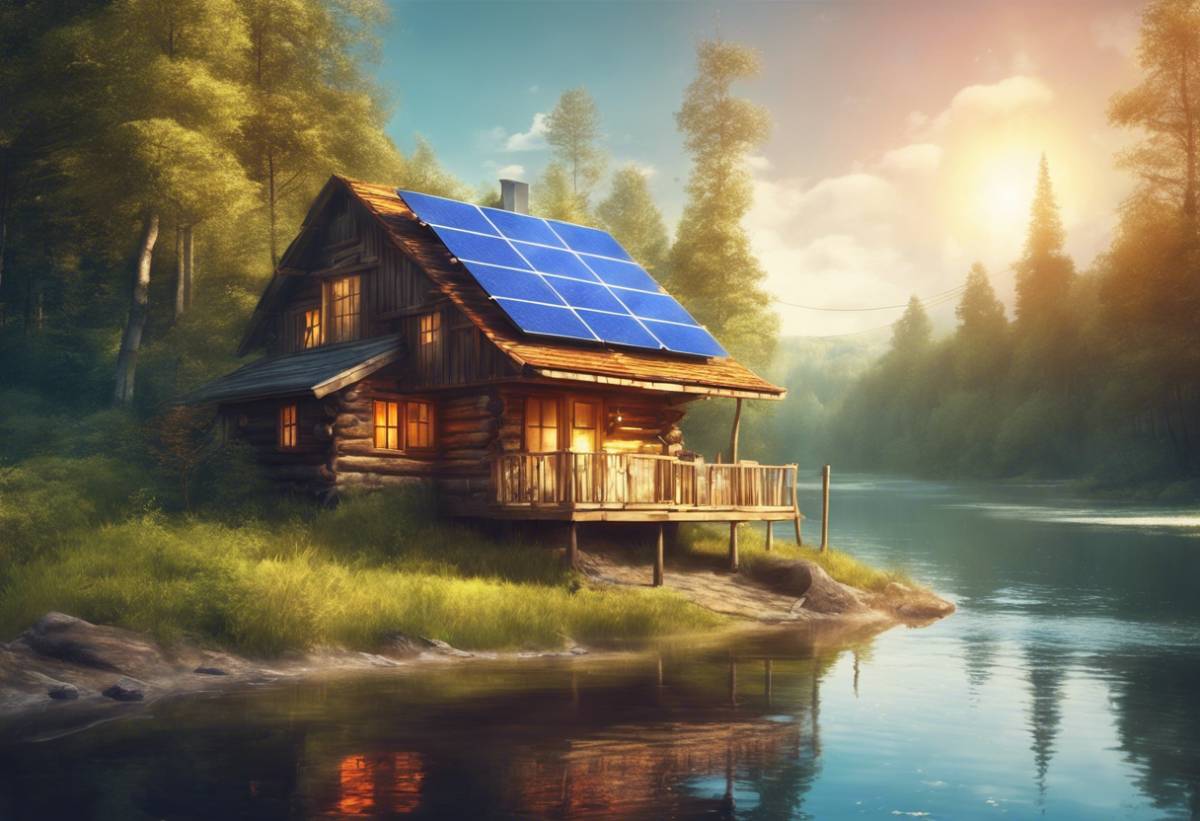
Going off grid is a dream for some and a nightmare for others. Just the thought of having to monitor your energy consumption is enough to turn most people off. Yes, when we have a plethora of modern conveniences to suck up energy all day and night, living off grid is not an easy task, but it is one that is very much rewarding.
People choose to live off the grid for a variety of reasons: to be self-reliant, to be further removed from society, to decrease their environmental footprint. But going off grid is not just about living your ideals – in a remote location, it might be more cost-effective to install a standalone off grid electrical system instead of running power lines to connect to the grid, which can cost a hefty $10-30k per km ($15-50k per mile) of line or in a lot of cases even more than that.
Whether your dream is fully green (100 percent renewable) or not (100 percent run on a gas generator) or a hybrid option that lies somewhere in between, you can find an off grid power solution that works for you. In this guide, we’re focusing on renewable power systems and energy sources so you can get a good picture of how to sustainably provide both electricity and heat to your home. From there you can compare the systems to find the setup most suitable to you.

Parts of an Off Grid Power System
First, we’ll have a look at the multiple parts of an off grid system so you see how it all comes together. An off-grid power system (aka standalone power system) operates independently of the main electrical grid to provide energy. It includes several components that generate, store, regulate and distribute electricity.
Energy source – It all starts with the source. Sun, water, wind, biomass, waste – these renewable energy sources are like the food you feed your body. Without them we don’t live. Without the energy source, our off grid power systems won’t function.
Get the Green Building Project Checklist
Use this handy checklist on your next project to keep track of all the ways you can make your home more energy-efficient and sustainable.
Energy system – Whether it’s solar PV, wind turbines or micro-hydro turbines, these renewable energy sources collect the energy from the environment and convert that energy into electricity.
Inverter – Off grid power systems generate direct current (DC) electricity. Since most of our home’s appliances and devices use alternating current (AC) there’s an incompatibility there. Enter the inverter. Just as a translator listens to a conversation in Spanish and translates it to English, the inverter converts DC electricity to AC so all your appliances can function.
Distribution system – These are the guts of the system – the wiring, switches and circuit breakers required to distribute electricity from the energy source, batteries or generator to power your home and appliances.
Monitoring and control – The brains of the system. They play an important role as they operate the functioning of the system and in the background they’re also monitoring energy production and usage, managing battery charging and fine tuning settings for more energy-efficient operation. If you’re connected to the grid, you’ll also need a meter to measure the electricity you use from your own energy source in comparison to that of the grid. Additionally, if you share your excess energy with the grid, a special meter will allow you to measure the amount taken by the grid against the amount of energy you use from the grid, for balancing purposes.
Safety components – This equipment protects your system, your home, your devices and yourself. Grounding equipment literally connects your system to the ground, as an “escape route” for extra electricity when the system gets overloaded (eg. during a power surge from a lightning strike). Think of a balloon: It has a limited capacity and if we try to blow extra air into the balloon it’ll just explode. Adding a small hole to the balloon allows for the overflow of air to escape without the balloon exploding, and this is sort of how grounding equipment works, too.
Charge controller – Since off grid systems need a backup power supply when the wind doesn’t blow or the sun doesn’t shine, a charge controller is a necessary component (unless, of course, you choose to not have power for extended periods of the day). This device regulates the voltage and current flowing between the energy source (e.g. solar panels) and the batteries, preventing the batteries from being overcharged and to ensure efficient charging.
Battery bank – Another essential ingredient for off-grid power systems as they store electricity for later use or at times when your energy source may be functioning but your demand is greater than supply. The battery bank is sized to provide enough energy to handle your energy requirements. It’s generally the costliest part of the system.
Generator – Some off grid power solutions use a generator, either as the sole source of energy or as a backup. Some don’t use one at all. They are generally used in locations that have limited energy resources or to get you through a period of prolonged low energy production. Aside from providing power directly, they can also be used to recharge your batteries. We examine generators farther down in the Small Scale Off Grid Power System section.
8 Off Grid Power Solutions
This list looks at eight solutions for powering your off-the-grid home. It presents three of the most common off grid power systems that provide electricity as well as off grid energy solutions that provide heat and lastly, another option that people find handy if they just need a small dose of electricity.
Off Grid Power Systems for Electricity
1. Solar Power
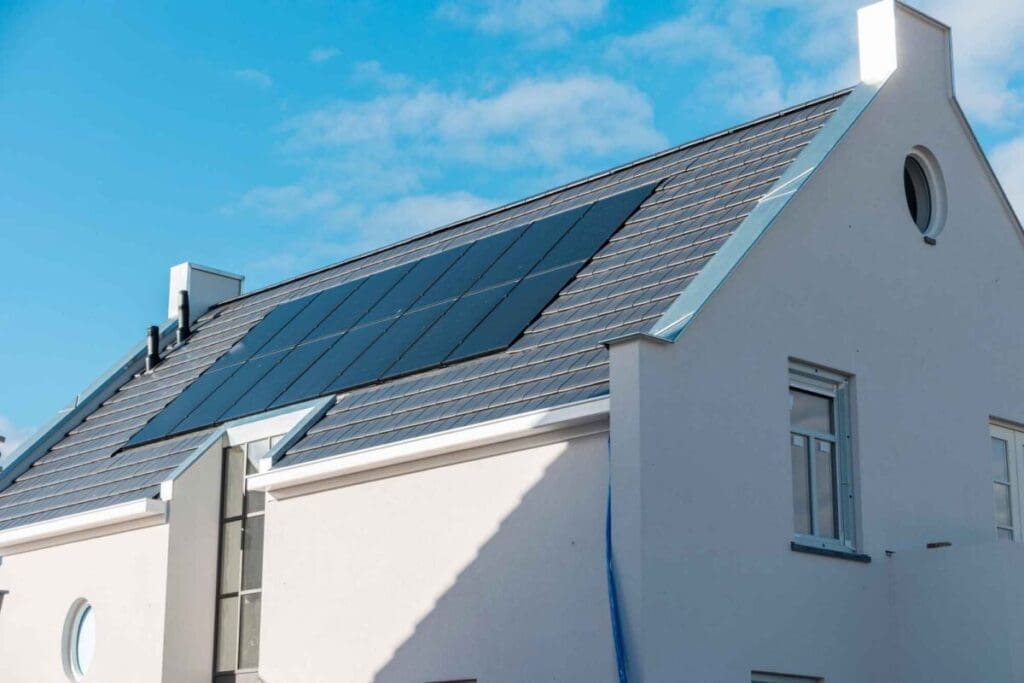
Solar PV (aka solar photovoltaics or solar panels) generates energy from the sun’s light. When sunlight hits the solar panel, the photovoltaic cells inside the panel capture the light and convert it into electricity. This electricity can be stored in batteries for later use.
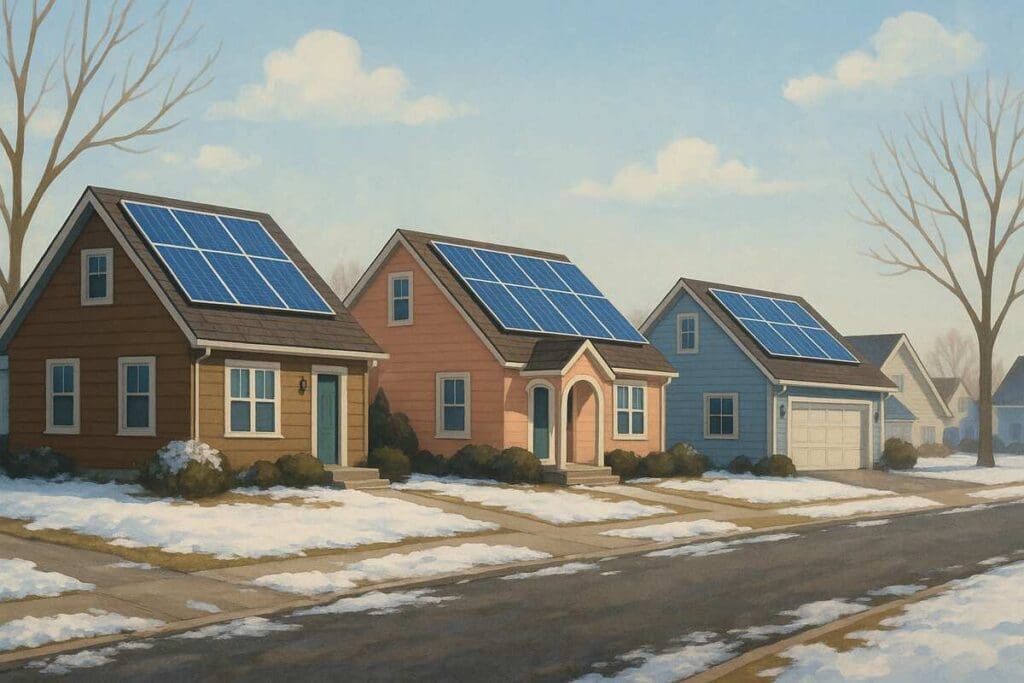
Solar panels are the most common and readily available form of renewable energy for off-grid homeowners. They can be costly to set up, but many governments and utilities offer incentives for solar power systems such as these which help make costs more manageable.
As far as choosing an off grid power supply, solar PV is at the top of most people’s list. It’s a great option, but it does have its limitations. First, it’s an intermittent power source that will only provide energy during the day. And if you live somewhere like the west coast where the skies are usually overcast or if you live in a shady forest, you won’t be generating too much electricity. Solar also just provides electricity, so it’s not an all-in-one solution if you want to have space heating.
With solar PV production increasing rapidly over recent years, costs have been driven down, making them a much more affordable option. There are plenty of options to choose from, including small scale off grid solar power kits. There are now multiple ways to share your electricity if you don’t want to keep it for yourself in your battery bank. You could either sell it back to the grid or distribute it through peer-to-peer sharing via a community microgrid – Sonnen is a good example of this.
A photovoltaic system is the not the only way to harness the sun’s energy. Solar water heaters (sometimes referred to as solar thermal or solar domestic hot water systems) also make use of the sun’s power to heat water for your home, These come in many different configurations, and some may be more effective than others, depending on where your home is situated. Regardless, living off the grid doesn’t have to mean boiling water to have a nice warm bath!
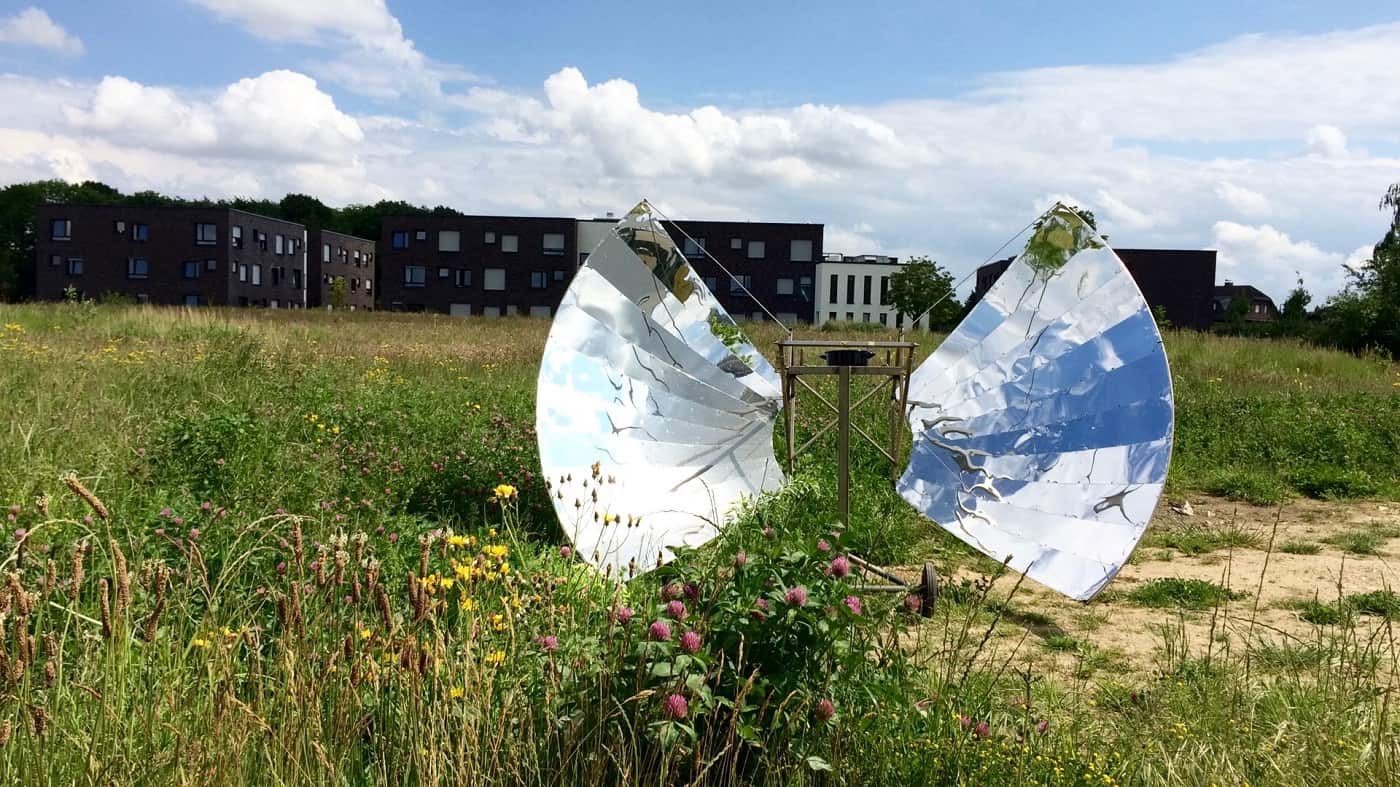
Finally, a solar cooker is a cool and interesting way to cook food. They concentrate the heat from the sun in their reflective material, heating up food to safe temperatures.
2. Wind Energy
A wind turbine uses blades that catch the wind and spin a rotor, which powers a generator and creates electricity. Wind power has a long history, which proves their efficacy – over 1,000 years ago the first windmills appeared and the first turbine used to generate electricity was way back in 1887.
Modern wind turbines can be horizontal-axis types (HAWT), which are the kind we typically see, or vertical-axis types (VAWT), which look like egg beaters. The latter type is far less common as they are not as efficient as HAWTs and because they are not as common there’s not nearly the selection. However, they do have the advantage of being omnidirectional, so they can capture wind from all directions. Their design is also better for low wind speeds.
The main drawback with wind power is that wind isn’t dependable. It varies depending on where you live, and even in the same place it changes from day-to-day according to weather patterns. While limited amounts of wind power can be stored in batteries for later use, it’s important to have a contingency plan in place if you rely on electricity from a wind turbine.
For homes that are on the grid, there are government programs that provide incentives for utilizing green energy sources, and there may be opportunities to earn rebates if you share your wind power with the grid.
3. Micro-hydro Power
Much like wind turbines, the blades of water turbines catch moving water, which then spins the turbine’s rotor and powers a generator. The most common example of this is a hydropower dam that drops water onto massive turbines and generates hydropower for whole communities.
Water turbines for off-grid homes are obviously smaller, and are unfortunately limited to homes that are near moving bodies of water. Water is more reliable than wind, but a certain amount of kinetic force is required to spin the turbines, and it’s hard to find enough moving water to create that force in most locations. The result is that off grid hydro power is a less common option than solar or wind.

Off Grid Energy Sources for Heat
4. Heat pumps (ground source and air source)
Heat pumps are becoming a popular way to heat and cool the home thanks to their efficiency. They operate on the same principle as an air conditioner or refrigerator except instead of just cooling, they can also heat a space and provide your hot water needs as well. The two most common kinds of heat pumps are air source heat pumps (by far the most common) and ground source heat pumps (also known as geothermal).
Air source heat pumps work by extracting heat from the outside and transferring that heat to a heat exchange fluid (refrigerant or water) and then dumping that heat inside the house. In the summer, they take the heat from the inside and dump it outside.
Ground source heat pumps do the same thing except they take heat from underground, which is more efficient as the Earth, below the frost line, has a constant and reliable temperature of 10 degrees Celsius (50 degrees Fahrenheit). Though they are more efficient than air source heat pumps, geothermal systems have a larger cost upfront. However, in the long run, the savings will pay off.
Heat pumps are more efficient than other heating systems – having an approximately 3:1 efficiency ratio, they produce approximately three times more energy than they use. They can be so efficient because they’re utilizing already existing heat in the environment rather than producing it through combustion (eg. burning natural gas or oil).
Heat pumps use electricity. A lot of it. So for a renewable off grid setup you would have to have a solar PV system to power the heat pump. Assuming your solar system is powerful enough you’d have all your electricity, space heating/cooling and hot water all provided for from these two systems.
Other types of heating systems exist that can run on electricity, but we’ve highlighted heat pumps here due to their high efficiency.
5. Biomass / Biogas
Biomass boilers use combustion of organic materials such as wood chips, pellets, logs, straw (and other agricultural products) and municipal solid waste to generate heat, electricity or both.
Biogas on the other hand, takes wet organic materials like animal manure, food waste or agricultural waste and breaks them down with microorganisms in an anaerobic environment (absence of oxygen) to produce biogas (a mixture of methane and carbon dioxide) that can be burned for heat or converted into electricity.
Biomass is considered a renewable energy source as the organic materials fed into the system are replenished naturally. But the environmental impact depends on a range of factors such as the type of biomass used, how it’s harvested and the efficiency of the conversion process. For example, sustainably managed forests can serve as a source of biomass fuel without depleting natural resources, while using agricultural residues or organic waste can help reduce landfill waste and methane emissions.
Biomass boilers operate at approximately 90 percent efficiency which is on par with the high-efficiency gas furnaces being sold nowadays. For homesteaders who want a simple, reliable heating system, a pellet heater or other biomass boiler can be a good choice, particularly if they have a locally-sourced supply of fuel from responsibly managed forests – and even more so if you can source that fuel from your land.
There are some downsides to burning wood though. First is the amount of pollutants it pumps into the air. This is especially a problem if you live in or near a city (though most off-grid homesteaders do not) since pollutants like PM and VOCs are more of a problem in the city. Though trees can be planted as new carbon sinks to replace those that are harvested, when you’re burning wood you’re quickening the rate that those CO2 emissions enter the atmosphere. Also, if you’re chopping your own wood there’s a lot of labour involved, though homesteaders are no stranger to labour and it can be a nice way to get a workout.
There’s some debate regarding how bad burning wood is as compared to burning fossil fuels. It depends on factors like transportation distance, refining of the fuel, efficiency of the heating system, etc. On the one hand, if you’re gathering deadwood from your own land and you’re far away from civilization your impact on the environment will be a lot different than an urbanite burning non-local wood. Similarly, different comparisons can be made between burning fossil fuels and wood.
There are types of biomass and biogas systems that can provide both heat and electricity, which would seem like a perfect fit for off gridders, but the reality is that they are expensive and costly to maintain.
6. Fire
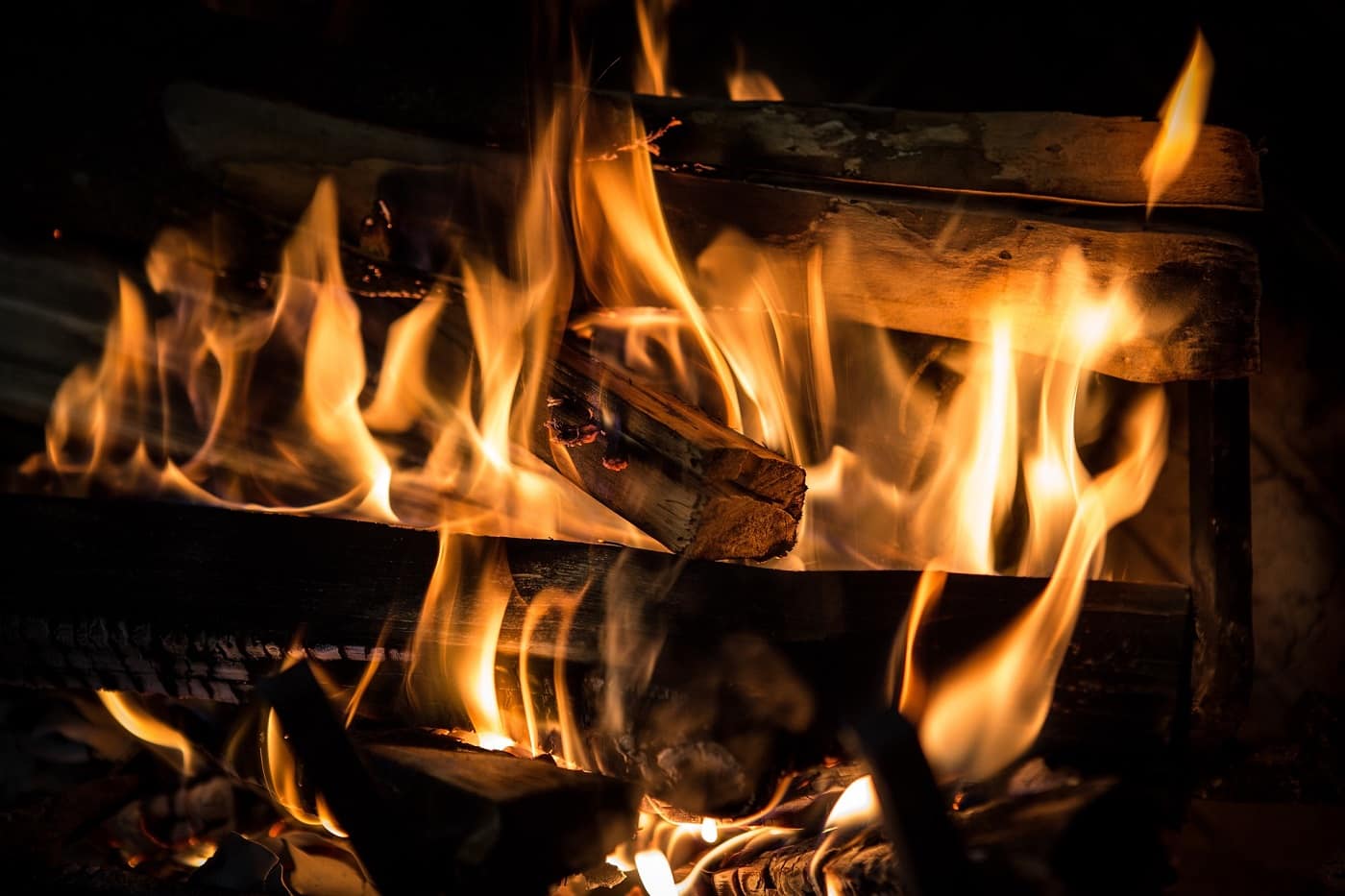
Fire was humankind’s first energy source and to this day is still incredibly useful. It can be used for heat, cooking, light, clearing of land, incineration of waste, among several other uses, making it a very important energy source to those who live off the grid.
Though wood can be burned in biomass boilers with fire, we’re mentioning this option separately because of its many applications and because of its simplicity. Fire can be use to generate heat, cook, etc. all you need is wood and a match. It doesn’t get any simpler or more reliable for off grid living since your property will most likely have trees growing on it that you can always use for fuel.
A wood-burning stove is a major centrepiece for an off-the-grid lifestyle. An effective heat source, particularly suited for small homes, it will keep a home warm during cooler seasons. It can also replace an electric or gas stovetop when you need to cook or boil water in a kettle.
The radiant heat from a wood-burning stove can also dry clothes that you’ve hung up inside on cold or wet days.
Some forms of controlled fire outside, such as a charcoal barbecue, a fire pit or an underground oven (sometimes called the earth oven method) are also effective alternatives to the electric or gas stove. These are especially useful in warmer weather, when lighting a wood-burning stove inside would just make your home too hot.
These forms of fire also provide opportunities for entertainment or connection – there’s just something special about gathering around a fire with marshmallows, or coming together for a barbecue in front of an underground oven.
Last but not least, candles and lanterns can provide you with fire-based light when you have no electricity for whatever reason.
Small Scale Off Grid Power System
7. Solar Generators
If your electricity needs are minimal, you can get by with a solar generator. They’re like a mini solar PV system but much more convenient as they’re portable and you can set them up super easily.
They usually store somewhere around 500 to 3000 Wh of electricity (and their output is generally in the same range of 500 to 3000 W) so you’re not going to be running major appliances on them, but they’re good for if you just have some electronics, small appliances and the occasional washing machine load or a small fridge or you want to power. So if this is all you need to get by, solar generators are a great option.
If your electricity needs are minimal, the BLUETTI AC60 Portable Power Station is a solid choice. It offers 403 Wh capacity and 600 W output so it’s enough to run your electronics, lights and small appliances. It can be recharged in the sun in 2.5 hours.
For a solar generator in the mid-range of power and storage have a look at the Bluetti AC200L+SP200L. It offers 2 kWh of storage and 2.4 kW of output and can be charged by the sun in about 2 hours. It offers 6 different ways of charging including through a car charger and uses a LiFePO₄ battery that provides reliable performance for 10 years.
If you’re looking for something high capacity check out the EcoFlow DELTA Pro 3. It has a capacity of 4kWh and an output of 2.6 kW so it can provide quite a good amount of power for a portable generator. It’s also expandable to 12kWh should you need more battery storage.
Gas generators are also an option, but they have a much higher impact on the environment. If you’re curious we’ve written a comparison of Gas vs Solar Generators.
8. Power Inverters for Charging Small Devices
If you’ve simplified your off grid setup to just a wood-burning stove for cooking and heating you’ve got off-grid living figured out! However, in the 21st century it’s become hard to live without electricity thanks to our internet addiction. And depending on where you live it’s hard to live without a car. Luckily, there’s a power solution that combines both of those dependencies: the power inverter!
Homesteaders use power inverters in their cars to charge small devices (such as cell phones, laptops and tablets) while they run errands. This is a super-efficient way to make use of a vehicle. Cars are sort of like large generators as they charge their battery as they run, so you can take advantage of this by simultaneously using the battery as a power source for your small devices.
If you’re a homesteader, you probably won’t use your devices very often as you’ll be busy with maintaining crops or animals, emptying the composting toilet, cooking, cleaning and other tasks. So the humble power inverter could be the sole off grid power system that you’ll ever need!

Pingback: 10 Small Homestead Skills: What to Learn for a Small Homestead
It’s time to move on to a new technology.
A self running generator produces its own torque and Electric Power without the need for hydrocarbon fuels.
It can run 24 hours a day 365
A self running motor generator is not a heat engine. And since it’s not a heat engine it doesn’t waste energy through a Cooling system. No cooling system will also make it easy to install.
A self running motor generator has only one moving part.
A self running motor generator has zero maintenance.
A self running motor generator is quiet clean and produces no waste products.
A self running motor generator doesn’t need a transmission it can run either forward or in reverse.
A Self running motor generator can be brought to a forced stop under a full load without any damage to the motor or generator system.
A Self running motor generator Cost is less than an internal combustion engine because of its ease of manufacturing.
A self running motor generator gets its power from
Quantum Photoelectric Discharge and the canceling of lenz’s law.
For more information on this new technology and to see it up and running, feel free to contact me I live in Everett
Open-Minded Skeptics are Welcome!
Call for an appointment
also, physicist, electrical engineers, scientists and are encouraged to investigate this new technology.
what is a self running motor?
I’m looking at living off grid and researching options. I’m interested in learning more about your self running motor generator what you have to offer. I may not understand but the males around me will no doubt.
would love to hear MORE
I have studied perpetual motion for 65yrs. Without success. Would like to hear more.
I would love to hear more about the self running motor generator.
I have an off grid home I wish to supply with a self running grnerator if possible?
Would love to see the self running generator.
Would love to see your self running generator and I would like to have a conversation about it.
More info on self running generator
I’ll try to contact the person who commented about the self-running generators to see if he has more info to share.
No skeptics here for a device that defies physics, hey. Will need more evidence than a mere claim.
SELF RUNNING GENERATOR
“I’ve been considering switching to renewable energy for a while now. This article gave me some great ideas on where to start!”
What a fascinating exploration into the world of off-grid living and renewable energy sources! ?? Your article captures the essence of this lifestyle beautifully, emphasizing both the challenges and rewards of living independently from the grid. I love how you break down the various renewable energy systems, making it easier for readers to understand the components and options available for sustainable living. The balance of practicality and idealism, whether for environmental reasons or simply for the thrill of adventure, truly resonates with those dreaming of self-sufficiency. Keep up the fantastic work—your insights are invaluable for anyone considering this path! ?✨
Off-grid living offers an eco-friendly, self-sufficient lifestyle through renewable energy sources like solar, wind, and hydropower. By relying on these systems, individuals reduce their dependency on the grid and minimize their environmental impact. While each energy source has unique benefits and challenges, technological advancements are making off-grid living more accessible for a wider range of people.
This post really highlights the essential options for off-grid living! I appreciate the detailed breakdown of the various power systems and energy sources. It’s fascinating to see how diverse the solutions can be. I’m particularly interested in the potential of solar power for self-sufficiency. Looking forward to implementing some of these ideas!
hello – I’m in Wasaga Beach Ontario and I’m interested in clean living to reduce foot print to environmental issues today. Can you recommend a self sustaining power to use in homes, like the free energy used in Tartaria, copper and magnets to conduct free energy.