
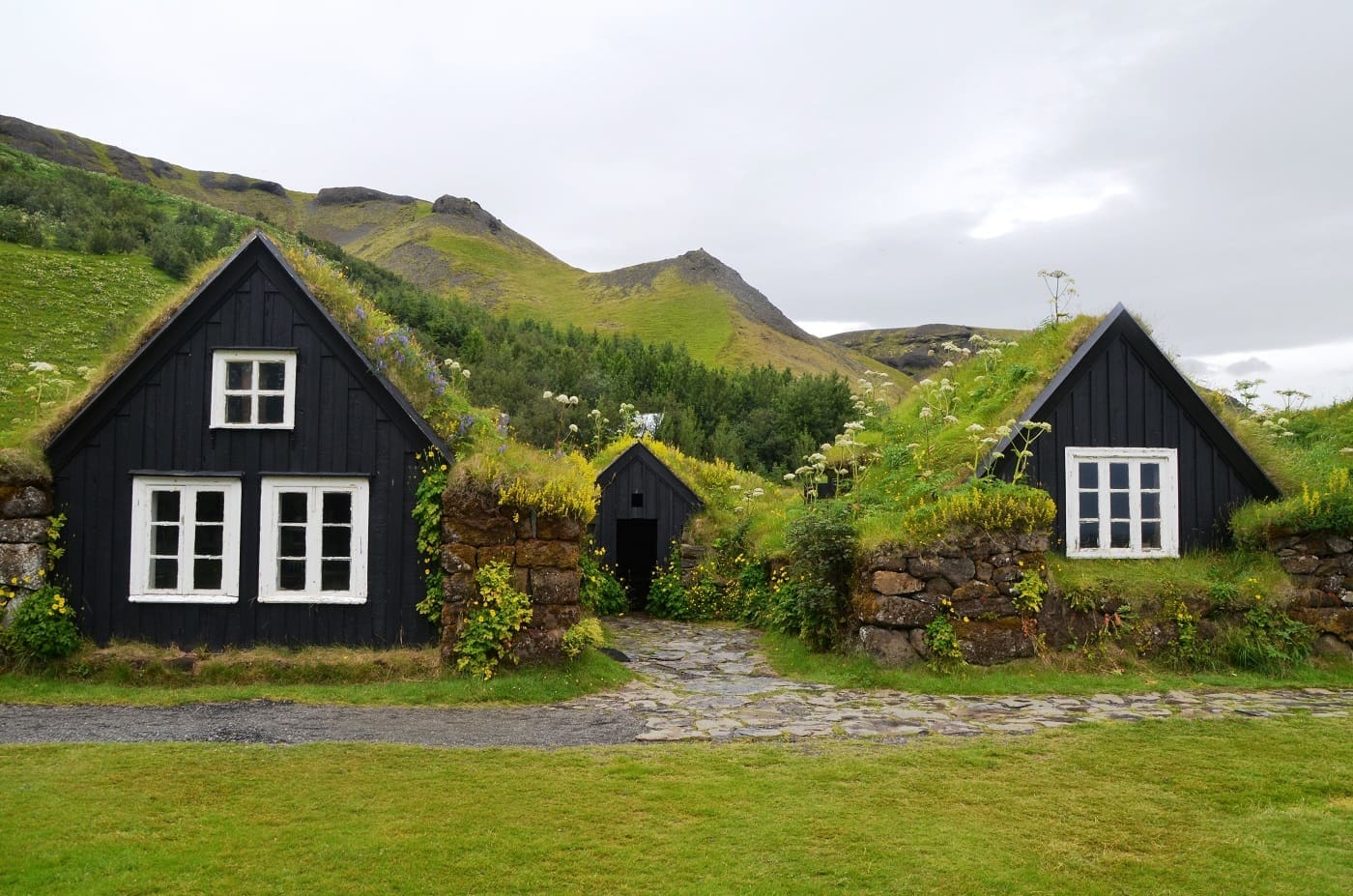
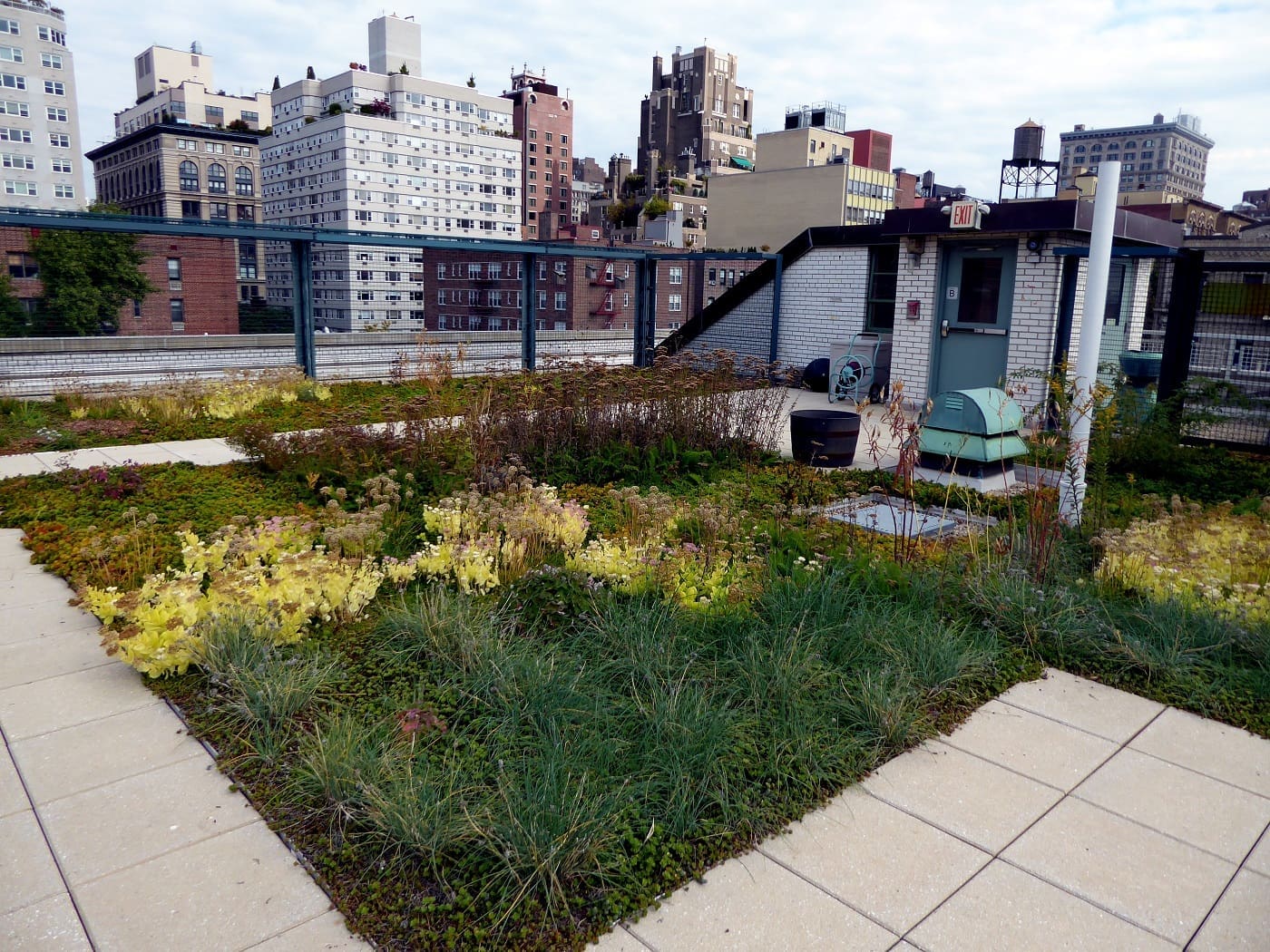
A green roof, also known as a living roof or an eco-roof, is essentially a rooftop garden. While they can cost more upfront than a conventional roof, the benefits are huge and the potential long-term savings could pay dividends – especially for the environment!
In addition to the economic and environmental benefits, there are many social benefits associated with green roofs. Urban sprawl means that space in general, but especially green space, is at a premium. Utilizing the unused space we have on rooftops comes with the added advantage of being able to create beautiful community spaces like urban farms, rooftop gardens or rooftop play spaces.
A green roof can have an average lifespan of 50 to 75 years. Given the potential longevity of a green roof, it’s something that will be with you for a long time and will cost you a bundle to install so it’s a purchase most people spend a lot of time researching. That’s where this guide comes in. Continue reading to get an understanding of the different types of green roofs, how they are designed and their benefits and drawbacks.
The Benefits of Green Roofs
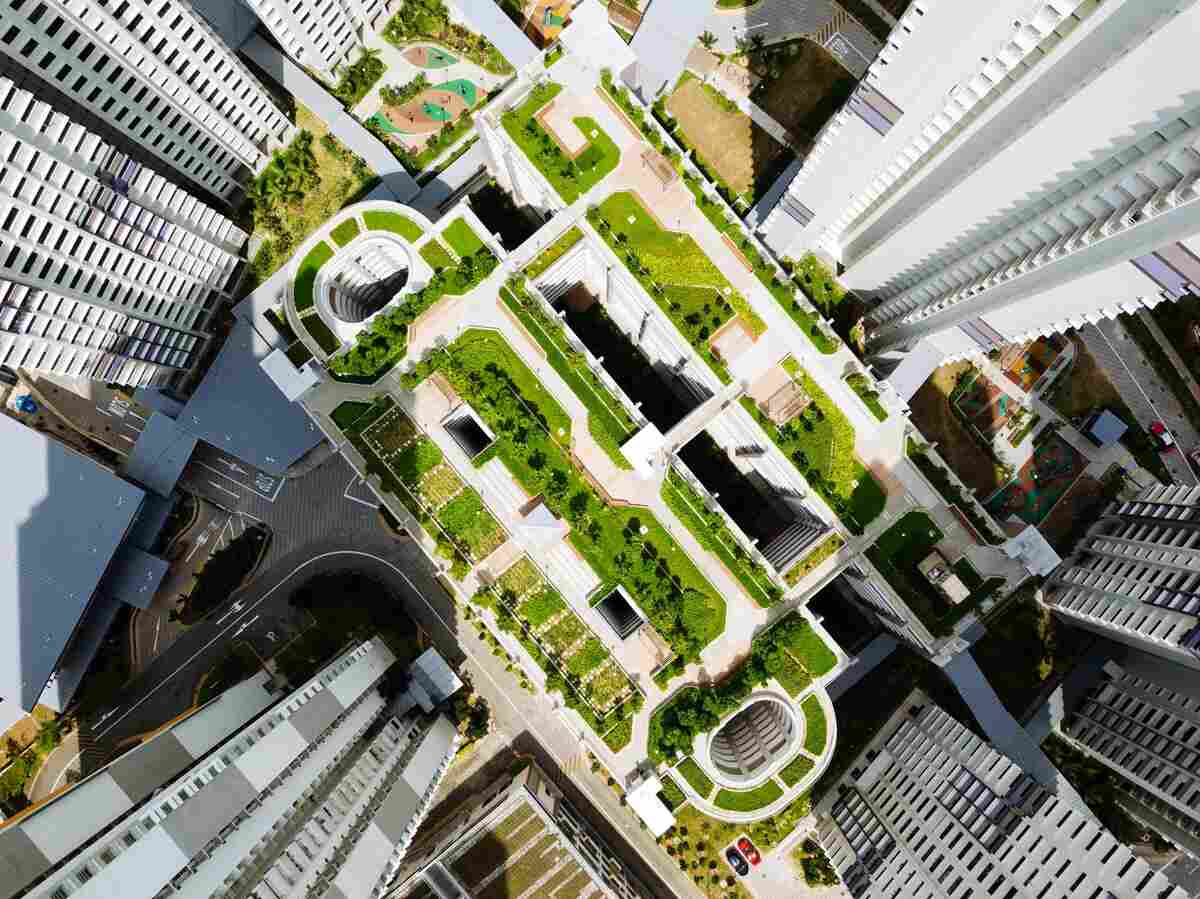
While the benefits of green roofs aren’t widely recognized in North America yet, green roofs are popular in Europe. The wide variety of benefits include environmental, economic and even social advantages.
The Urban Heat Island Effect
In population-dense areas, green roofs can help offset the urban heat island effect by absorbing smog and carbon dioxide, contributing to the dew and evaporation cycles and covering heat-absorbing surfaces (hello, black tar roofs!) in order to decrease the overall temperature of a building and its surroundings. This also results in decreased energy needs and cuts cooling costs.
Get the Green Building Project Checklist
Use this handy checklist on your next project to keep track of all the ways you can make your home more energy-efficient and sustainable.
Insulation
The added insulation of a green roof helps with temperature regulation within a building by aiding with heat retention in cooler months and deflecting heat from the sun in warmer months.
Air Quality
By absorbing carbon dioxide, as well as filtering smog and other harmful chemicals, green roofs are able to improve the overall air quality within an area. The plants and greenery will also release more oxygen into the air, which will enhance the air quality even further.
Stormwater
Green roofs can help absorb stormwater and minimize harmful stormwater run-off that combines with harmful chemicals, grease and oils as it accumulates on pavements and then drains into (and pollutes) nearby bodies of water or municipal stormwater collection systems. Absorbed stormwater will also lend itself to the evaporation cycle in order to help keep the surrounding area cooler.
Building Longevity and Waste Diversion
The protection that a green roof provides from the environment, when it includes proper waterproofing and drainage, can increase the longevity of a structure. Building owners may also be able to save money on repairs and maintenance. Indirectly, the waste from having to make repairs to a roof, for example, will be saved from a trip to the landfill.
As another outlet for waste diversion, a compost area could be incorporated into plans for a living roof, and the resulting compost could be used as food for the roof’s vegetation.
Biodiversity
Depending on the types of vegetation added to a green roof, it may be able to support pollinators and certain species of birds by providing shelter, breeding or nesting space, and sources of food and water. Some green roofs also incorporate hives for pollinating bees. All of this helps to support biodiversity.
Social Well-Being
Socially, green roofs can provide pleasant spaces for people to gather, which often leads to a positive impact on social well-being. More specifically, they can be used as space for urban farms where people can meet to tend to plants and reap the benefits of a harvest. Urban agriculture can also be a source of employment and can contribute to better food security.
Aesthetics and Space
Housing urban green space on roofs also makes use of more vertical space, which comes at a premium in a highly population-dense city. Perhaps there isn’t space for another park in the city at street level, but there is a plethora of unused space up above on urban rooftops!
Green roofs also increase a building’s aesthetic appeal and value, making them more marketable towards home buyers or renters.
Health Costs?
Finally, you could argue for a decrease in overall health costs within an urban area, given all of the above – particularly the decrease in pollution and smog, as well as the positive social impact.
The Drawbacks of Green Roofs
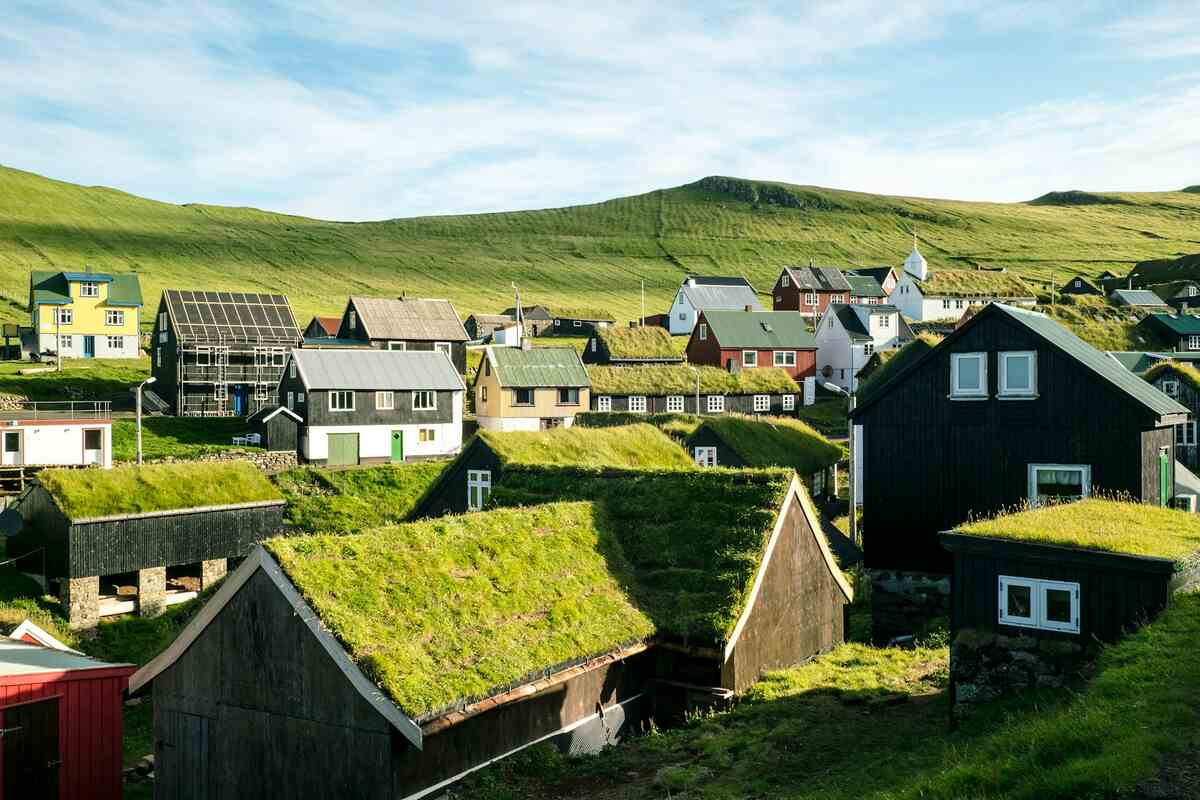
While the advantages to be gained from a green roof far outweigh the potential drawbacks, it’s important to know the bigger picture.
One of the major drawbacks of a green roof is that the upfront cost is higher than that of a traditional roof. Green roofs require irrigation systems, proper waterproofing to prevent leaks, a root barrier, a growing medium that’s lighter than traditional soil and appropriate drainage, just to name a few essentials. However, this increased cost should be weighed against the savings in utility bills and the increased market value of the property you’ll gain from having the roof.
With an extensive type of green roof, the limited number of plants and greenery you’ll have to choose from can be a drawback. It’s also more difficult to use the extensive type of green roof for recreational purposes, so one of these often ends up existing solely for the environmental and economic gains it can provide. In cold climates, this type of roof can also look less-than-appealing in the late fall and winter months, when plants begin to die for the winter.
The main drawback of an intensive or semi-intensive green roof is that being a more complex system, these are generally more costly than an extensive type of green roof, and you’d require professional help to design and build one.
A good amount of effort and costs go into maintaining a green roof, however, if you’re a gardener the maintenance can be seen as doing your hobby with a view. Maintaining a green roof involves typical gardening chores, such as pruning or replanting annual plants. Most of your costs go into taking care of the plants, watering them and doing inspections and repairs to the roof. It’s money well spent, but it is generally more costly to maintain than a conventional roof.
3 Different Green Roof Types
Green roofs are versatile and can include a vast array of different plants or designs. There are three main categories of green roofs:
Extensive – This is the simplest kind of green roof, involving small plants and greenery that require less infrastructure and maintenance. Typically, these roofs are more lightweight, shallow and easier to build.
Semi-intensive – These involve some larger shrubs and trees while being primarily made up of smaller plants.
Intensive – These are complex green roofs that contain trees, shrubs and walkways and require intensive infrastructure such as an irrigation system, drainage, root barriers and more. They’re typically deeper and heavier than other green roofs.
Designing a Green Roof
When you see green roofs it’s usually going to be on new construction due to the amount of structural work that needs to be done to retrofit an older building to support the added weight of a green roof.
A green roof with proper waterproofing, irrigation, drainage and everything else ranges from approximately $10 to $24 USD per square foot. While this is a substantial cost upfront, the previously mentioned benefits and cost savings will pay dividends in the long term. Certain municipalities also offer financial incentives for installing a green roof, such as Toronto’s Eco-Roof Incentive Program.
If you hire a professional to install a green roof, it’s important to get a contractor who has experience with green roofing due to the importance of structural considerations. A Green Roof Professional (GRP) can also advise you on design elements.
In the process of planning to add a green roof to an existing building, you’ll need to account for several structural components:
- The slope of the roof
- The weight-bearing capacity of the roof
- Any existing drainage or waterproofing system
- Potential exposure to the elements
- Electrical and plumbing access
- Maintenance access – who can/will have access to the roof?
There are also choices in terms of how a green roof is installed. It’s possible to install “modules” of green roofing that can easily be moved, rotated or replaced – a common feature of the extensive style of green roof. The added benefit of a modular style is that the plants can be grown and cultivated in a greenhouse or garden prior to installation, but a drawback is that moisture can’t flow super-freely between modules.
The other option for an intensive-style green roof is a more integrated approach without modules – more like a rooftop park or a sprawling garden.
The Components of a Green Roof
There are several foundational layers that make up a green roof. From top to bottom, these include:
- The vegetation layer of plants
- A growing medium
- A filter membrane
- The drainage layer
- A waterproof and root repellent layer
- Roofing membrane support
- A thermal insulation layer
- A layer of vapour control
- Structural roof support
Depending on whether you choose an extensive, semi-intensive or intensive green roof type, there are certain design components that need to be considered.
Drainage
It’s important, for the structural integrity of any building, that water doesn’t pool on a rooftop. With a green roof, we’re inviting moisture to accumulate on the rooftop, so we must ensure that it doesn’t pool excessively in any one spot in a way that could damage the roof. Thus, drainage systems are very important when it comes to directing water away from potential pooling areas.
Waterproofing
For the same reason that drainage is important, proper waterproofing is also important. While proper drainage prevents water pooling, waterproofing plays a key role. Even where water doesn’t necessarily pool, we’re still inviting moisture to linger on the rooftop, so we need a waterproof layer within the roof’s structure to ensure that the moisture doesn’t damage the building underneath by rotting or wearing away any of its elements.
Irrigation
Plants need adequate water to survive. Nonetheless, irrigation is less important for extensive green roofs and more important for intensive green roofs.
Root Barriers
As plants grow above the Earth, their roots also continue to grow below the Earth. Roots are patient and have a surprising amount of strength that can penetrate a lot of different materials. This is what makes a root barrier so important within a green roof, as it can prevent roots from growing into the building itself by redirecting them sideways instead of downwards.
Growing Matter
Traditional soil may not be appropriate for some green roof designs, due to how dense and heavy it can be if a lot of it is needed to cover an entire roof (especially once it’s waterlogged!).
For more complex green roofs, such as the semi-intensive or intensive kind, growing substrate (also known as “artificial soil”) is ideal, as it requires less water and less maintenance to support plant growth. In comparison to soil, substrate is also more tolerant of weather extremes such as heat, cold and drought.
Plant Types
These will vary quite widely, depending on the type of green roof that’s being designed, as well as the purpose(s) of the green space. What plant species are native to the area and can be supported in this environment? Will it be used as an urban farm? Are there any local species that might benefit from certain types of plants being cultivated?
Other Accessories
A green roof can include other accessories aside from those that have been mentioned, depending on how the roof might be used. Things like beehives, walkways, benches, compost, solar panels, wind turbines and rainwater collection systems can all be incorporated into a green roof’s design (especially if it’s an intensive or semi-intensive roof that’s to be used as a communal green space or urban farm).
Gorgeous Pieces of “Living Architecture”
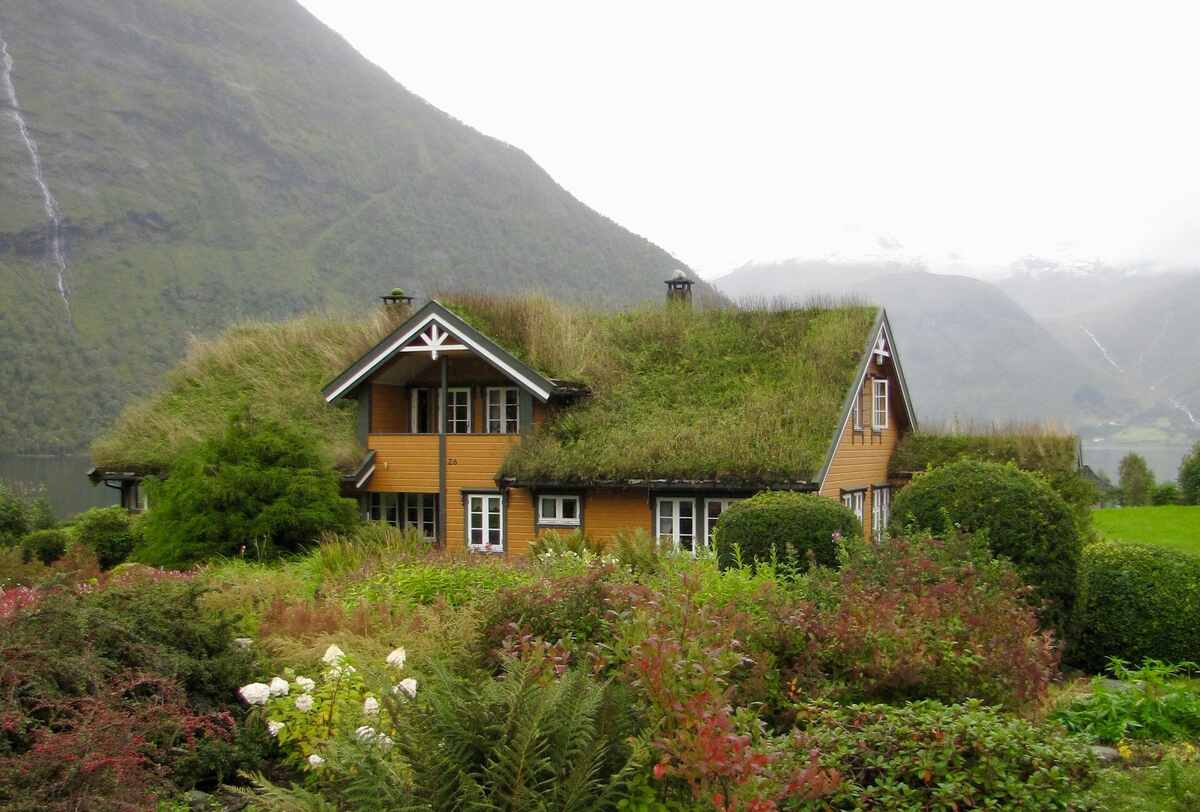
There’s so much diversity when it comes to green roofs, and they can be easily customized to suit a wide array of uses (and aesthetic preferences), from an urban farm to a peaceful oasis to a simple covering of greenery.
There are already many gorgeous examples of this kind of “living architecture” in the world, and more continue to emerge as we catch on to what a beneficial piece of building design this can be.
The importance of green space can’t be understated, especially as the population continues to grow at rapid rates in dense urban centres. Creating more of this space will benefit not only our Earth, but all of humankind as well.
image 1: Pexels; image 2: Unsplash; image 3: Unsplash; image 4: Pexels; image 4: Unsplash

THank you Eve. I am looking at building a small (8 by 10) green roof over the outdoor basement stairs into our house. It would not be insulated inside. Do you know who I could contact to provide the specs for building a strong enough roof? Thank you!