

The idea of constructing a house with garbage might put some people off. Many people, even. There are a lot of benefits to reclaiming and repurposing materials for construction, though. These materials are cheap (often free) and they allow builders to minimize waste output. They divert perfectly useful items from landfills and often create unique and beautiful homes.
If this is your first foray into building with reclaimed materials, you might be wondering how to find waste materials to start your build. Let’s start with reclaiming construction materials first before going into some options for finding other waste materials that can be repurposed.
How to Find Construction Waste
Contractors and Other Builders
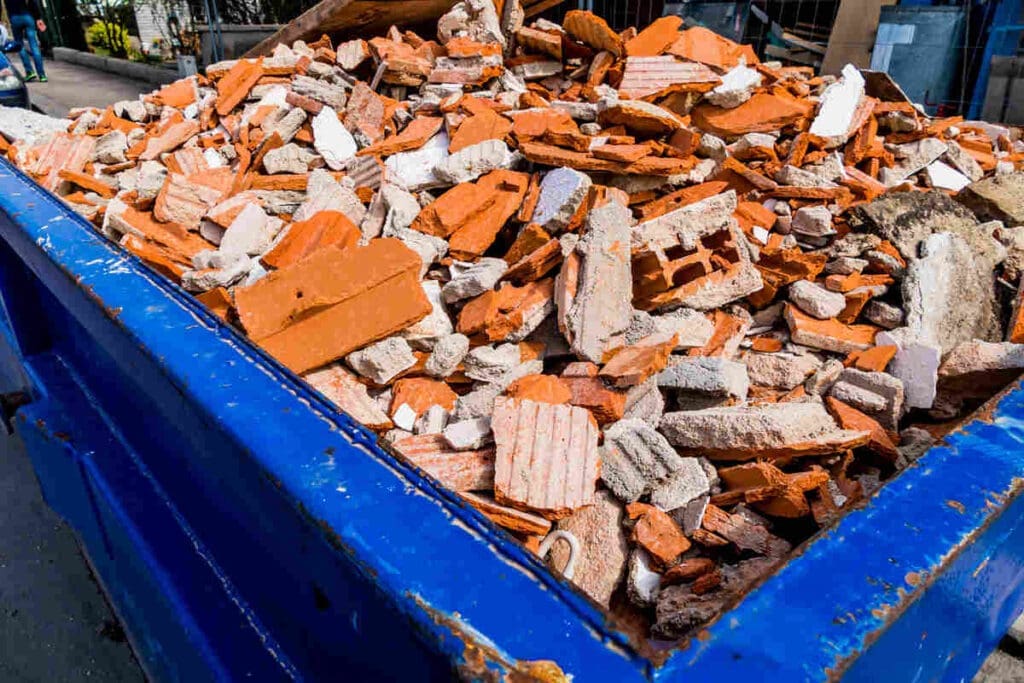
Give your local contractors a call. The construction industry generates a lot of waste (about 4 million tonnes, according to Statistics Canada) and despite growing awareness of the issue, most of that waste isn’t recycled. A 2014 study for Environment Canada found that about 84% of Canadian construction waste ends up in landfills every year. You might be able to pick up excess or offcuts of plywood, drywall, sheeting, insulation and envelope materials.
In many cases, contractors also rely on professional hoarding clean-up services and junk removal providers to clear excess materials before renovation or demolition begins.
Architectural Salvage
Architectural salvage businesses specialize in reclaiming materials from older buildings scheduled for demolition. They’re a prime source for everything from flooring to beams to doors to whole staircases. One of the many bonuses of working with an architectural salvage company is that the material will often be handcrafted and have already stood the test of time. You can luck out and find species of wood that are rare today and one of a kind larger pieces that would be impossible to replicate.

Get the Green Building Project Checklist
Use this handy checklist on your next project to keep track of all the ways you can make your home more energy-efficient and sustainable.
You can expect to put in some labour refinishing items. You can also expect to pay a fair price to compensate the company for their time and effort in gently dismantling a historic building. That cost might be substantial if you’re looking at a larger piece that’s truly extraordinary or that has historic value.
Search Online
There are a few great online resources for reclaimed and recycled building materials. You can browse available materials on marketplaces like Planet ReUse and The Freecycle Network or post an ad describing what you’re searching for. Don’t overlook social media marketplaces, either. You never know who might have the exact item you want lying around in their back yard.
To make the most of this option, you’ll have to put the work into checking these marketplaces every day and be willing to move quickly when the perfect item comes up. If you have something very specific in mind or if you need a rarer material that’s in excellent condition, you might be waiting a while before it comes up.
How to Find Waste Materials and Repurpose Them

Glass
Glass can be recycled and repurposed in a number of creative ways. Older glass windows aren’t ideal substitutes for their modern, more efficient counterparts but many people use them as greenhouse glass panes. You can often find them at salvage yards and secondhand shops.
Bottles can be embedded into a building material like cement or adobe to create spectacular effects in walls and to let in light. If you simply cannot drink enough beer or wine to attain the number of bottles you need for your project, consider asking local bars or restaurants if you can have theirs.
Plastic
JD Composites made a splash in 2019 when they built a waterfront home in Nova Scotia out of 600,000 recycled plastic bottles. The CBC’s Brett Ruskin says the bottles “were shredded, melted and formed into custom moulds” to create walls. Those who don’t have that kind of manufacturing capability still repurpose plastic bottles in construction by filling them in with earth or other materials to create walls. Plastic bottles can also be stacked or embedded in a mortar like glass bottles.
There are many good places you might approach for plastic bottles. Try local sports venues, companies, schools, libraries and businesses, to start. Be prepared to do some rinsing.
Wood
Reusing wood waste from the forestry industry offers lots of possibilities. Tree bark can be used for siding, stumps for furniture and branches for arbors, coat racks, balusters; the list goes on. Even sawdust can be turned into concrete blocks. Research suggests these blocks aren’t suitable for load-bearing, but they’re a lightweight, locally-sourced alternative for non-load bearing walls. They also offer good insulation.
If you’re fortunate to live in an area that has an active forestry industry, you can contact local logging companies and sawmills and ask how you can harvest what they don’t use. Furniture makers can be a valuable source of sawdust, although perhaps not in the quantities you might be hoping for. If you want a specific wood product, try a search on ReuseWood.org – an online directory of North American companies that accept and offer recycled wood and wood products.
Steel and Other Metals
Steel, the iconic building material of the early 20th-century skyscraper, has been growing in popularity as a lightweight alternative to wood framing in green building. It creates less waste than traditional wood construction, is incredibly durable and remains 100% recyclable. Because it’s so strong, it can support thicker walls and insulation, making it a useful option for an energy efficient home.
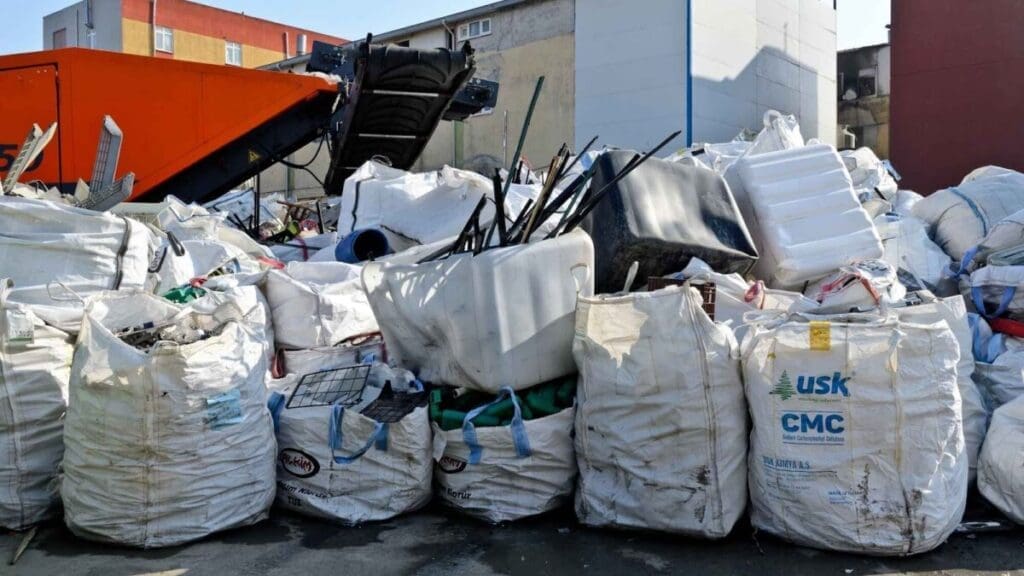
Some scrapyards will sell stock to retail customers. Not every scrapyard will, but they can be invaluable for steel piping and tubing, beams, plates and rebar. You might also be able to source copper wiring and aluminum siding there.
Paper
Papercrete, a mixture of newspaper or cardboard, cement, aggregate and water, is an old building technique with many benefits for the contemporary world. It’s cheap, strong, energy-efficient and simple to work with.
Finding newspaper in bulk in order to make enough papercrete for a building project is not the simple task it once was. Check local newspaper offices, public libraries and recycling centres. You might also ask local businesses like auto shops, doctors, dentists and lawyers’ offices – places that still keep newspapers in waiting rooms – if you can pick up their papers every week.
Think Big
Some industries make use of larger containers that have a limited shelf life within that industry but are still structurally sound at the end of that life. Builders can incorporate these larger containers into their projects.
Shipping containers are perhaps the best-known containers used for housing but any large container, from a water tower to a boxcar, can be repurposed for building. Acquiring a large container locally is preferable, of course, so research into the industries around you is key.
Happy hunting for your pre-loved building materials!
Feature image: Martin Cathrae; Image 1: Jon Evans

0.5